Meet the African elephant! People celebrate it on Save the Elephant Day (April 16) and World Elephant Day (August 12) around the world, and on Elephant Appreciation Day (September 22) in the U.S.
- Save the Elephant Day · Friday, April 16 — Started in 2012 by the Elephant Reintroduction Foundation with filmmaker Patricia Sims. Source
- World Elephant Day · Thursday, August 12 — Started in 2012 by filmmaker Patricia Sims and Thailand's Elephant Reintroduction Foundation. Source
- Elephant Appreciation Day · Wednesday, September 22 — Created in 1996 by Wayne Hepburn of Mission Media. Source
Read this one out loud together — it's more fun with a slow, rumbly elephant voice.
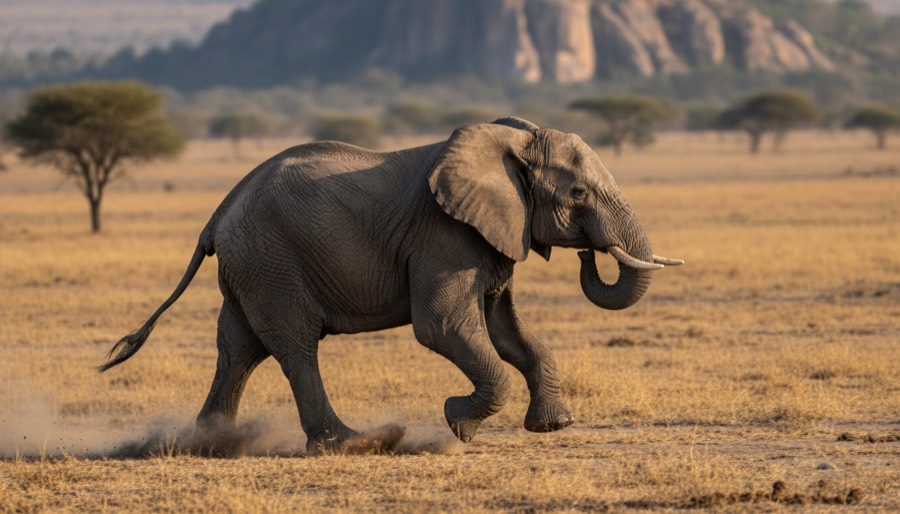
African elephants are the biggest animals that walk on land!
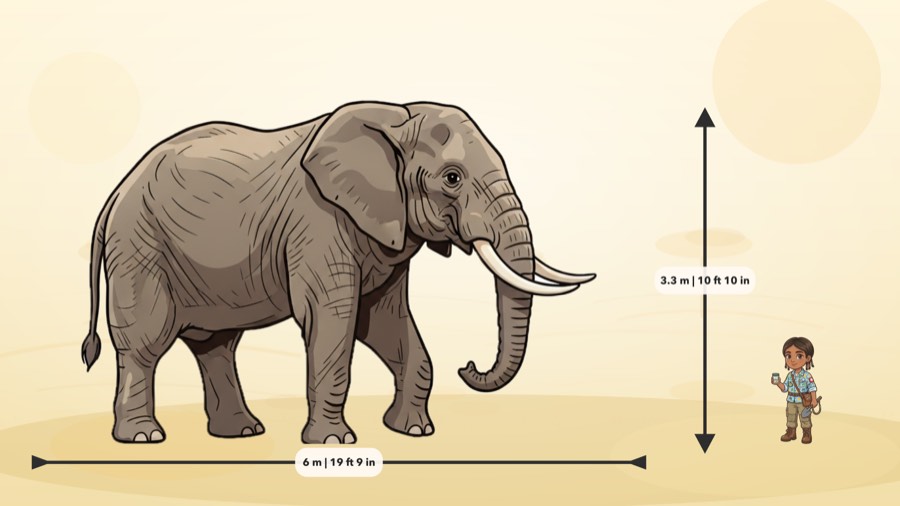
Can you guess how big? A grown-up elephant stands about 3.3 meters (10 feet 10 inches) tall at the shoulder. You are about 109 centimeters (3 feet 7 inches). So an elephant is about three of you, stacked up!
Elephants are heavy, too. A big one can weigh about 5,000 kilograms (11,000 pounds). That's about as much as 271 five-year-olds, all standing on one giant scale together!
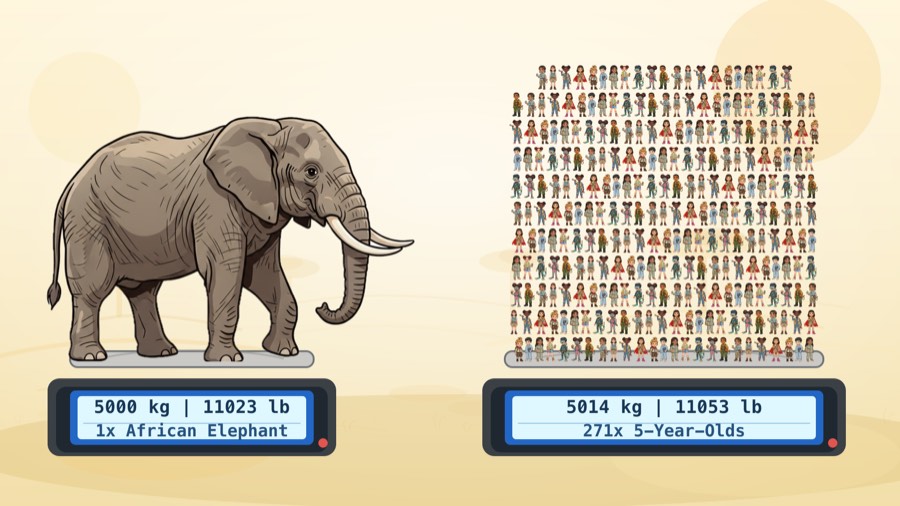
Can you picture 270 friends on a scale?
Here's a surprise. Elephants can talk in rumbles so low that you can't hear them. Other elephants can feel the rumbles through the ground, with their feet, from far away. Can you stomp softly and listen with your feet?
An elephant's trunk is like a nose and a hand in one. It has tens of thousands of tiny muscle bundles. It can lift a heavy log, and it can pick up a single blade of grass!
Those big ears work like fans. When an elephant flaps them, the air cools it down in the hot sun. Can you flap your "ears" like an elephant?
Elephants love mud baths. The mud helps protect their skin from sunburn and bugs. And those long tusks? They're really giant teeth that never stop growing.
A baby elephant is called a calf. It weighs about as much as five of you, and it can stand up and walk within about half an hour of being born!
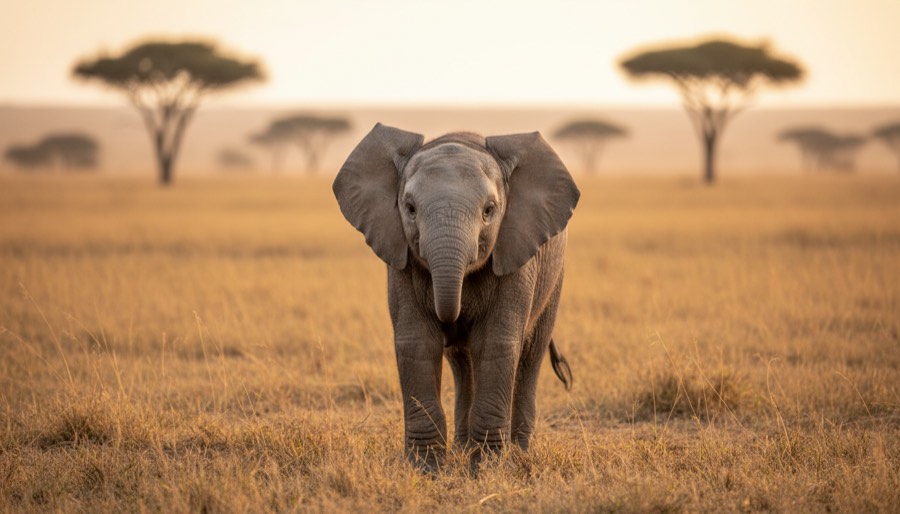
Elephants live in families led by a wise grandma. Friends and family remember each other for a very long time. When they meet, they say hello by wrapping their trunks together.
At mealtime, elephants munch grass, leaves, bark, and fruit for up to 16 hours a day. They drink about a bathtub's worth of water, too. Time for a snack, elephant style!
Where to see an African elephant
In the wild, African elephants live in grasslands, savannas, and forests across Africa, where lucky safari-goers can watch them. For the rest of us, these places around the world care for African elephants you can visit.
North America
African elephants
Dallas Zoo — Dallas, TexasA family herd lives here, and a new calf joined it in July 2026.
Learn more →African savanna elephants
Zoo Atlanta — Atlanta, GeorgiaA big savanna habitat with a pond and waterfalls for splashing.
Learn more →A whole herd of African elephants
Disney's Animal Kingdom — Lake Buena Vista, FloridaSee them on Kilimanjaro Safaris, where mud wallows and pools are made for elephants.
Learn more →Around the world
Orphaned baby elephants
Sheldrick Wildlife Trust — Nairobi, KenyaVisitors can watch rescued orphans enjoy their milk and mud bath, one hour each day.
Visit Sheldrick Wildlife Trust →African elephants
West Midland Safari Park — Worcestershire, EnglandHome to Elephant Valley, a reserve built for African elephants.
Learn more →Animals sometimes move between zoos — check the zoo's own website before you visit.
For grown-ups
African elephants are now treated as two species. The IUCN Red List lists the savanna elephant as Endangered and the forest elephant as Critically Endangered, mostly because of ivory poaching and habitat loss. (The app's older "Vulnerable" label comes from before the 2021 split.) There's a hopeful story: the Sheldrick Wildlife Trust in Kenya has raised more than 320 orphaned elephants and rhinos, caring for each until it is ready to return to the wild.
Elephants need room to roam. This week, try a family "elephant walk" in your neighborhood, noticing how far you can go and which paths are shared with others. Or learn together about groups that protect elephant habitat. It's a small way to practice making room for wildlife.
Starters: "If you could talk without words, what would you say?" "What would you share with an elephant friend?"
If your kid asks why do people hurt elephants for their tusks? — this holds up: "Some people want ivory, which is the elephant's tooth, and that's not okay. Lots of people are working hard to protect elephants, and laws and rangers help keep them safe. Elephants need their tusks for digging, eating, and helping family."
Keep exploring
Wild Atlas has a whole page built around this animal — narrated facts, the full scale comparison against a 5-year-old, and the rumbles and trumpets an elephant actually makes. The African elephant is in the Safari Stars pack, which is a paid pack.
Meet the African elephant in Wild Atlas →
For more, visit the IUCN Red List announcement.
 Subscribe and the Farm Friends pack ($3.99) is free — yours to keep even if you unsubscribe.