Meet the African wild dog! People around the world celebrate it on August 26, World Painted Dog Day — named for the splashy, painted-looking coat that gives this animal its other name.
- World Painted Dog Day · Thursday, August 26 — Origins not well documented; zoos and groups such as the African Wildlife Foundation and Taronga Zoo mark it. Source
Read this one out loud together — save your best sneeze for the middle.
African wild dogs vote by sneezing!
When the pack wants to decide whether to go hunting, the dogs sneeze. The more sneezes, the more likely the whole pack heads out. Ah-choo!
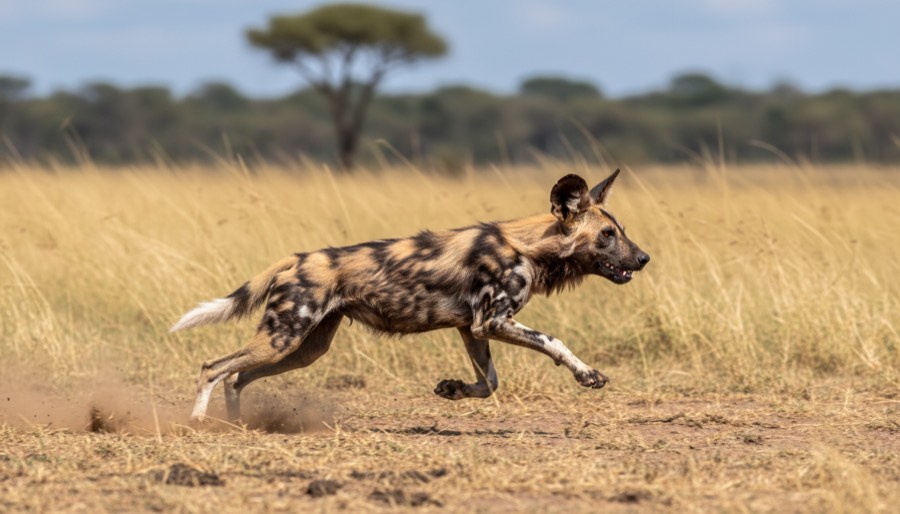
Each wild dog has its own splashy coat of brown, black, white, and yellow patches. No two coats match, so they're a bit like fingerprints. Some people call them painted dogs.
These dogs are also fast. They can run about 60 kilometres per hour (37 miles per hour). That's faster than a car in a neighborhood! And they work as a team, taking turns chasing, so they catch their food most of the time they try.
Can you tap your four fingers on your knee? Wild dogs have only four toes on each foot, not five like most dogs.
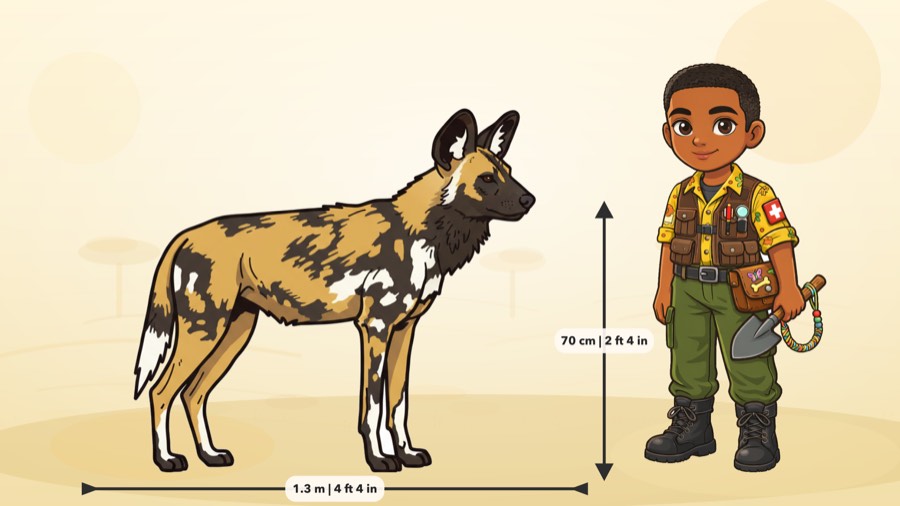
A wild dog stands about 70 centimetres (2 feet 4 inches) tall at the shoulder. That's about as high as a 5-year-old's tummy! It's about 1.3 metres (4 feet 4 inches) long from nose to tail.
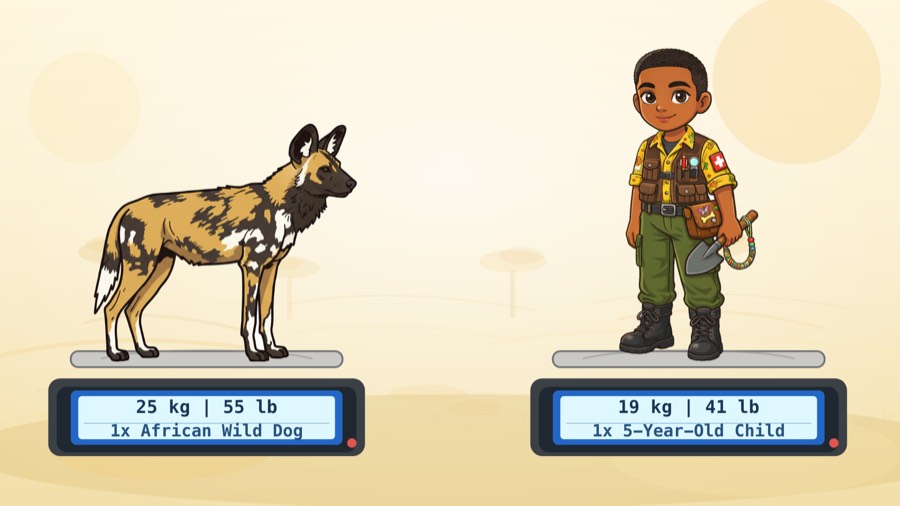
A wild dog weighs about 25 kilograms (55 pounds). That's a little more than a 5-year-old.
Can you make a squeaky, twittery greeting? When wild dogs say hello, they chirp and squeak almost like birds.
Wild dog families are called packs, usually with six to twenty dogs, and sometimes more. Everyone helps out. The pack shares food with the puppies, and with dogs who are older or not feeling well.
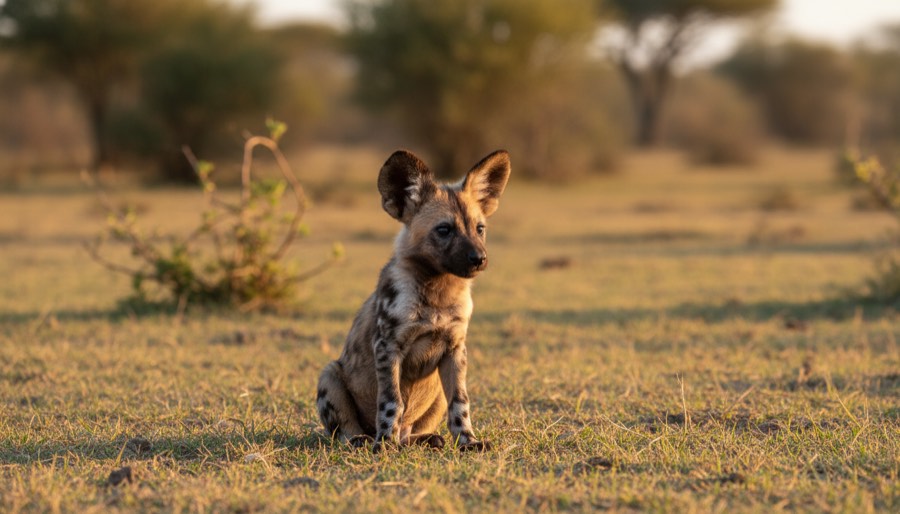
Wild dog puppies are born in a den underground, snug and safe. They grow up with a whole pack of helpers. And those big, round ears? They help the dogs hear far away, and they help them stay cool in the hot sun.
Where to see an African wild dog
In the wild, African wild dogs roam the grasslands and woodlands of Africa, south of the Sahara. For the rest of us, these zoos and wildlife parks have painted dog packs you can visit.
North America
African painted dogs
Brookfield Zoo Chicago — Brookfield, IllinoisLearn how these dogs live, hunt, and look after each other.
Learn more →African painted dogs
Saint Louis Zoo — St. Louis, MissouriThe zoo has welcomed painted dog pups, so listen for squeaky, twittery greetings.
Learn more →Painted wild dogs
Audubon Zoo — New Orleans, LouisianaFind them in the African Savanna area.
Learn more →African painted dogs
Oregon Zoo — Portland, OregonA chance to spot those big, round ears up close.
Learn more →Painted dogs
The Wilds — Cumberland, OhioHome to a very large painted dog habitat, run with the Columbus Zoo.
Learn more →Around the world
African painted dogs
Chester Zoo — Chester, EnglandPainted dog pups have scampered out of their underground den here.
Learn more →African hunting dogs
ZSL Whipsnade Zoo — Bedfordshire, EnglandLook for the huge, round ears from a raised viewing platform.
Learn more →African painted dog pack
Perth Zoo — Perth, AustraliaA pack lives in the African Savannah, and the zoo helps wild painted dogs in Africa.
Learn more →Animals sometimes move between zoos — check the zoo's own website before you visit.
For grown-ups
African wild dogs are listed as Endangered by the IUCN, with roughly 6,600 left in the wild (only about 1,400 of them adults). They need lots of room, and they're hurt by shrinking habitat, snares, disease, and conflict with people. There's a hopeful story: in Zimbabwe, the group Painted Dog Conservation works with local communities, and the country's wild dog population has grown from about 400 to about 700 dogs since the group began.
One family hope action: this week, look up your nearest accredited zoo and see if it has painted dogs. Visiting supports the zoos that help protect wild animals and the people who live near them.
Starters: "Why do you think a pack sneezes instead of talking?" "What jobs does everyone in a team have?"
If your kid asks what happens when they hunt? — this holds up: "Wild dogs eat other animals, the way lions do. It's how they get food for their whole family, including the puppies who can't hunt yet. They're really good at working together."
Keep exploring
Wild Atlas has a whole page built around this animal — narrated facts, the full scale comparison against a 5-year-old, and the squeaky, twittery sounds a wild dog actually makes. African Wild Dog is in the Safari Stars pack, one of the app's paid packs.
Meet the African wild dog in Wild Atlas →
For more, visit the IUCN Red List.
 Subscribe and the Farm Friends pack ($3.99) is free — yours to keep even if you unsubscribe.