Meet the albatross! People around the world celebrate it on World Albatross Day, every June 19.
- World Albatross Day · Saturday, June 19 — Started by ACAP from 2020; the date marks the signing of the agreement in 2001. Source
Read this one out loud together. Stretch your arms out wide like wings, and glide a little on the big words.
An albatross can glide over the ocean for hours without flapping its wings once!
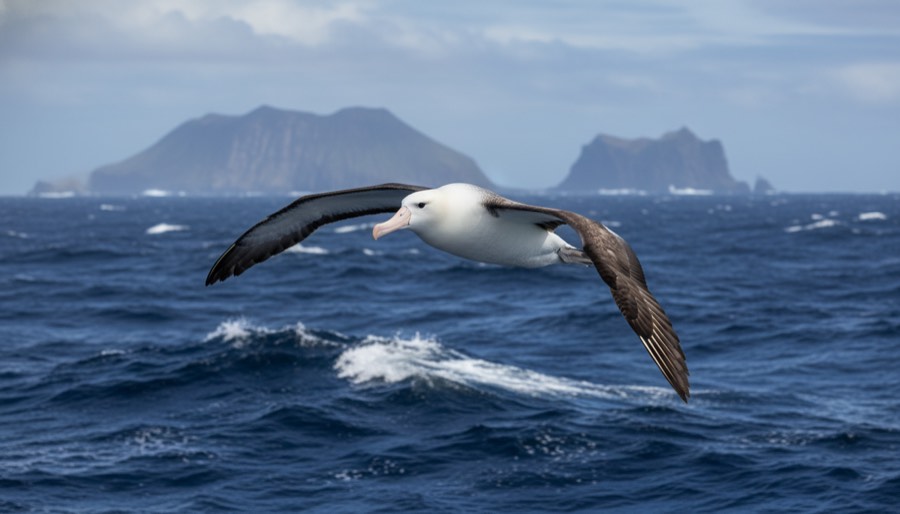
How? It locks its wings wide open and rides the wind, like a kite with feathers. It might fly more than 1,000 kilometers (about 620 miles) in a single day.
Its wings are the longest of any bird. The biggest albatross can stretch them about 3.4 meters (11 feet) wide. That's about three 5-year-olds, lying head to toe!
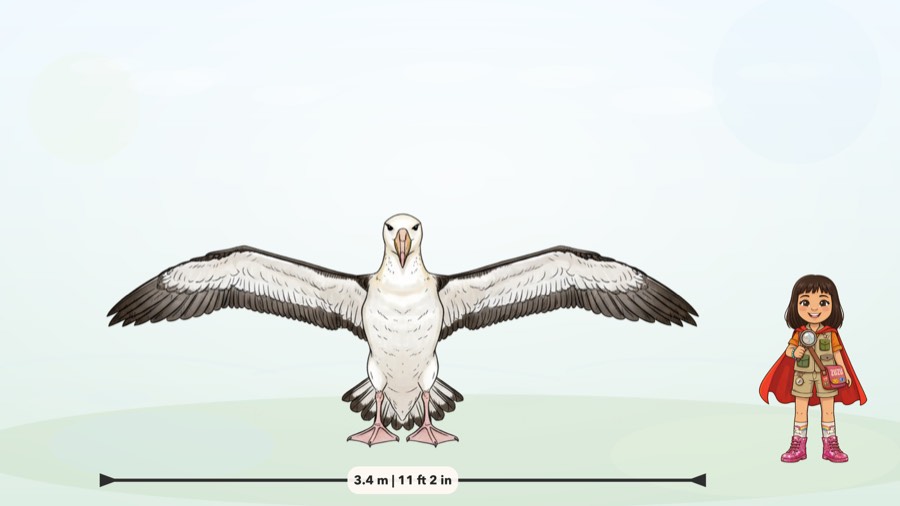
Can you stretch your arms out like wings? Now imagine them three times longer.
Here's a surprise. Albatrosses have a great sense of smell, and they can sniff out dinner from far away. They also drink salty seawater, then sneeze the extra salt out through tubes on their beaks.
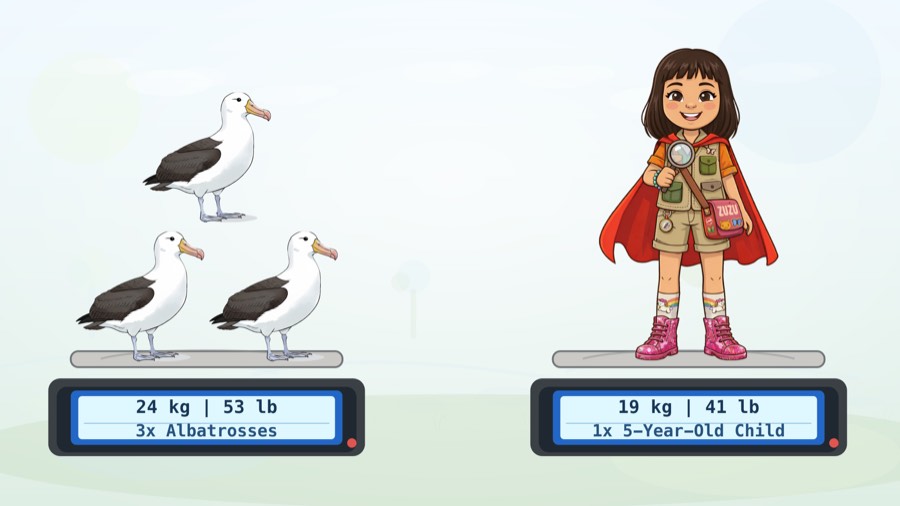
An albatross weighs about 8 kilograms (18 pounds), about as much as a small watermelon. A 5-year-old weighs about as much as two or three albatrosses.
A young albatross may spend years at sea without touching land. Albatrosses come ashore mostly to nest. Many pairs stay together for life, and each year they meet again and dance, spreading their wings and clacking their beaks.
Can you clack your teeth like a beak, and bob your head hello?
An albatross chick is a fluffy white ball. It stays in its nest for almost a whole year while its parents bring food from far across the sea. Then one day, it spreads its wings, and off it glides.
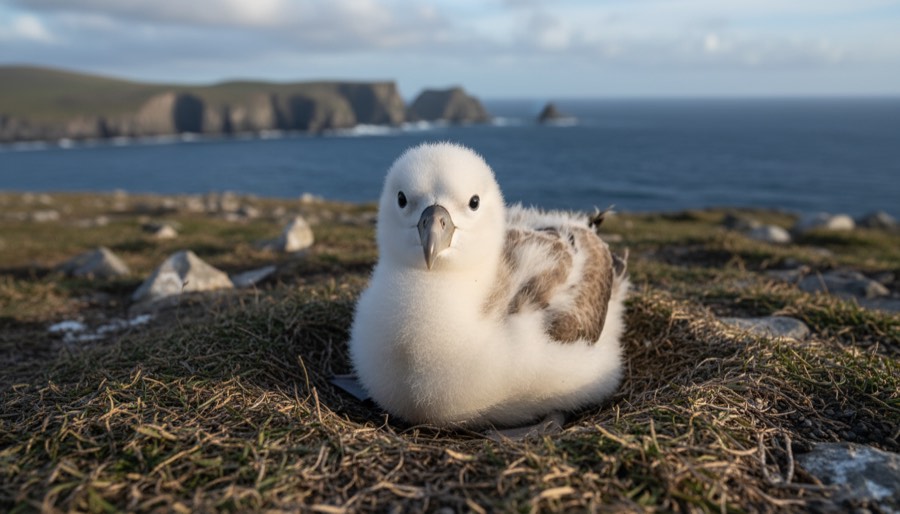
Some albatrosses live to be 70 years old. Can you imagine flying for that long?
Where to see an albatross
In the wild, albatrosses spend most of their lives far out over the ocean, and come to land only to nest. For the rest of us: almost no zoos can keep them, so the best places to meet one are a couple of special visits. Check each place's own website for seasons and times before you go.
North America
Makana and Alika
Monterey Bay Aquarium — Monterey, CaliforniaTwo Laysan albatrosses that can't live in the wild take part in the aquarium's feeding shows. They aren't on regular display, so check the schedule first.
Learn more →Nesting albatrosses
Kīlauea Point National Wildlife Refuge — Kauaʻi, HawaiʻiLaysan albatrosses nest on the hillside here in winter, and you can watch them glide past the cliffs.
Learn more →Around the world
Northern royal albatrosses
Royal Albatross Centre — Taiaroa Head, Dunedin, New ZealandThe only mainland nesting spot for these giants. Visitors watch from a glass observatory, and chicks hatch early in the year, so check the centre's website for the best time to see them.
Learn more →Albatrosses almost never live in zoos, so this list is short on purpose. Check each website before you visit, since seasons and schedules change.
For grown-ups
Most of the world's albatross species are listed as threatened by the IUCN, and the wandering albatross, with the longest wings of all, is Vulnerable. The biggest dangers are fishing hooks and nets at sea, plastic, and rats or mice that eat eggs and chicks on nesting islands. There's a hopeful story: South Georgia, a remote island where albatrosses nest, was declared free of rats in 2018 after a huge, years-long effort, and surveys have since found more nesting seabirds and songbirds there.
This week, one small hope action: choose to skip a single-use plastic item together, like a bag or a straw. Plastic that gets loose can end up in the ocean, where seabirds can mistake it for food. Many small choices add up.
Starters: "How would it feel to fly for hours without flapping?" "Why do you think an albatross comes back to the same partner every year?"
If your kid asks why are albatrosses in trouble? — this holds up: "Albatrosses fly across huge parts of the ocean, and sometimes they get tangled in fishing gear or find plastic. People are working on safer fishing and on protecting their nesting islands, and you can help by taking care of the ocean."
Keep exploring
Wild Atlas has a whole page built around this animal, with narrated facts, a scale comparison against a 5-year-old, and the honking calls an albatross really makes. It's in the Feathered Friends pack, an add-on pack in the app.
Meet the albatross in Wild Atlas →
For more, visit the Agreement on the Conservation of Albatrosses and Petrels (ACAP).
 Subscribe and the Farm Friends pack ($3.99) is free — yours to keep even if you unsubscribe.