Meet the Amur tiger! People around the world celebrate it on International Tiger Day, every July 29 — a day made up by the countries where wild tigers live, to say "let's look after them."
- International Tiger Day · Thursday, July 29 — Created at the 2010 St Petersburg Tiger Summit by the 13 tiger-range countries. Source
Read this one out loud together — it's even better in a soft, sneaky-tiger whisper.
Shh... listen closely. Can you hear an Amur tiger? No? That's because it's walking on soft, padded paws, and it makes almost no sound at all!
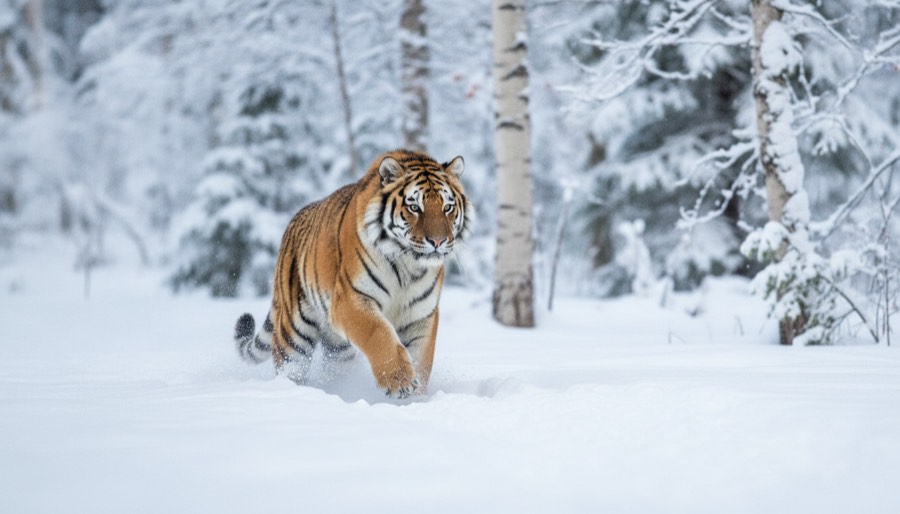
The Amur tiger is one of the biggest cats in the whole world. It lives in the cold, snowy forests of far-eastern Russia. A thick, furry coat keeps it warm and cosy, even when snow is falling all around.
Here's a secret about those stripes. No two tigers have the same pattern. Your fingerprints are all your own, and so are a tiger's stripes! Even the skin under its fur is striped.
Can you trace a pretend stripe on your arm?
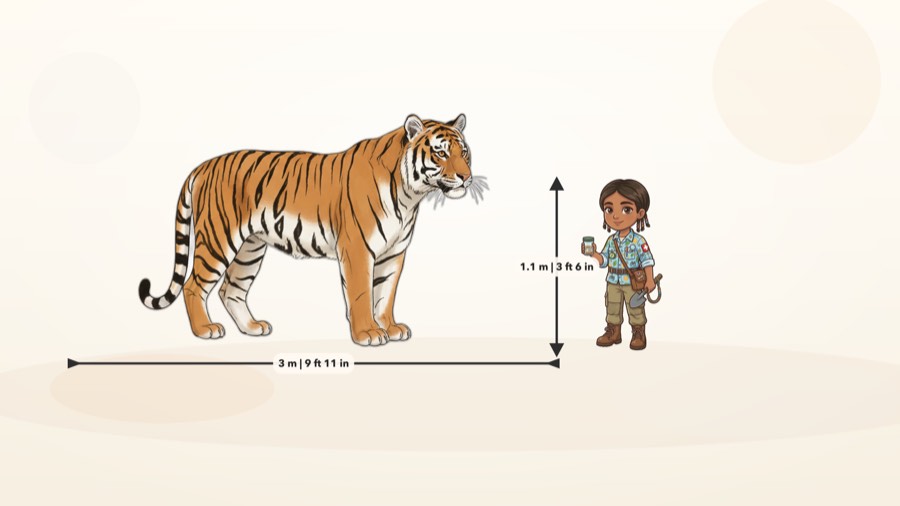
A big Amur tiger can be about 3 meters (almost 10 feet) long from nose to tail. That's longer than almost three 5-year-olds lying head to toe!
An Amur tiger can weigh about 200 kilograms (441 pounds). That's about as much as 11 five-year-olds standing together on one big scale.
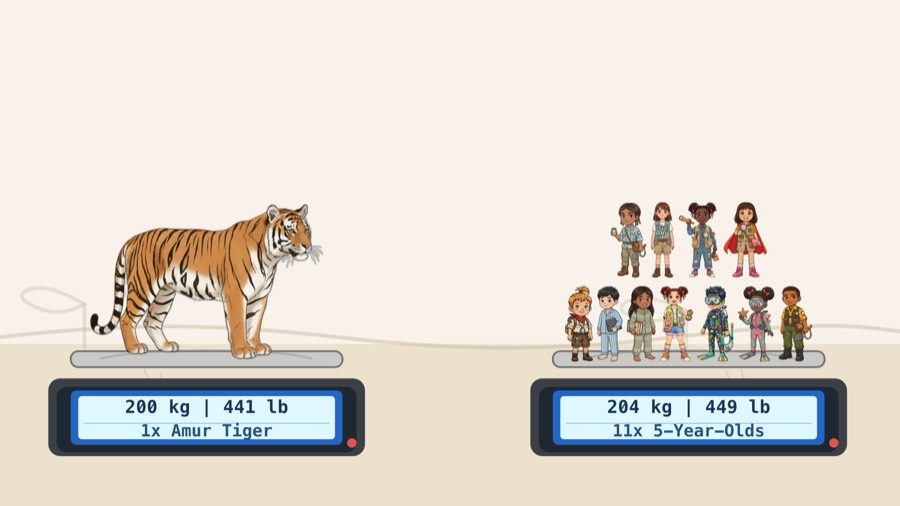
Can you picture 11 friends on one scale?
Tigers also love water. The Amur tiger is a strong swimmer, even in chilly rivers. Most cats don't like getting wet, but not this one!
And what does a tiger sound like? Far away, it can let out a deep, rumbling roar that booms through the trees. Up close and friendly, it makes a soft, puffing sound called a chuff.
Can you try a gentle chuff? Puff your cheeks and blow out softly.
Tiger cubs are born tiny. They stay close to their mom, learning how to creep through the forest, until they are about two years old.
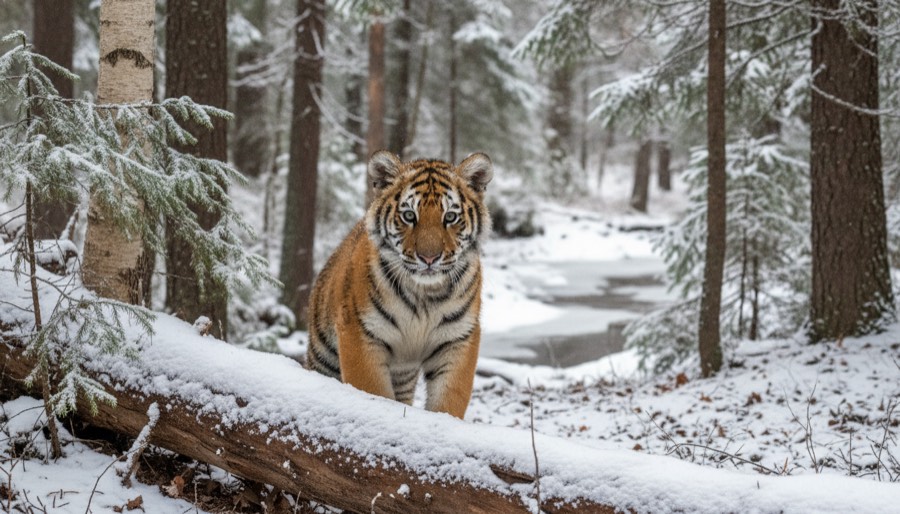
Now you know the Amur tiger's secrets: silent paws, fingerprint stripes, and a love of snowy swims.
Where to see an Amur tiger
In the wild, Amur tigers live in the snowy forests of far-eastern Russia and nearby parts of China, where they are very hard to spot. For the rest of us, these zoos around the world have Amur tigers you can visit.
North America
Amur tigers
Minnesota Zoo — Apple Valley, MinnesotaLook for the tigers on the zoo's Northern Trail. Over 40 tiger cubs have been born here since it opened!
Learn more →Amur tigers
Saint Louis Zoo — St. Louis, MissouriPart of a zoo team effort to help Amur tigers thrive.
Learn more →Amur tigers
Toronto Zoo — Toronto, OntarioMeet the world's biggest wild cat family up close.
Learn more →Amur tigers
Wilder Institute / Calgary Zoo — Calgary, AlbertaLook for them in the zoo's Imagine Asia area.
Learn more →Amur tigers
Roosevelt Park Zoo — Minot, North DakotaHome to a tiger family with an outdoor Amur Tiger River Valley.
Learn more →Around the world
Amur tigers
Zoo Zürich — Zürich, SwitzerlandTigers share a brand-new big-cat habitat called Panthera.
Learn more →Animals sometimes move between zoos — check the zoo's own website before you visit.
For grown-ups
Tigers are listed as Endangered by the IUCN, mostly because of habitat loss and poaching. There's a hopeful story: Amur tigers once dropped to just a few dozen animals in the 1940s. Protection in Russia helped them recover, and a 2022 census counted about 750 in the Russian Far East. That's still a small number, so careful protection matters — but it shows that people can change a story.
A family hope action: choose paper and wood products from forests that are looked after well (look for a forest-stewardship label), and talk together about why forests matter to animals like tigers.
Starters: "How do you think a tiger stays so quiet?" "What would you do if you lived in the snow all winter?"
If your kid asks are tigers dangerous? — this holds up: "Tigers are wild animals who want to be left alone, and they're strong, so people who study them stay far away and watch quietly. At the zoo, there's always a safe barrier between us and them."
Keep exploring
Wild Atlas has a whole page built around this animal — narrated facts, the full scale comparison against a 5-year-old, and the sounds an Amur tiger really makes. It's part of the Legends of the Wild pack.
Meet the Amur tiger in Wild Atlas →
For more, visit the IUCN Red List.
 Subscribe and the Farm Friends pack ($3.99) is free — yours to keep even if you unsubscribe.