This week's Wild Atlas Spotlight: last Saturday was World Migratory Bird Day, so this week we're following the greatest traveler of them all — a bird that flies from one end of the Earth to the other, every single year.
About this day: There's no official day for the Arctic tern this week, so this one is a Wild Atlas Spotlight.
Read this one out loud together — it's short, and it's even better with your best 'kee-yah' bird call.
Every year, a bird that weighs about as much as a stick of butter flies from the top of the world to the bottom — and back again. That's the longest trip of any animal scientists have ever tracked!
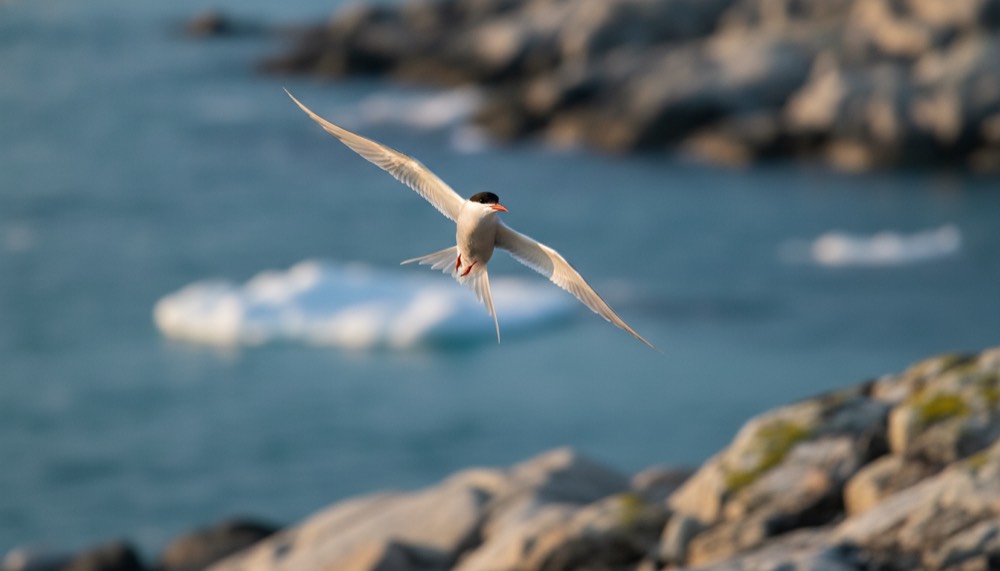
Meet the Arctic tern: a small, silvery-white seabird with a black cap and a bright red beak and legs. Its tail splits into two long streamers, so some people call it the "sea swallow."
Can you flap your arms like tern wings and fly from one end of the Earth to the other?
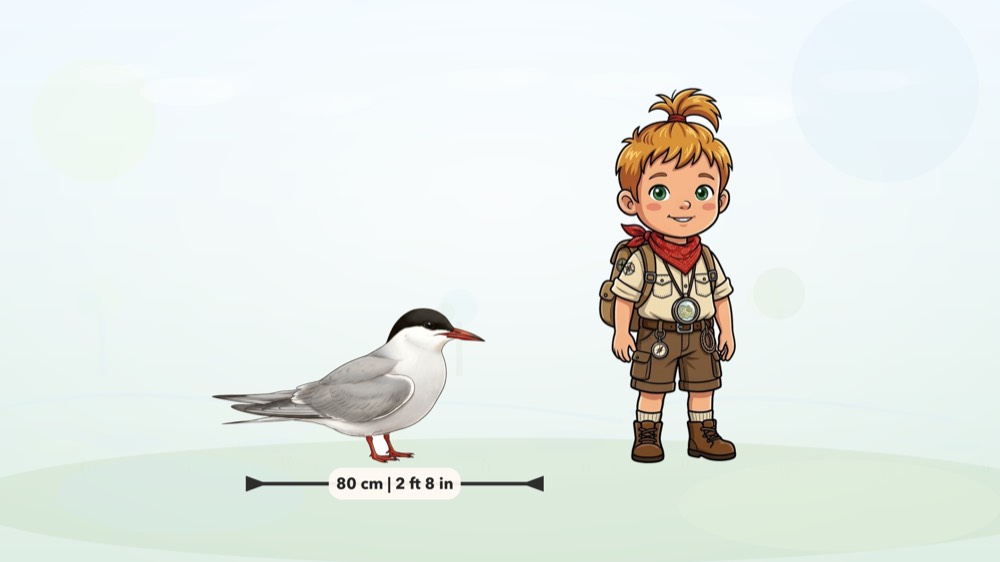
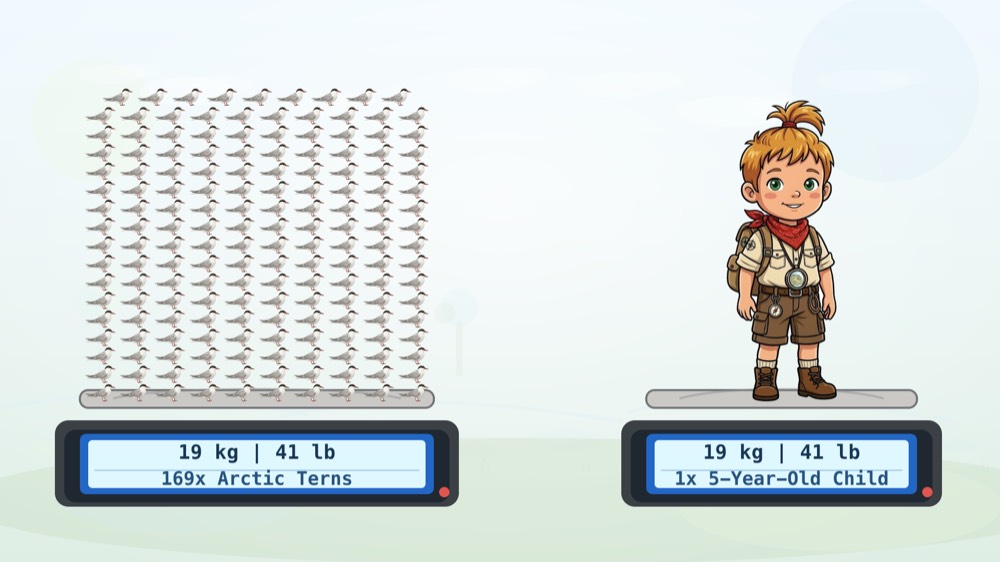
Stretch its wings out wide, and they're about three-quarters as wide as a 5-year-old is tall. But the bird itself is tiny — it would take about 170 Arctic terns on a scale to weigh as much as one 5-year-old!
Can you make the loudest "kee-yah" tern call you can? That's one of the calls they make.
It hunts by hovering over the sea, then zooming down — splash! — to grab a little fish.
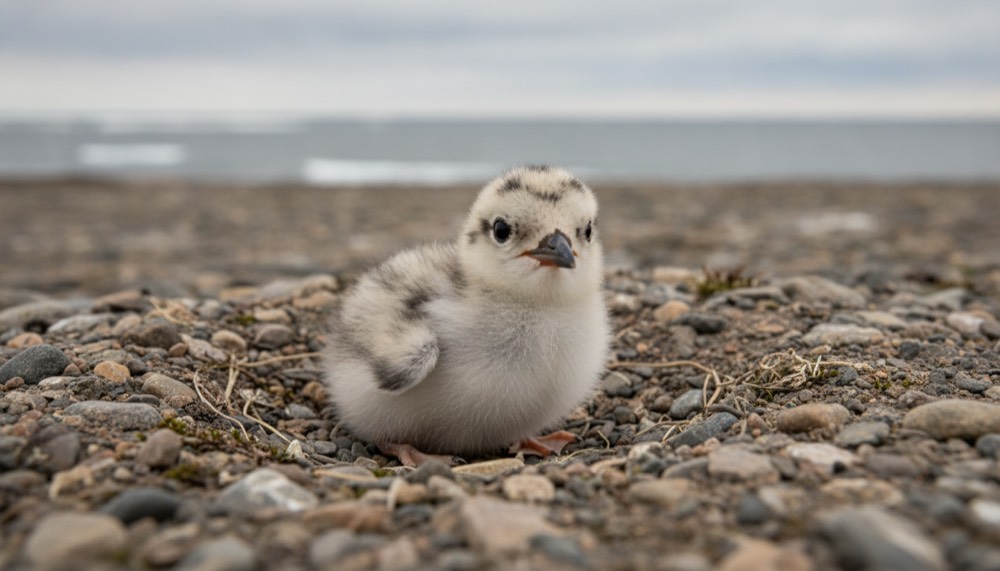
Tern chicks hatch fluffy, in a shallow dip in the ground. Mom and Dad take turns keeping the eggs warm, then bring their chick fish to eat. Chicks can fly when they're about a month old.
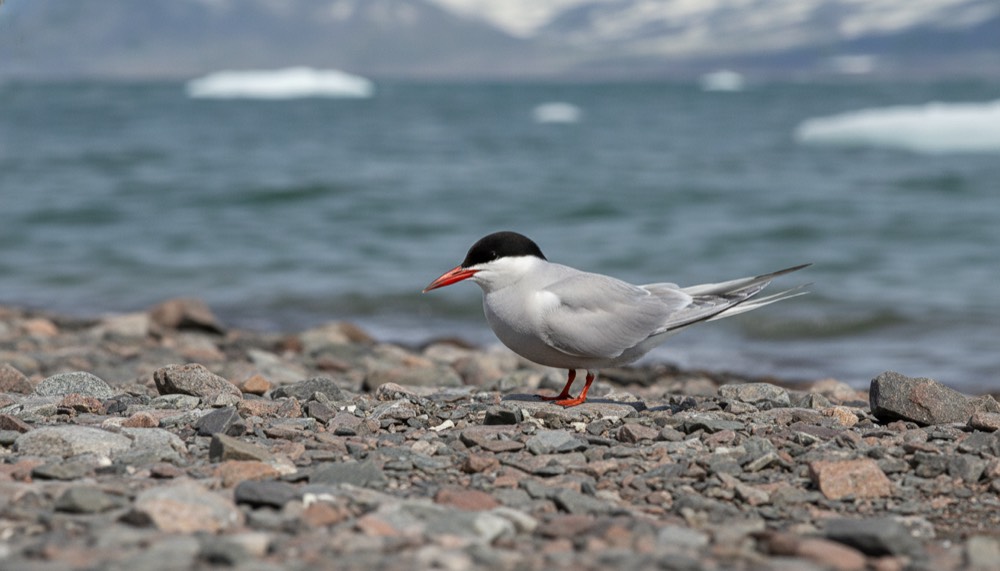
In summer, Arctic terns nest on rocky, grassy shores near the top of the world. Then they fly all the way to the icy ocean near the bottom of the world for a second summer — so they probably see more sunshine than almost any animal alive.
Can you stand on one leg like a tern resting on a rock?
In its whole life, an Arctic tern can fly far enough to reach the Moon and back three times.
Where to see an Arctic tern
Arctic terns spend much of the year traveling between the top and bottom of the world, so zoos and aquariums almost never keep them. In the wild, the best place to see one is near a northern coast in summer, when they nest on rocky islands and beaches. For the rest of us, a boat trip, a nature-center video, or a live seabird camera is the closest thing to meeting one.
North America
Puffin and tern island
Machias Seal Island, Gulf of Maine (boat from Cutler, Maine)Every summer, this small island fills with nesting Arctic terns and puffins. Visitors watch from a boat or a wooden hide, and landings aren't guaranteed.
Learn more →Maine's comeback islands
Maine Coastal Islands National Wildlife RefugeScientists helped Arctic terns start nesting here again after years without them. The islands are viewed from boats only, during nesting season.
Learn more →Around the world
The Farne Islands
Northumberland, England (boat from Seahouses)Hundreds of pairs of Arctic terns nest here, and parents swoop close to guard their chicks — visitors wear hats just in case!
Learn more →These are wild seabirds on nesting islands, so a sighting depends on the season (roughly May to August) and the weather. Always watch from a boat, path or hide with a guide, and never walk into a nesting colony.
For grown-ups
Arctic terns aren't in danger worldwide — the IUCN lists them as Least Concern. But the population trend is decreasing, and in the UK they're now regionally Red, the highest concern level there. Some nesting spots are having a harder time, especially where the small fish terns eat have grown scarce, which scientists link to warming seas.
There's a hopeful story too. In Maine, scientists used wooden decoys and recorded bird calls to invite terns back to islands — and the terns came home. By 1996, one of those islands, Seal Island, had about 950 pairs of Arctic terns — the biggest colony in Maine.
Family hope action: on a beach, with a grown-up, pick up any plastic you find, and ask your grown-up to handle any fishing line or hooks — both can trap seabirds like terns. It won't reach a nesting island by itself, but it's the same idea as Maine's helpers: the ocean stays safer for terns when the people near it look after it.
Starters: "If you could fly anywhere in the world twice a year, where would you go?" "How do you think a tiny bird finds its way across the whole planet without a map?" "What do you think it would feel like to see the sun almost all the time, like a tern does?"
If your kid asks does the tern ever get lost, or not make it home? — this holds up: "Sometimes the trip is hard, and not every tern makes it every year — but Arctic terns are amazing at finding their way, and most make this same journey again and again, for up to 30 years."
Keep exploring
Arctic terns aren't in Wild Atlas yet, but Wild Atlas has more than 250 other animals to explore — including fellow seabirds like the Atlantic puffin and the albatross — with narrated facts and full scale comparisons against a 5-year-old.
Explore 250+ animals in Wild Atlas →
For more, visit Egevang et al. 2010, Tracking of Arctic terns reveals longest animal migration (PNAS).
 Subscribe and the Farm Friends pack ($3.99) is free — yours to keep even if you unsubscribe.