Meet the Arctic wolf! People around the world celebrate wolves on International Wolf Day (August 13) and during National Wolf Awareness Week in the United States (the third week of October).
- International Wolf Day · Friday, August 13 — Grassroots; wolf conservation groups adopted it with no single founding organisation. The International Wolf Center marks it. Source
- National Wolf Awareness Week · Starts Sunday, October 17 — Established in 1996 by Defenders of Wildlife. Governors in more than half of US states have proclaimed it. Source
Read this one out loud together. Save your best howl for the end.
Arctic wolves have fur on the bottoms of their paws!
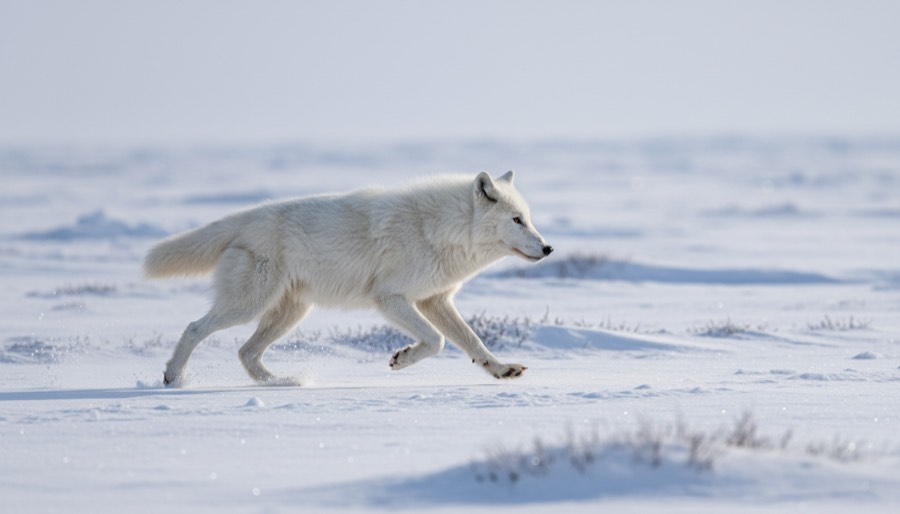
Fur on their feet works like cozy socks. It keeps their paws warm on the ice and snow.
Arctic wolves live in the far north, in Canada and Greenland. It is one of the coldest, snowiest places on Earth. Their thick double coat is so warm they can curl up and nap outside in a snowstorm. Their ears are small and their noses are short, which helps keep the cold out too.
And their white coat? It helps them blend in with the snow.
Here is a wow fact. In summer up there, the sun doesn't set for months. Arctic wolves can hunt in daylight all day and all night!
Wolves are team players. A pack works together to find food, and it can travel a very long way in a single day. That's like walking from your town to the next town over.
Can you tiptoe like a wolf across the snow?
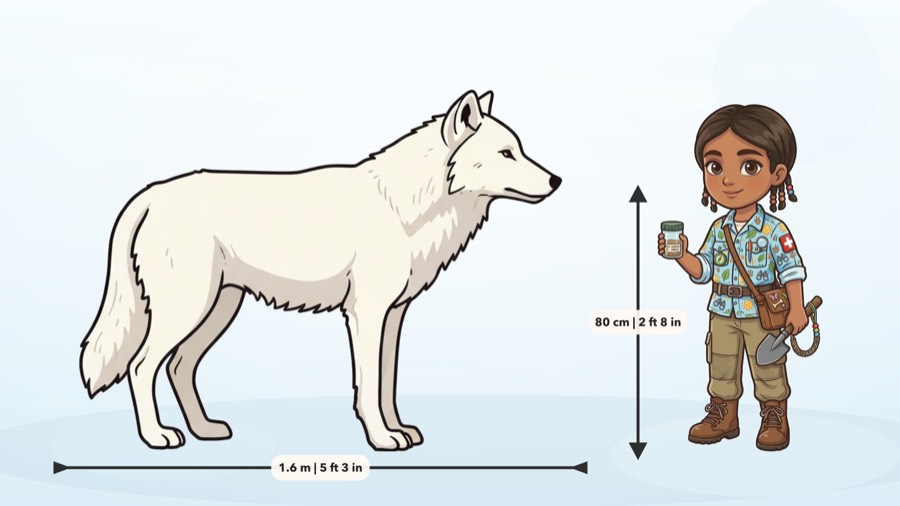
How big is an Arctic wolf? A big one is about 80 centimeters (2 feet 8 inches) tall at the shoulder. That's about as high as your chest. From nose to tail tip, it's about 1.6 meters (5 feet 3 inches) long.
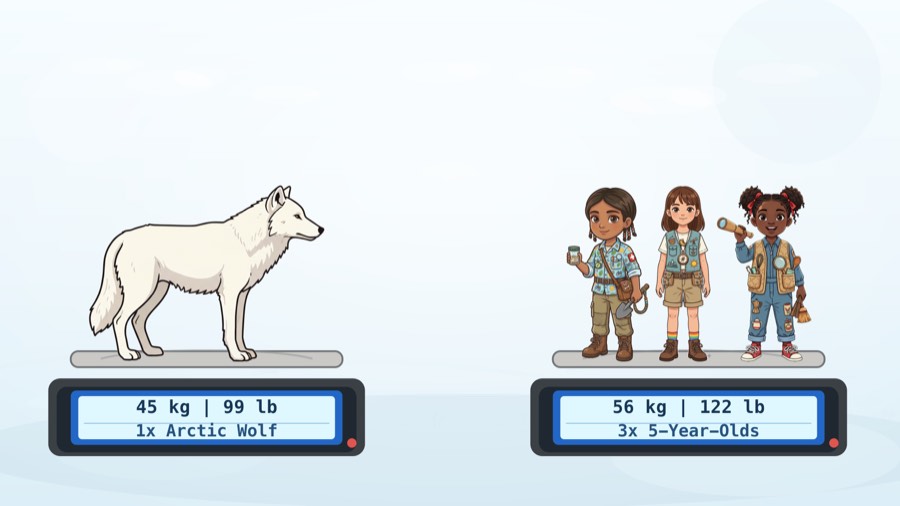
A big Arctic wolf weighs about 45 kilograms (99 pounds). That's about as much as two or three five-year-olds standing on one scale!
Wolves talk to each other with a howl. It can ring out long and loud across the snowy land. Can you howl like a wolf? Go ahead. Aaa-oooooo!
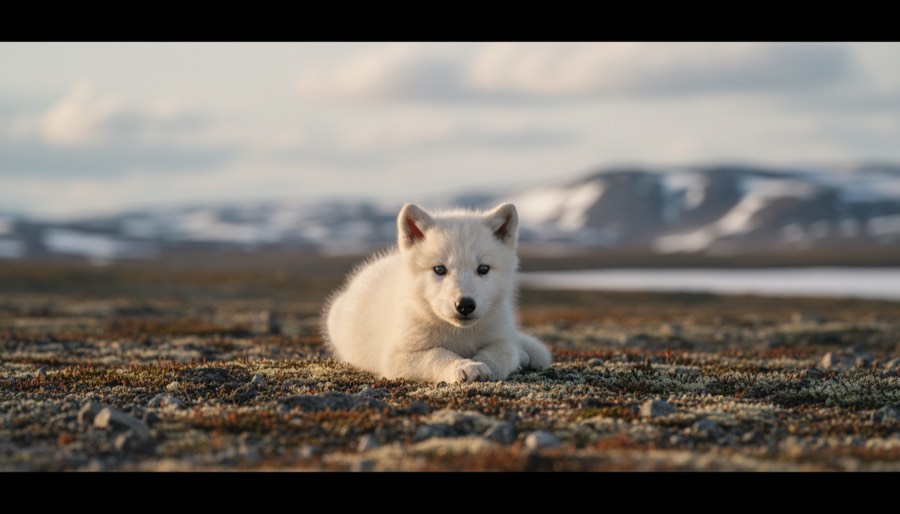
Baby wolves are called pups. They start out tiny, with their eyes closed, and they grow up with their pack close by.
Now you know the wolf with the warm, furry paws.
Where to see an Arctic wolf
In the wild, Arctic wolves live far up north in Canada and Greenland, where very few people go. For the rest of us, these zoos and parks have Arctic wolves you can visit.
North America
Tundra Trek
Toronto Zoo — Toronto, OntarioThe zoo's Arctic wolves live in its Tundra Trek area.
Learn more →R. Mollot Arctic Wolf Habitat
Edmonton Valley Zoo — Edmonton, AlbertaA roomy tundra-style home that opened in April 2025.
Learn more →Around the world
Arctic wolves
Schönbrunn Zoo — Vienna, AustriaA pack of white Arctic wolves lives here, in the heart of Vienna.
Learn more →Arctic wolves
Zoo de Beauval — Saint-Aignan, FranceMeet the white wolves of the far north, all the way in France.
Learn more →First Arctic wolf pups in Japan
Nasu Animal Kingdom — Tochigi, JapanTwo pups were born here in May 2024, a first for Japan.
Learn more →Animals sometimes move between zoos — check the zoo's own website before you visit.
For grown-ups
Arctic wolves are a subspecies of the gray wolf, which the IUCN lists as Least Concern; the Arctic wolf itself isn't assessed separately. They live so far north that few people share their home, so they face fewer pressures than many wolves farther south. Scientists are still watching how a warming Arctic may change the tundra and the animals the wolves depend on.
A hopeful story: in 2025, Edmonton Valley Zoo opened a much larger Arctic wolf habitat, and in 2024 Nasu Animal Kingdom in Japan welcomed the country's first Arctic wolf pups. Zoos like these help people meet wolves up close and care about them.
One family hope action: wolves and the animals they hunt depend on healthy, wild places. This week, try walking or biking one short trip instead of riding in a car, and talk about how that helps keep wild places cool.
Starters: "What do you think it sounds like when a whole pack howls?" "How would you stay warm if you lived somewhere really snowy?" "Why might wolves work better as a team?"
If your kid asks are wolves dangerous? — this holds up: "Wolves are wild animals, and they mostly want to keep to themselves. Arctic wolves live so far away that they almost never meet people. We admire them best from a distance, with our eyes and our binoculars."
Keep exploring
Wild Atlas has a whole page built around this animal — narrated facts, the full scale comparison against a 5-year-old, and the howl an Arctic wolf actually makes. The Arctic wolf is in the Planet Pioneers pack, a paid pack in the app.
Meet the Arctic wolf in Wild Atlas →
For more, visit NatureServe Explorer.
 Subscribe and the Farm Friends pack ($3.99) is free — yours to keep even if you unsubscribe.