Meet the capybara! There's no official capybara day on the calendar, so this one is simply a Wild Atlas Spotlight — the calmest, friendliest giant we know.
- Wild Atlas Spotlight · Friday, July 9
Read this one out loud together — it's short, and it's best in your calmest, most relaxed voice.
Capybaras are the biggest rodents in the whole world — and the friendliest!
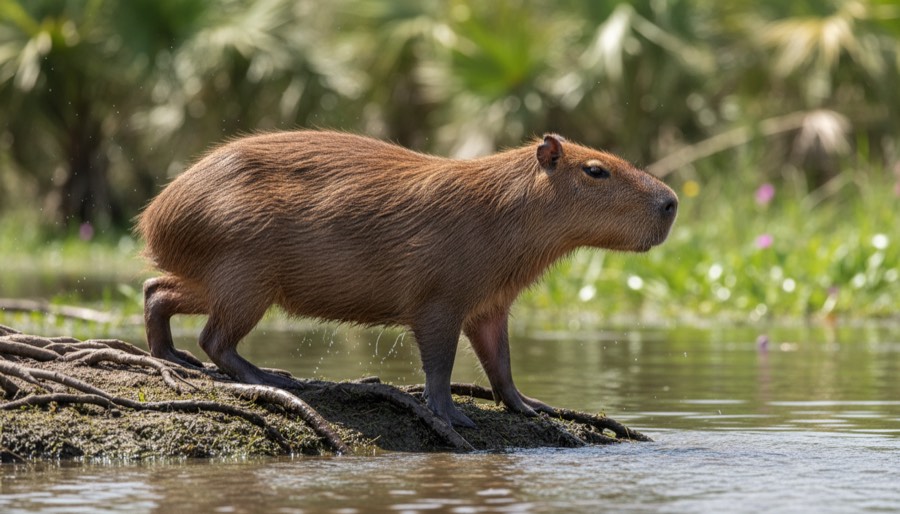
A capybara is a rodent, like a mouse or a guinea pig, just much, much bigger. It lives near rivers, lakes, and wetlands in South America. It's so calm and gentle that birds, and even monkeys, sit on its back like a comfy chair!
Can you sit as still and calm as a capybara?
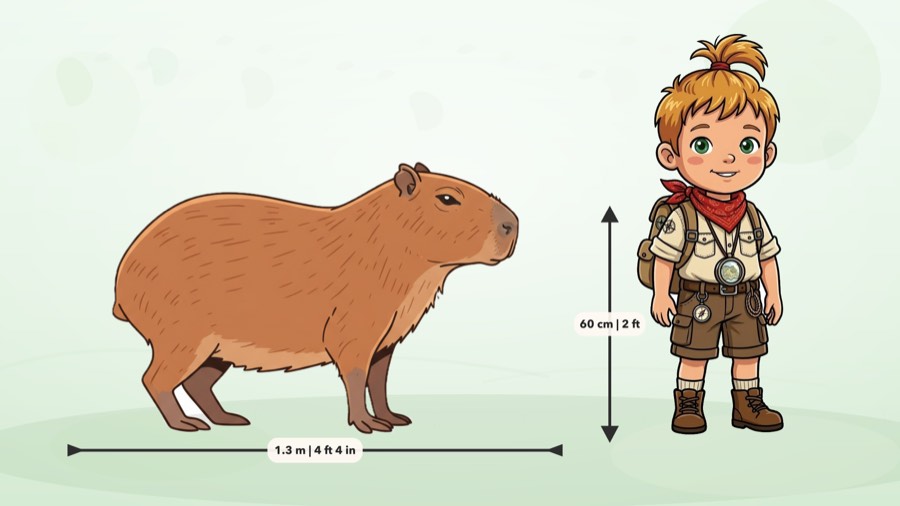
A capybara is about 1.3 meters (4 feet 4 inches) long. That's longer than a 5-year-old is tall! At the shoulder, it stands about 60 centimeters (2 feet) high, which reaches about up to your belly.
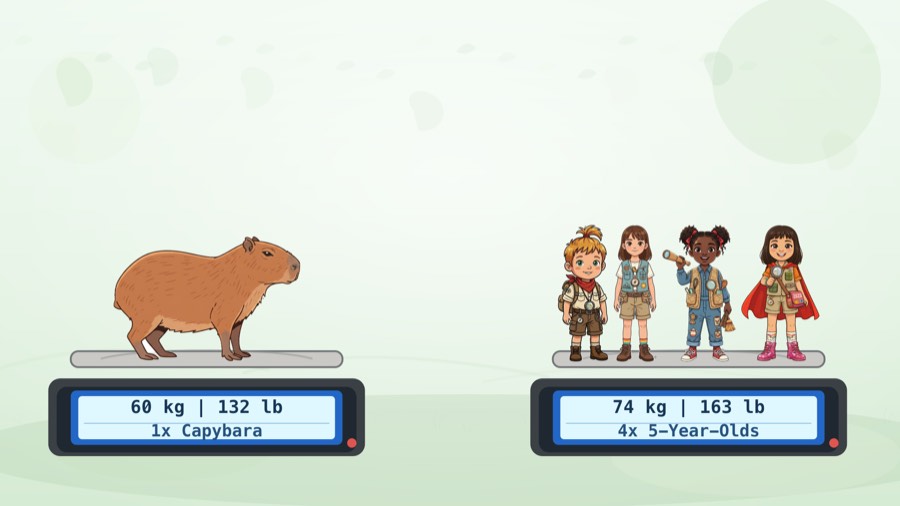
A grown-up capybara weighs about 60 kilograms (132 pounds). That's about as much as three or four 5-year-olds, all standing on one big scale!
It's related to guinea pigs, but it's about 50 times bigger.
Capybaras love the water. Their feet are a little bit webbed, and their eyes, ears, and nose sit high on top of their head. That means a capybara can swim, or float with just its nose sticking out, and still see and hear everything. It can even hold its breath for up to five minutes.
Can you hold your breath and count slowly? Try it for just a few seconds. Don't go for five minutes!
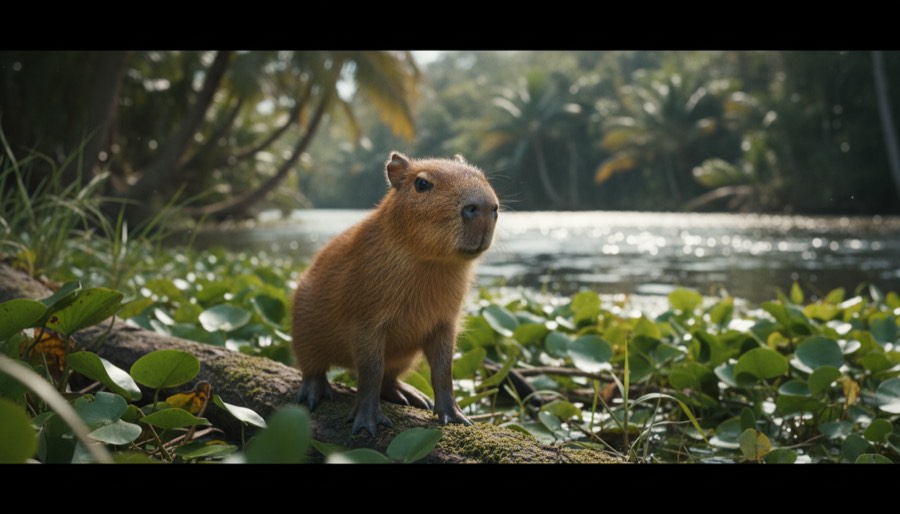
A baby capybara can run and swim just hours after it's born. Capybaras live together in a herd, usually 10 to 20 of them, and they chat in squeaks, barks, purrs, and whistles.
A capybara's front teeth never stop growing. So it munches grass all day, and that keeps its teeth just the right size. It also takes mud baths to cool off on hot days.
Can you squeak and whistle like a capybara?
Where to see a capybara
In the wild, capybaras live near rivers, lakes, and wetlands across South America. For the rest of us, these zoos have capybaras you can visit.
North America
Capybaras in Elephant Odyssey
San Diego Zoo — San Diego, CaliforniaThese capybaras share a habitat with tapirs, and they have their own pool.
Learn more →A brand-new capybara pair
Nashville Zoo — Nashville, TennesseeTwo young capybaras joined the zoo in 2026. They first lived in the zoo's nursery, and were moving to a new South American habitat, so check the zoo's website to see where to find them.
Learn more →Capybara behind-the-scenes programs
Turtle Back Zoo — West Orange, New JerseyThe zoo runs special capybara tours and breakfast programs — look at their events page for dates.
Visit Turtle Back Zoo →Around the world
Capybaras by the anteater paddock
Chester Zoo — Chester, EnglandLook for them in a shared paddock, just before the entrance to Islands.
Learn more →Capybaras in Berlin
Zoo Berlin — Berlin, GermanyOne of the world's biggest zoos lists capybaras among its animals.
Visit Zoo Berlin →Animals sometimes move between zoos — check the zoo's own website before you visit.
For grown-ups
Capybaras are listed as Least Concern on the IUCN Red List, which means there are plenty of them overall. That's good news, but some local groups still face trouble from hunting and from losing their wetland homes.
There's a hopeful side to this, too: capybaras do well when rivers, marshes, and grasslands stay healthy, and they thrive in many protected areas across South America. Looking after wetlands helps capybaras and the many other animals that share them.
This week's hope action: wetlands need clean water. Try picking up litter near a pond, creek, or storm drain, or planting something native that soaks up rain in your yard or a pot.
Starters: "Why do you think so many animals feel safe sitting near a capybara?" "What would you do on a hot day if you lived in a river?"
If your kid asks why do capybaras sit in water so much? — this holds up: "It keeps them cool on hot days, and it's also a safe place to hide. Capybaras are great swimmers, so the water is like their cozy hideout."
Keep exploring
Capybara is one of the animals in the Rainforest Explorers pack in Wild Atlas — with narrated facts, the full scale comparison against a 5-year-old, and the sounds a capybara makes.
Meet the capybara in Wild Atlas →
For more, visit the IUCN Red List.
 Subscribe and the Farm Friends pack ($3.99) is free — yours to keep even if you unsubscribe.