Meet the cassowary! People around the world celebrate it on September 26, World Cassowary Day.
- World Cassowary Day · Sunday, September 26 — Started in 2014 by Far North Queensland conservationists (Paul Webster, CAFNEC, Rainforest Rescue). Source
Read this one out loud together — save your deepest, rumbliest voice for the end.
A cassowary wears a helmet that grew on its own!
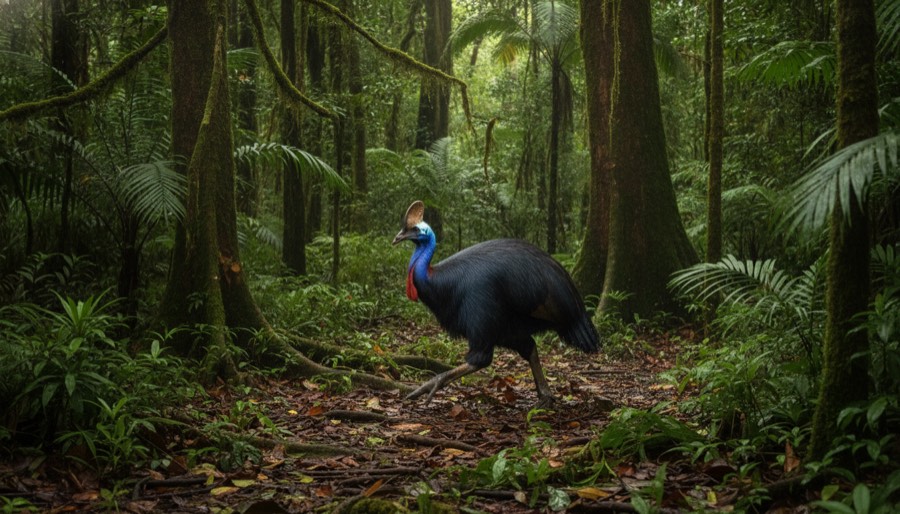
It's a huge bird that lives deep in the rainforest. Its neck and head are bright blue, with two red flaps that wobble when it walks. And on top of its head sits a tall, bony helmet called a casque. It may help the cassowary push through thick plants.
A cassowary can't fly at all. But its strong legs can make it run fast and jump high!
Can you stomp through the forest on big bird legs?
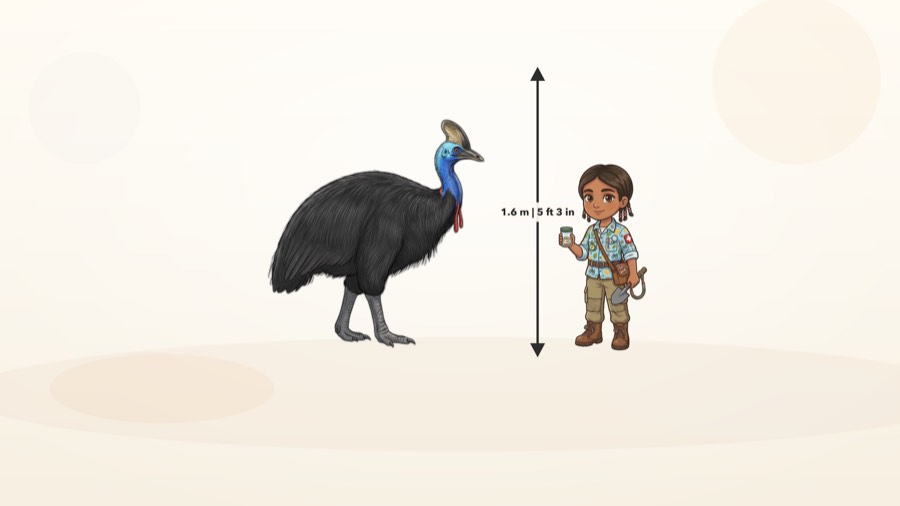
A big cassowary can stand about 1.6 meters (5 feet 3 inches) tall. That's about one and a half times as tall as you are, if you're five! It's one of the heaviest birds in the whole world.
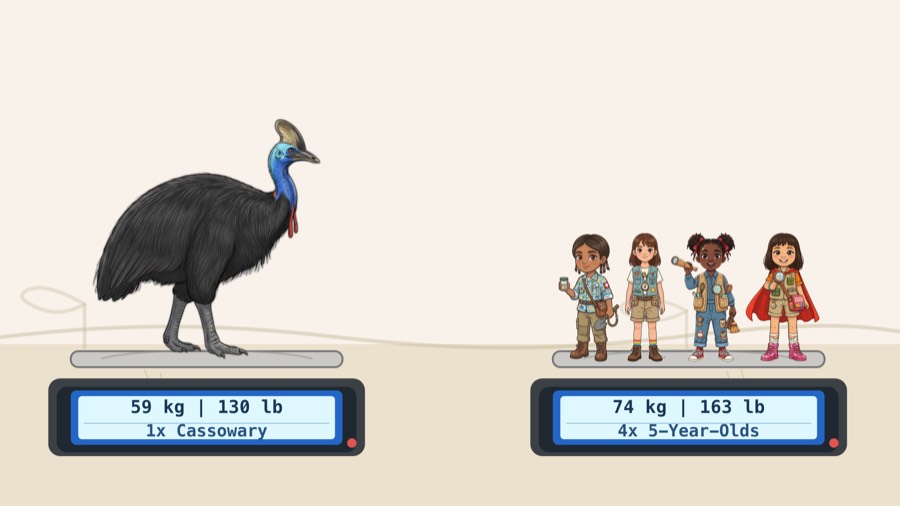
A cassowary weighs about 59 kilograms (130 pounds). Picture three or four of your friends standing on one big scale — that's about how much it takes to match one cassowary!
Cassowaries are the rainforest's gardeners. They love fruit that has fallen on the forest floor, and they swallow it whole. Then they wander off, and the seeds they leave behind can grow into brand new trees.
Can you hear that? Cassowaries make a deep, rumbling boom — so low you can almost feel it in your chest. It's one of the lowest sounds any bird makes.
Can you make your lowest, rumbliest sound?
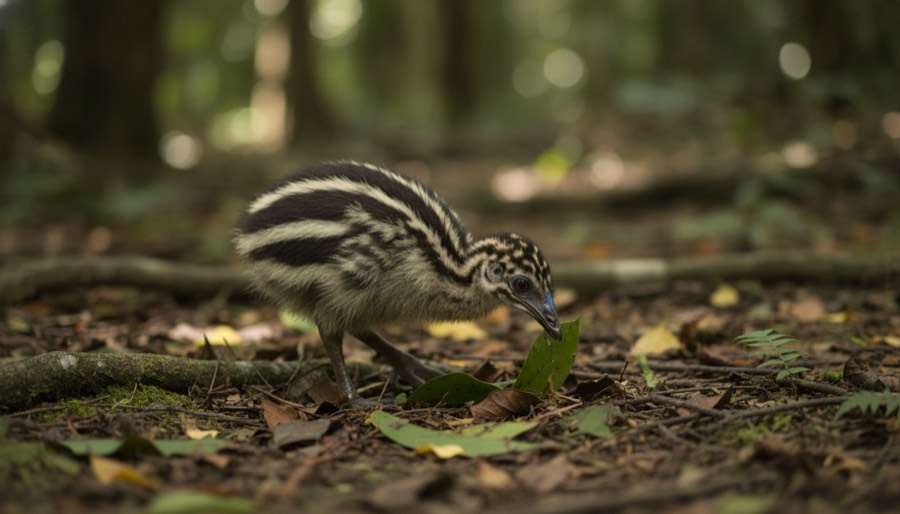
Baby cassowaries have a surprise, too. They're striped, soft, and fluffy, with no helmet yet — and it's the dad who keeps the eggs warm and looks after the chicks!
Can you stripe-stomp like a cassowary chick?
We always watch this big bird from far away. It likes lots of space, and that's just how a rainforest gardener likes it.
Where to see a cassowary
In the wild, cassowaries live in the rainforests of northern Australia and New Guinea, where they stay hidden among the trees. For the rest of us, a few zoos around the world have cassowaries you can visit.
North America
Southern cassowaries
San Diego Zoo Safari Park — Escondido, CaliforniaYou can spot southern cassowaries in the Walkabout Australia area.
Visit San Diego Zoo Safari Park →A southern cassowary in the Bird House
Smithsonian's National Zoo — Washington, D.C.Look for a cassowary in the Bird House.
Visit the National Zoo →A double-wattled cassowary
Houston Zoo — Houston, TexasThe double-wattled cassowary is another name for the southern cassowary, because of the two red wattles hanging from its neck. Check the zoo's page to confirm before you go.
Visit Houston Zoo →Around the world
Cassowaries
Australia Zoo — Queensland, AustraliaWatch cassowaries forage for forest fruits, close to where they live in the wild.
Visit Australia Zoo →Cassowaries
Taronga Zoo — Sydney, AustraliaTaronga keeps cassowaries in a rainforest-style home. Check the zoo's website for who is on show.
Visit Taronga Zoo →Animals sometimes move between zoos — check the zoo's own website before you visit.
For grown-ups
The southern cassowary is listed as Least Concern worldwide on the IUCN Red List, but the picture is more mixed than that sounds. In Australia it is listed as Endangered, mainly because rainforest has been cleared and split up, and because cassowaries are sometimes hurt on roads. There's a hopeful story in the day itself: it was started in 2014 by conservationists in Far North Queensland, and rainforest replanting and community care for cassowary country are part of that work. Cassowaries are called "rainforest gardeners" because the seeds they swallow and drop help new trees grow.
A family hope action: plant something. A pot of native flowers on a windowsill or a tree for your yard is a small version of what cassowaries do for the rainforest. Or look for local tree-planting days.
Starters: "If you were a rainforest gardener, what would you plant?" "Why do you think a bird would want a helmet?"
If your kid asks are cassowaries dangerous? — this holds up: "Cassowaries are shy and like to keep to themselves. They have strong legs and sharp claws, so they can protect themselves if they feel cornered. That's why people always give them lots of space and just watch quietly from far away."
Keep exploring
Wild Atlas has a whole page built around this animal — narrated facts, the full scale comparison against a 5-year-old, and the deep rumble a cassowary actually makes. The cassowary lives in the Legends of the Wild pack, which is a paid pack.
Meet the cassowary in Wild Atlas →
For more, visit Australian Museum — Southern cassowary.
 Subscribe and the Farm Friends pack ($3.99) is free — yours to keep even if you unsubscribe.