Meet the chimpanzee! People around the world celebrate it on World Chimpanzee Day (July 14) and International Primate Day (September 1).
Read this one out loud together — it's more fun with a few chimp hoots and pant-laughs mixed in.
Chimpanzees make their own tools — and they use them to go fishing for snacks!
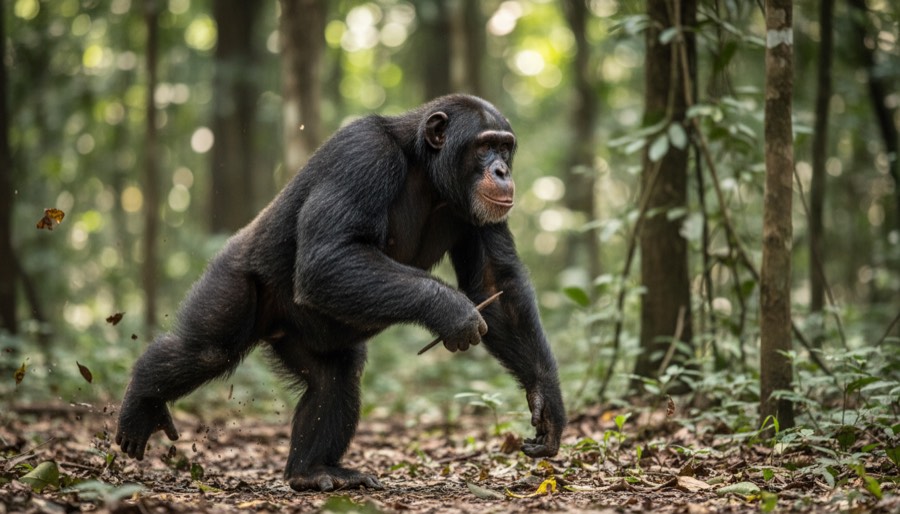
Here's how it works. A chimpanzee finds a thin stick and pokes it into a tiny hole in a termite mound. The termites grab on. Then out comes the stick, and the chimp licks them off. Yum!
Chimpanzees crack nuts, too. They put a nut on a flat stone and bang it with another rock, like a little hammer. Bang, bang, bang!
When a chimp is thirsty, it can chew up a bunch of leaves to make a sponge. It dips the sponge in water and then squeezes it into its mouth.
Can you pretend to be a chimp using a stick? What would you fish for?
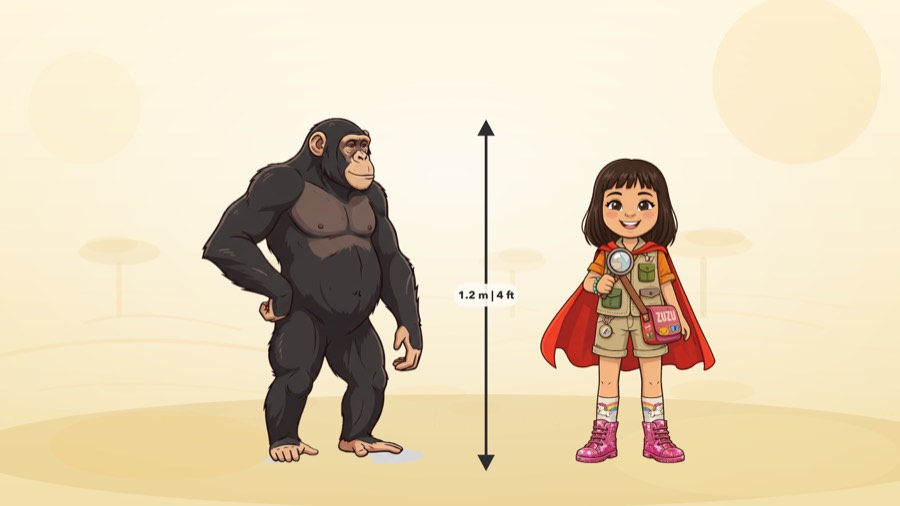
A chimpanzee stands about 1.2 meters (4 feet) tall. That's a little taller than a 5-year-old, who stands about 109 centimeters (3 feet 7 inches).
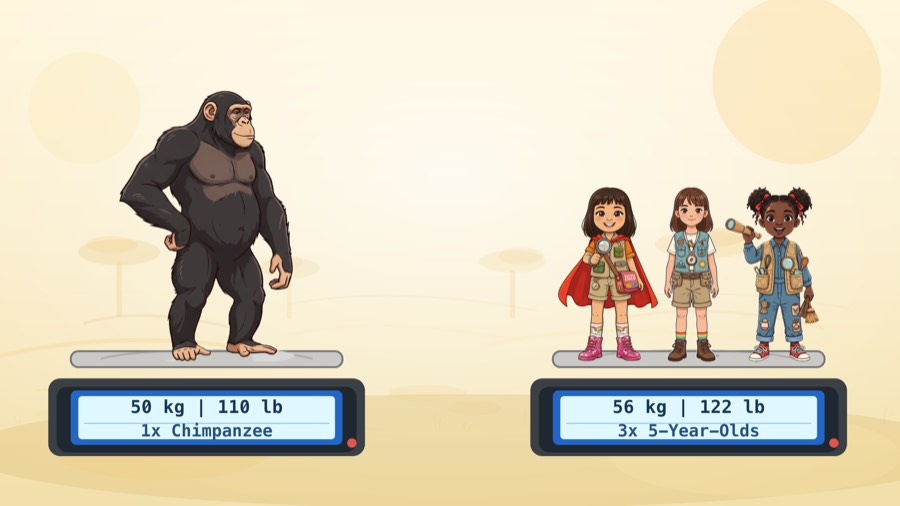
A chimpanzee weighs about 50 kilograms (110 pounds). That's almost the same as three 5-year-olds standing on one big scale together!
Chimpanzees are very good at being a family. They greet each other with hugs and kisses, and they pat each other on the back to say "it's okay." Every chimp even has its own fingerprints, just like you.
At bedtime, a chimpanzee doesn't go home. It builds a brand-new nest of leafy branches high up in a tree, and it makes a fresh one every night.
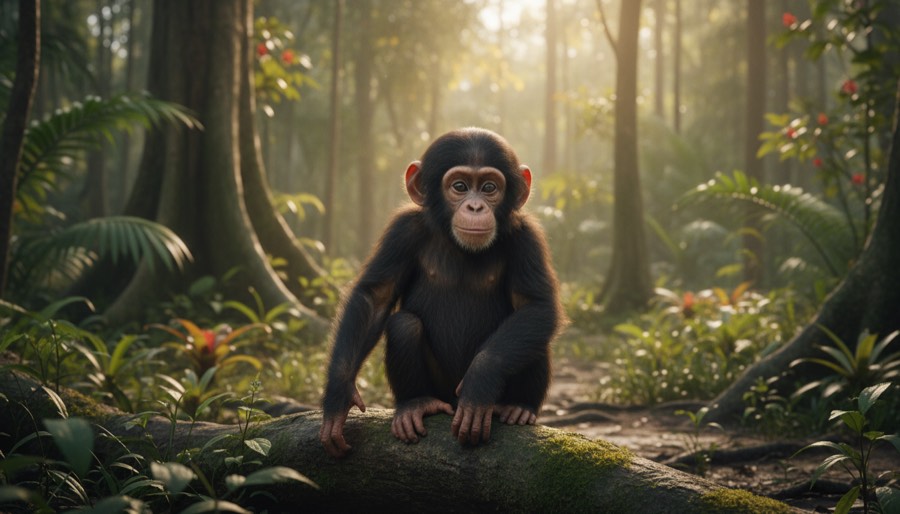
Baby chimpanzees ride on their mom's back, a little like a piggyback ride, for years. They watch everything their mom does, and that's how they learn to use tools.
Chimpanzees talk with hoots, screams, and pant-laughs when they play. Can you do a chimp hoot? Oooh-oooh-ooh-AH-AH! Now can you laugh like a chimp, with lots of panting?
Where to see a chimpanzee
In the wild, chimpanzees live in forests and woodlands across Africa. For the rest of us, these zoos and sanctuaries around the world care for chimpanzees.
North America
Chimpanzees
Lincoln Park Zoo — Chicago, IllinoisSee a habitat with tall trees, long hanging vines, and working termite mounds, just right for chimp tool-time.
Learn more →Chimpanzees
Saint Louis Zoo — St. Louis, MissouriA chimpanzee family lives at this free zoo. Check the zoo's page for the latest on who is out and about.
Learn more →A big chimpanzee sanctuary
Chimp Haven — near Shreveport, LouisianaOver 300 chimpanzees who once lived in research labs now enjoy a peaceful retirement here. Check its website for visiting information.
Learn about Chimp Haven →Around the world
Chimpanzees
Edinburgh Zoo — Edinburgh, ScotlandThe Budongo Trail is home to a chimpanzee group, and scientists there study how chimps think.
Learn more →Chimpanzees
Leipzig Zoo (Pongoland) — Leipzig, GermanyChimpanzees live alongside bonobos, gorillas, and orangutans, so you can meet all four great apes in one place.
Learn more →Chimpanzee family
Taronga Zoo — Sydney, AustraliaMeet the chimpanzee family on the African Savannah trail.
Learn more →Animals sometimes move between zoos — check the zoo's own website before you visit.
For grown-ups
Chimpanzees are listed as Endangered by the IUCN, mostly because their forests are shrinking and they face disease, hunting, and the pet trade. There's a hopeful story close to home: hundreds of chimpanzees once used in research in the United States have retired to sanctuaries such as Chimp Haven, where they live in big, forested spaces with their chimp friends.
A small family hope action: choose products with certified sustainable palm oil and wood, which helps protect the forests where wildlife lives. Or find a park or garden near you and spend ten minutes spotting what lives there.
Starters: "If you could make one tool out of a stick, what would it do?" "Why do you think chimps hug each other?"
If your kid asks why aren't chimpanzees pets? — this holds up: "Chimpanzees are wild animals who are strong and need a big family of other chimps and a whole forest to explore. They're happiest living the way chimpanzees do, so we visit them at zoos and sanctuaries instead."
Keep exploring
Wild Atlas has a whole page built around this animal — narrated facts, the full scale comparison against a 5-year-old, and the hoots a chimpanzee actually makes. The chimpanzee is in the Safari Stars pack, which is a paid pack.
Meet the chimpanzee in Wild Atlas →
For more, visit the IUCN Red List.
 Subscribe and the Farm Friends pack ($3.99) is free — yours to keep even if you unsubscribe.