Meet the crocodile! People around the world celebrate it on World Croc Day, every June 17 — a day for learning about these ancient river reptiles.
- World Croc Day · Thursday, June 17 — First held in 2017 (founders include Dr Marisa Tellez of the Crocodile Research Coalition), backed by the IUCN SSC Crocodile Specialist Group. Source
Read this one out loud together — it's short, and it's more fun with a slow, low crocodile voice.
A baby crocodile calls to its mom from inside its egg!
When it's ready to hatch, it makes a tiny chirping sound. Mom hears it, digs up the nest, and helps. Then she gently carries her babies to the water in her mouth. Her big, strong teeth are very careful.
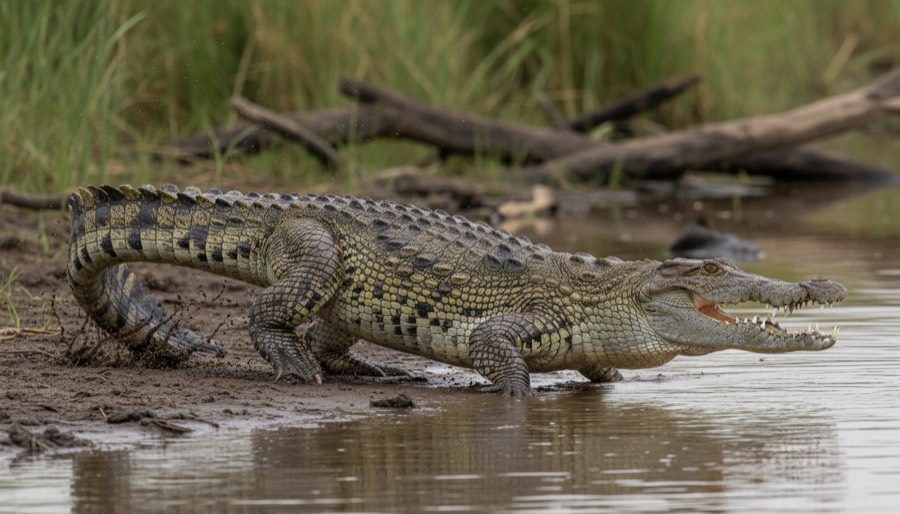
Here's another surprise: a crocodile's eyes and nostrils sit on top of its head. It can hide in the water with almost everything under, and still see and breathe.
Crocodiles even cry real tears while they eat! It isn't because they're sad. The tears help keep their eyes clean.
Can you stick out your tongue? A crocodile can't! Its tongue is attached to the bottom of its mouth.
Crocodile relatives have been around for over 200 million years. They lived alongside the dinosaurs!
And they're strong. Some crocodiles have one of the strongest bites of any animal on Earth.
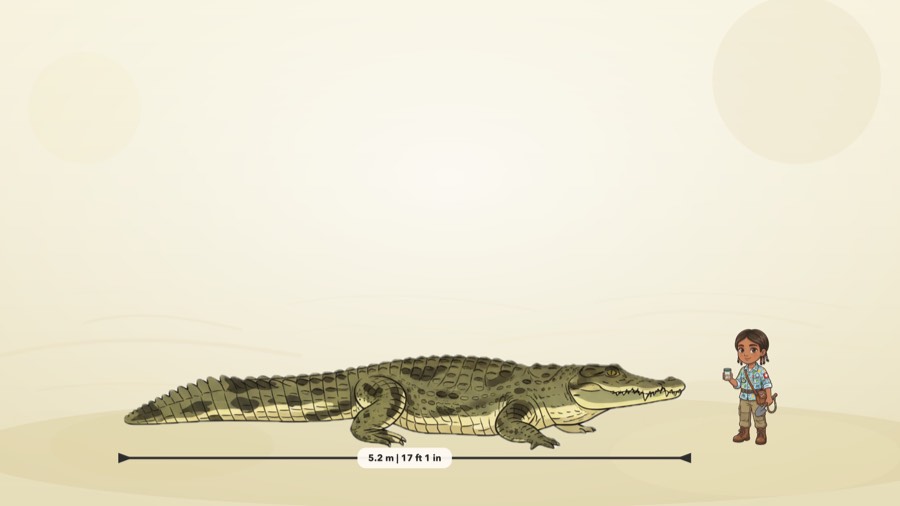
A big crocodile can be about 5 meters (17 feet) long. That's about as long as a large car — or about five 5-year-olds lying head to toe!
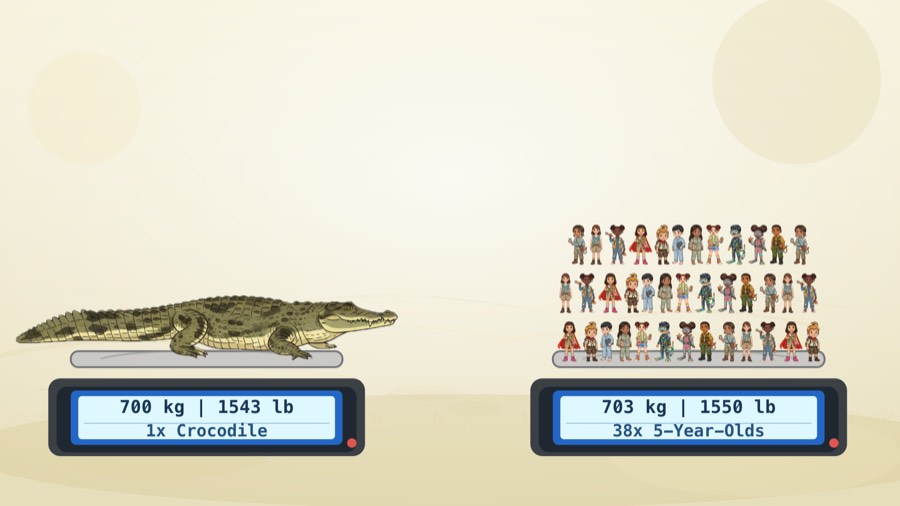
A big crocodile can weigh about 700 kilograms (1,543 pounds). That's the same as 38 five-year-olds all standing on a giant scale together!
Can you picture 38 friends on one scale?
Crocodiles also swallow small stones. The stones help mash up their food inside their tummies, because they can't chew.
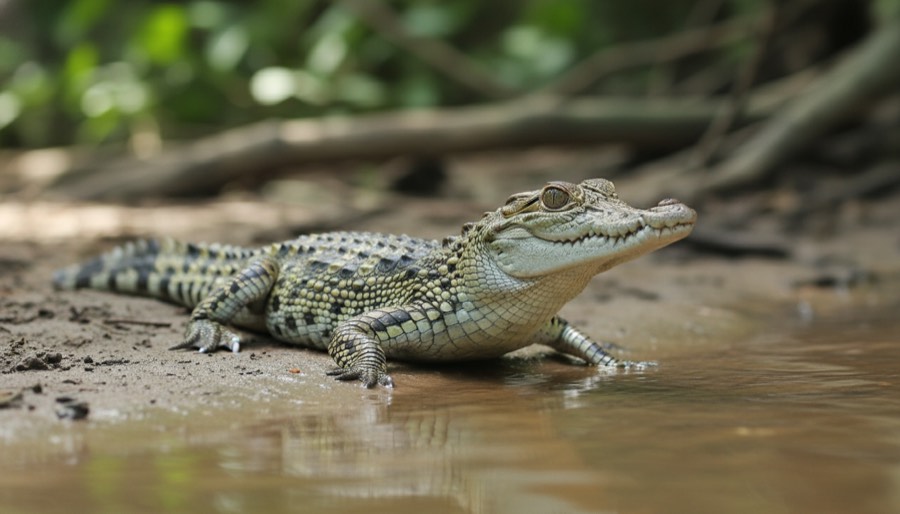
Can you move low and slow, like a crocodile sliding into the river? Can you make a quiet crocodile hiss?
Some crocodiles can live for 70 years or more. That's longer than a lot of grandparents! So a crocodile might watch the same river for a whole lifetime.
Where to see a crocodile
In the wild, crocodiles live in warm rivers, swamps, and wetlands in Africa, Asia, Australia, and Central and South America. For the rest of us, these zoos and wildlife parks have crocodiles you can visit from a safe distance.
North America
Cuban crocodiles
Bronx Zoo — New York, New YorkThe World of Reptiles is home to Cuban crocodiles, a rare species the zoo helped breed.
Learn more →Saltwater and Nile crocodiles
St. Augustine Alligator Farm Zoological Park — St. Augustine, FloridaA zoo built around crocodilians, with saltwater crocodiles, Nile crocodiles, and more to spot.
Learn more →Crocodilians of Asia and Africa
San Diego Zoo — San Diego, CaliforniaLook for small and slender-snouted crocodile species along the zoo's reptile paths.
Learn more →Cuban and Philippine crocodiles
Smithsonian's National Zoo — Washington, D.C.The Reptile Discovery Center keeps crocodilians, including Cuban and Philippine crocodiles, two rare species.
Learn more →Around the world
Saltwater crocodiles
Currumbin Wildlife Sanctuary — Queensland, AustraliaA big saltwater crocodile lives here; the sanctuary's page tells you who's on show.
Learn more →Saltwater crocodiles
Australia Zoo — Queensland, AustraliaA famous wildlife park with a long history of looking after crocodiles.
Learn more →Freshwater crocodiles
WILD LIFE Sydney Zoo — Sydney, AustraliaMeet a smaller, narrow-snouted crocodile that lives in northern Australia's rivers.
Learn more →Animals sometimes move between zoos — check the zoo's own website before you visit.
For grown-ups
"Crocodile" covers about two dozen species, so there isn't one conservation status. On the IUCN Red List, some, like the Nile and saltwater crocodiles, are Least Concern, while others, like the Cuban and Siamese crocodiles, are Critically Endangered. Please double-check a species' current status on the IUCN Red List before quoting it.
There's a hopeful story: Australia's saltwater crocodiles were hunted heavily until they were protected in the 1970s. Since then their numbers have bounced back — one of Australia's best-known conservation comebacks.
Crocodiles need healthy rivers and wetlands. This week, try picking up litter near a creek or pond, or choosing to keep a wetland wild when you walk by it. Healthy waterways are good for crocodiles and for us.
Starters: "Why do you think a crocodile keeps just its eyes and nose above the water?" "What do you think a mother crocodile does all day?"
If your kid asks would a crocodile hurt me? — this holds up: "Crocodiles are wild and strong, so people always stay far back from the water's edge where they live. They're not out to get anyone — they just want to be left alone to rest and hunt for their own food. Zoos keep us safe with strong walls and glass, so we can watch up close."
Keep exploring
Wild Atlas has a whole page built around this animal — narrated facts, the full scale comparison against a 5-year-old, and the sound a crocodile actually makes. The crocodile is in the Reptile World pack.
Meet the crocodile in Wild Atlas →
For more, visit the IUCN SSC Crocodile Specialist Group.
 Subscribe and the Farm Friends pack ($3.99) is free — yours to keep even if you unsubscribe.