Meet the dolphin! People around the world celebrate it on National Dolphin Day (April 14) and World Dolphin Day (September 12).
Read this one out loud together — add a few clicks and whistles for the dolphin sounds.
Dolphins sleep with half their brain awake!
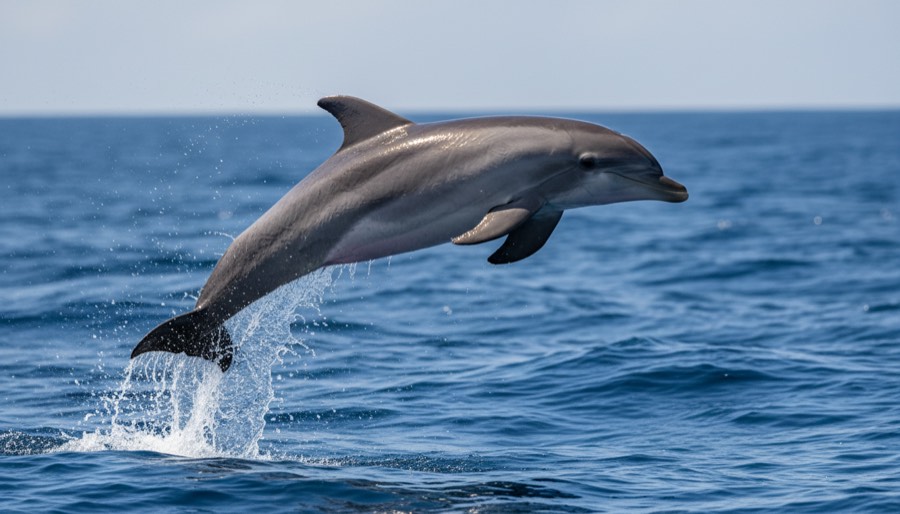
A dolphin is not a fish. It's a mammal, like you, so it has to swim up to the top to breathe air. If it fell fast asleep, it might forget to breathe!
So a dolphin switches off just half its brain at a time. The other half stays awake to keep breathing and stay safe. Sleepy dolphins even rest with one eye open.
Dolphins also have names — whistle names! Each dolphin has its own special whistle that works like a name, and friends can call to each other with it.
They click, too. Dolphins make clicking sounds that bounce off things and come back, so they can find fish even in dark water. It's like seeing with sound.
Can you make a dolphin click with your tongue? Can you whistle your own whistle name?
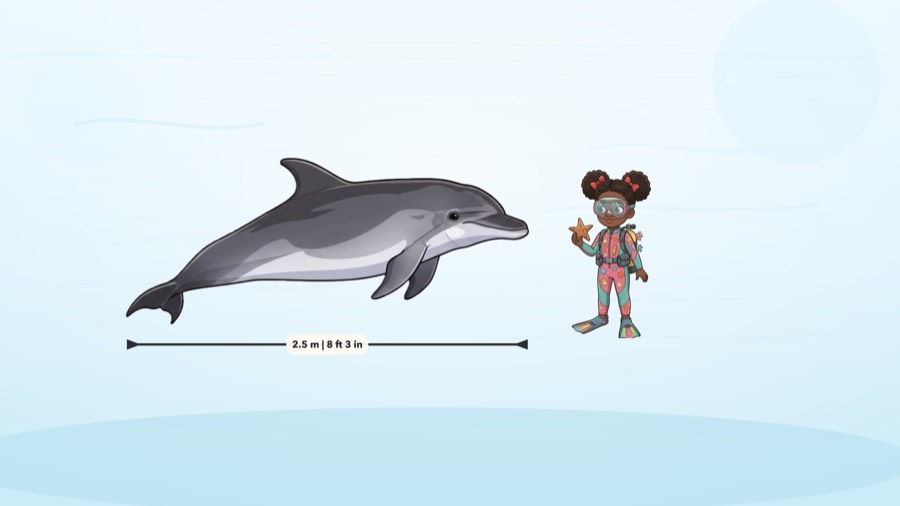
A bottlenose dolphin is about 2.5 meters (8 feet 3 inches) long. That's about twice as long as a 5-year-old is tall! Dolphins can swim up to about 30 kilometers (19 miles) per hour, and they often leap out of the water when they swim fast. Scientists think that might help them save energy.
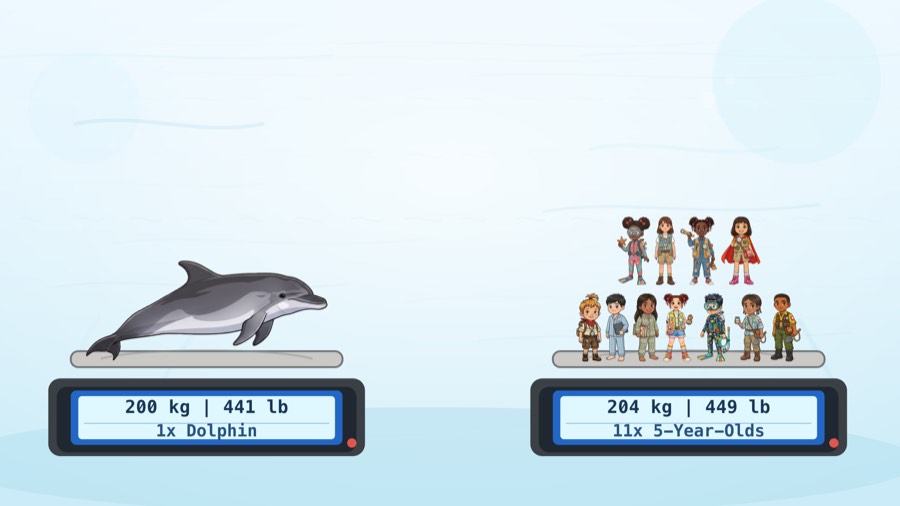
A dolphin weighs about 200 kilograms (441 pounds). That's as much as 11 five-year-olds, all standing on one big scale together!
Can you picture 11 friends on a scale?
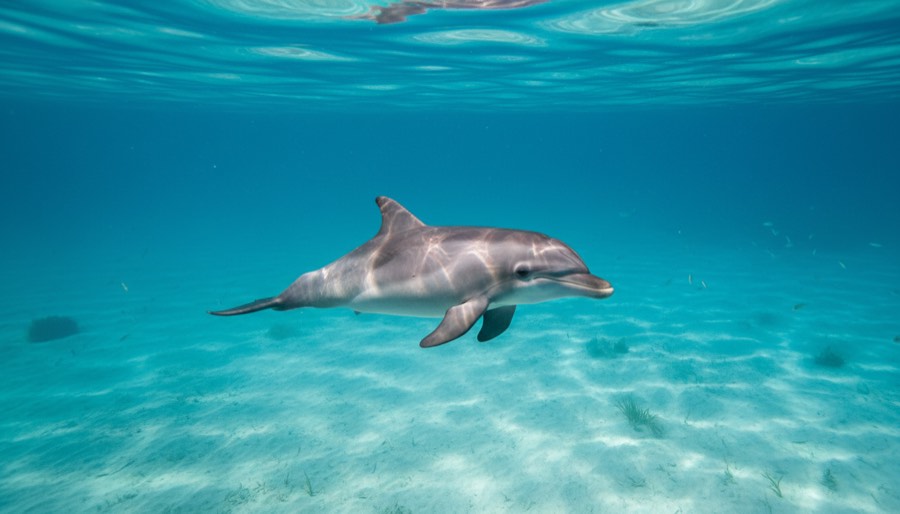
Baby dolphins are called calves. A calf stays close to its mom for several years, learning how to find food and how to be a dolphin.
Dolphins live in groups called pods, and they look out for each other. They've even been seen helping a friend who's hurt by gently pushing it up to the surface to breathe.
Dolphins can also recognize themselves in a mirror. That's something only a few animals can do!
Where to see a dolphin
In the wild, dolphins live in oceans and seas all around the world, and some kinds even live in rivers. For the rest of us, these zoos, aquariums, and marine centers care for bottlenose dolphins you can visit.
North America
Dolphin Bay
Brookfield Zoo Chicago — Brookfield, IllinoisA renovated habitat with rockwork and toys that let the dolphins search, chase, and play.
Visit Brookfield Zoo Chicago →Dolphin Coast
Georgia Aquarium — Atlanta, GeorgiaA whole gallery for a pod of bottlenose dolphins, with a theater for watching them swim.
Learn more →Dolphin Research Center
Grassy Key — Florida Keys, FloridaA nonprofit education and research center where you can learn how dolphins think and communicate.
Visit Dolphin Research Center →Around the world
The Dolphinarium
L'Oceanogràfic — Valencia, SpainEurope's largest dolphin habitat, with a main pool and four smaller ones for care and training.
Visit L'Oceanogràfic →The Delfinarium
Zoo Duisburg — Duisburg, GermanyGermany's biggest dolphin home, open since 1965.
Visit Zoo Duisburg →Animals sometimes move between zoos — check the zoo's own website before you visit.
For grown-ups
The common bottlenose dolphin is listed as Least Concern by the IUCN, but dolphins as a group are a mixed picture: some other dolphin species and local populations are in trouble, from fishing nets, boat traffic, noise, and pollution. A hopeful story is behind National Dolphin Day itself: in the 1980s, public pressure pushed major tuna companies to change how they fish, and the "dolphin-safe" label on tuna cans grew out of that campaign. It's a good example of ordinary shoppers and families making a difference.
A simple family hope action: next time you buy canned tuna, look for the dolphin-safe label together, or pick up litter on your next beach or park trip so it doesn't wash into the sea.
Starters: "How do you think a dolphin 'sees' with sound?" "If you had a whistle name, what would it sound like?" "What could we do to keep the ocean clean?"
If your kid asks do dolphins ever get hurt by people? — this holds up: "Sometimes, yes. Dolphins can get tangled in fishing nets or get sick from dirty water. But lots of people work hard to protect them, and there are things we can do too, like keeping trash out of the ocean."
Keep exploring
Wild Atlas has a whole page built around this animal — narrated facts, the full scale comparison against a 5-year-old, and the clicks and whistles a dolphin actually makes. The dolphin lives in the Ocean Creatures pack.
Meet the dolphin in Wild Atlas (Ocean Creatures pack) →
For more, visit the IUCN Cetacean Specialist Group — Red List status of cetaceans.
 Subscribe and the Farm Friends pack ($3.99) is free — yours to keep even if you unsubscribe.