Meet the donkey! People around the world celebrate it on World Donkey Day, every May 8.
- World Donkey Day · Saturday, May 8 — Founded by Dr Abdul Raziq Kakar in 2010 and marked annually from 2018; supported by The Donkey Sanctuary. Source
Read this one out loud together. It's more fun with a big, loud hee-haw.
A donkey's hee-haw can be heard from far, far away!
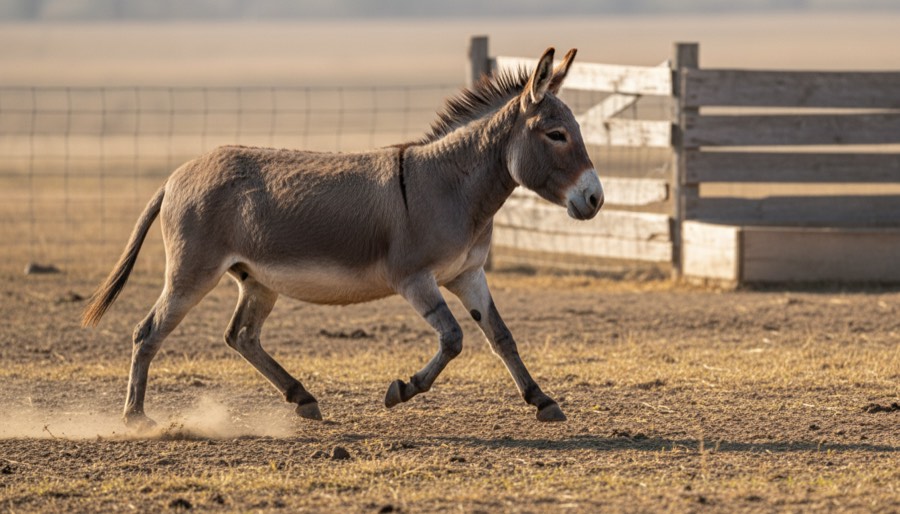
That loud bray is how donkeys talk to each other. And those big ears help them hear a friend calling from very far away.
Donkeys are good at remembering, too. They can remember other donkeys, and places they've been, for many years.
People first tamed donkeys in Africa about five thousand years ago. Since then, donkeys have been helpful friends on farms all around the world.
Donkeys love a good dust bath. They roll on the ground to help keep their skin clean and cool. Can you roll your shoulders like a happy donkey?
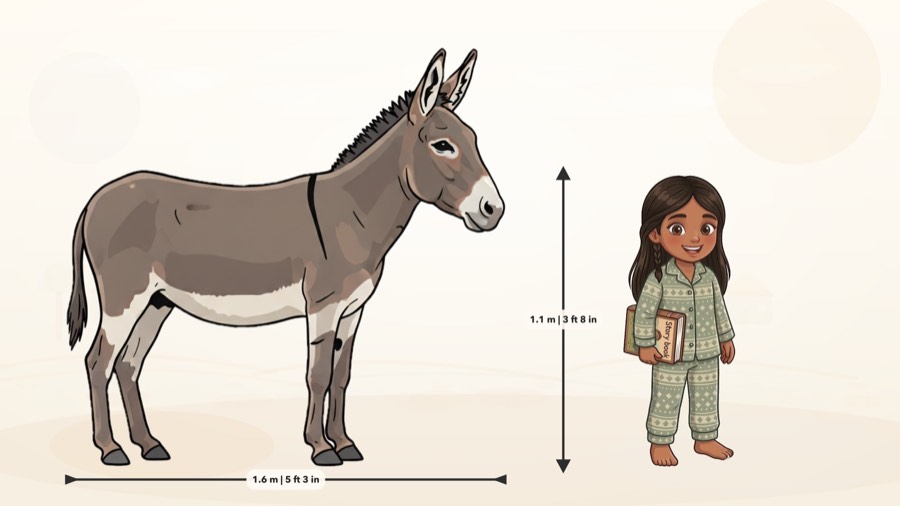
How big is a donkey? At the shoulder, it stands about 1.1 meters (3 feet 8 inches) tall. That's just about as tall as a 5-year-old, who is about 1.09 meters (3 feet 7 inches). From nose to tail, a donkey is about 1.6 meters (5 feet 3 inches) long.
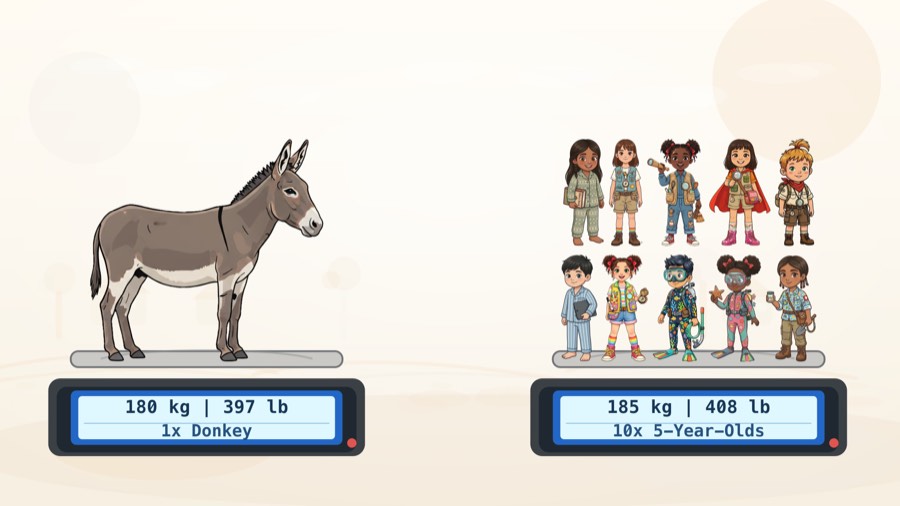
One donkey weighs about 180 kilograms (397 pounds). That's about as much as 10 five-year-olds all standing on one big scale together!
Can you picture 10 friends on one big scale?
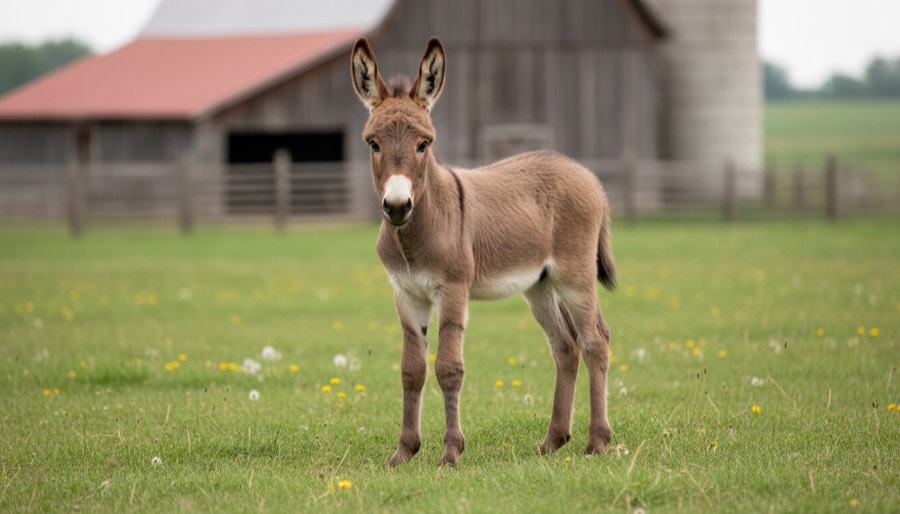
A baby donkey is called a foal. Look at those ears! They look huge on such a small face.
Donkeys are careful walkers, with small, tough hooves that are great for rocky paths. They like to look before they step.
Can you tiptoe carefully like a donkey across the room? Now try a big hee-haw!
Where to meet a donkey
In the wild, the donkey's cousins, the African wild asses, live in the hot, dry deserts of the Horn of Africa. For the rest of us: donkeys live on farms and in animal sanctuaries all over the world, and some sanctuaries welcome visitors.
North America
Peaceful Valley Donkey Rescue
San Angelo, TexasA donkey rescue that offers free tours. Ask for a tour ahead of time.
Schedule a tour →The Donkey Sanctuary of Canada
Puslinch, OntarioOpen to visitors on most Sundays from May to October. Check the dates and tickets first.
Plan a visit →Around the world
The Donkey Sanctuary
Sidmouth, Devon, EnglandHundreds of rescued donkeys live here. Entry is free, and there are play areas for kids.
Visit the sanctuary →The Donkey Sanctuary Ireland
Liscarroll, County Cork, IrelandAn open farm with walking paths and free entry, a few days a week.
Plan a visit →Visiting hours change, so check each sanctuary's own website first. Always ask a grown-up who looks after the donkeys before you pet one, and let the donkey say hello first.
For grown-ups
The everyday farm donkey isn't rated by the IUCN Red List, the way wild animals are. Its wild ancestor, the African wild ass, is rated Critically Endangered, with only a small number left in the deserts of Eritrea and Ethiopia (likely a few hundred at most), mostly because of hunting and competition for water and grass.
There's a hopeful story close to home: World Donkey Day began as the idea of one animal scientist, Dr Abdul Raziq Kakar, who noticed how much donkeys help people and how little thanks they get. Today it's marked around the world, and sanctuaries like The Donkey Sanctuary in Ireland care for more than 1,800 donkeys and mules.
A family hope action: if you visit a farm or sanctuary, spend a minute learning how the donkeys are looked after, like what they eat and where they rest.
Starters: "What do you think a donkey is saying when it brays?" "How would you say hello to a donkey?"
If your kid asks why do people say donkeys are stubborn? — this holds up: "Donkeys are careful. They like to stop and look before they step somewhere new. That's not being stubborn, it's being safe and smart. It takes a little patience and kindness to earn a donkey's trust."
Keep exploring
Wild Atlas has a whole page built around this animal, with narrated facts, the full scale comparison against a 5-year-old, and the sound a donkey actually makes. The donkey is in the Farm Friends pack, which is a paid pack.
Meet the donkey in Wild Atlas (Farm Friends pack) →
For more, visit a study of the Critically Endangered African wild ass in the Danakil Desert (Oryx).
 Subscribe and the Farm Friends pack ($3.99) is free — yours to keep even if you unsubscribe.