Meet the gibbon! People around the world celebrate it on International Gibbon Day, every October 24 — a day that started in 2015, the IUCN's Year of the Gibbon.
- International Gibbon Day · Sunday, October 24 — Started in 2015, the IUCN's Year of the Gibbon, by the Section on Small Apes of the IUCN SSC Primate Specialist Group. Source
Read this one out loud together — it's even better with a whooping, hooting gibbon song at the end.
Gibbons sing songs that echo across the whole rainforest!
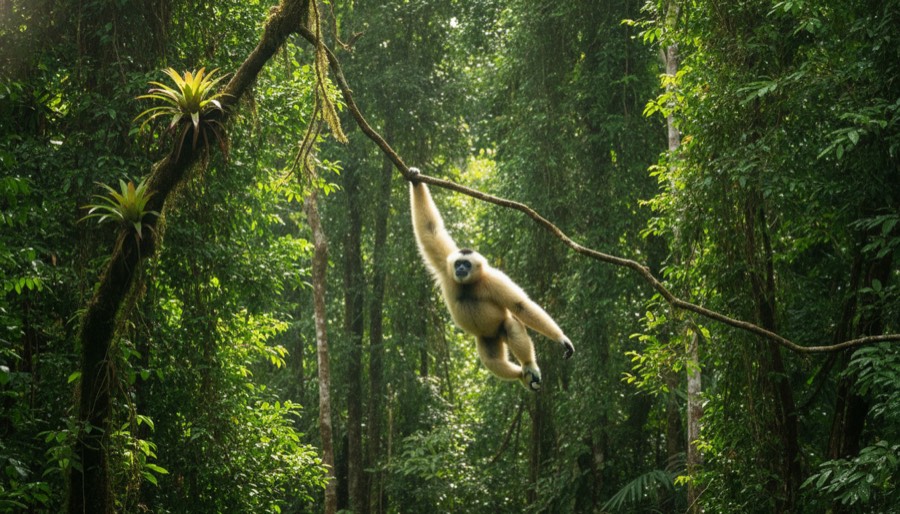
A gibbon is a small ape that lives high up in the treetops of Southeast Asia. Mom and dad gibbon sing together in loud, whooping duets. The songs get higher and higher, and you can hear them far across the forest. The songs also tell other gibbon families, "This part of the forest is ours!"
Gibbons are apes, not monkeys. That means they have no tail at all.
Here's another surprise: gibbons have very long arms. They swing hand over hand from branch to branch, which is called brachiating. It looks almost like flying! Their bendy wrists let their hands swivel, so they don't have to slow down.
Can you swing your arms like a gibbon? Try it while you stay safely on the ground!
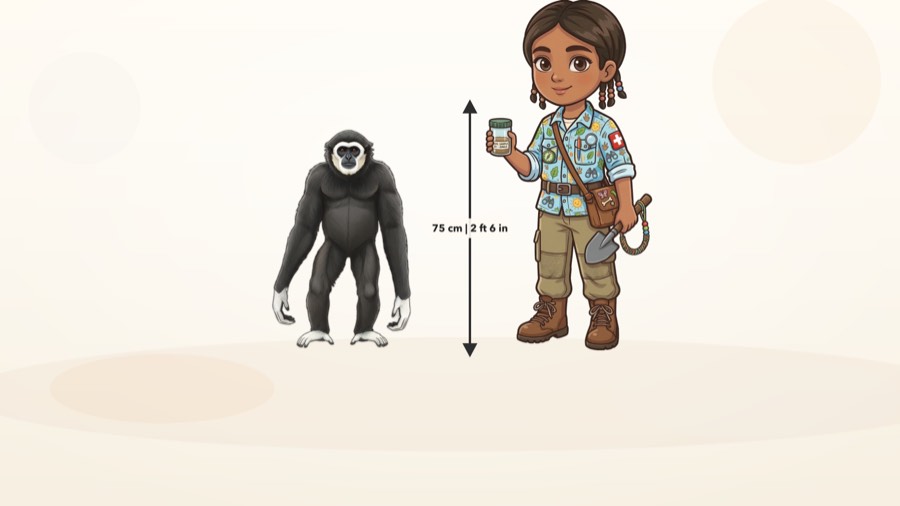
Standing up, a gibbon is about 75 centimeters (2 feet 6 inches) tall. That's shorter than a 5-year-old, who is about 109 centimeters (3 feet 7 inches). A gibbon is light, too. It weighs only about 6 kilograms (13 pounds) — less than a big house cat. It takes about four gibbons to weigh a bit more than one 5-year-old!
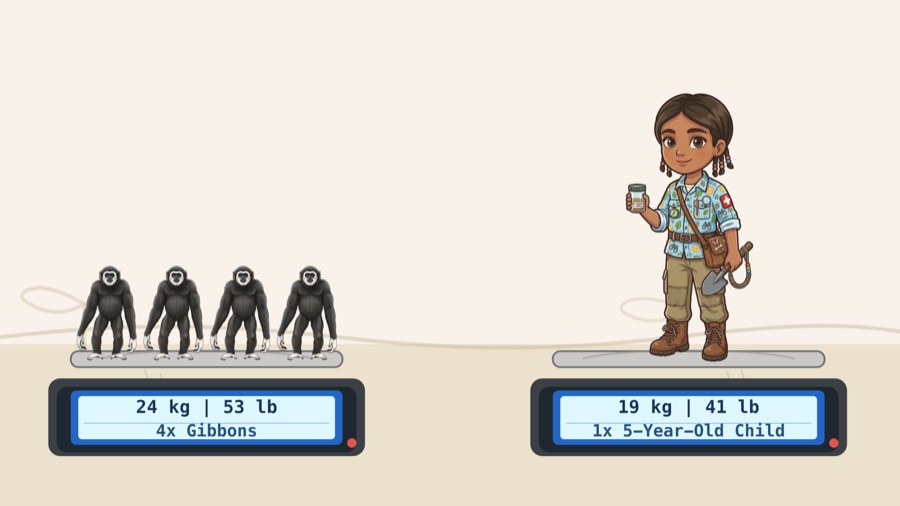
Being light helps gibbons swing without breaking the branches. And gibbons can leap across very wide gaps between trees. They almost never come down to the ground — the treetops are their whole world.
Can you imagine a world where your floor is a branch?
Baby gibbons hold tight to their mom's tummy while she swings through the trees.
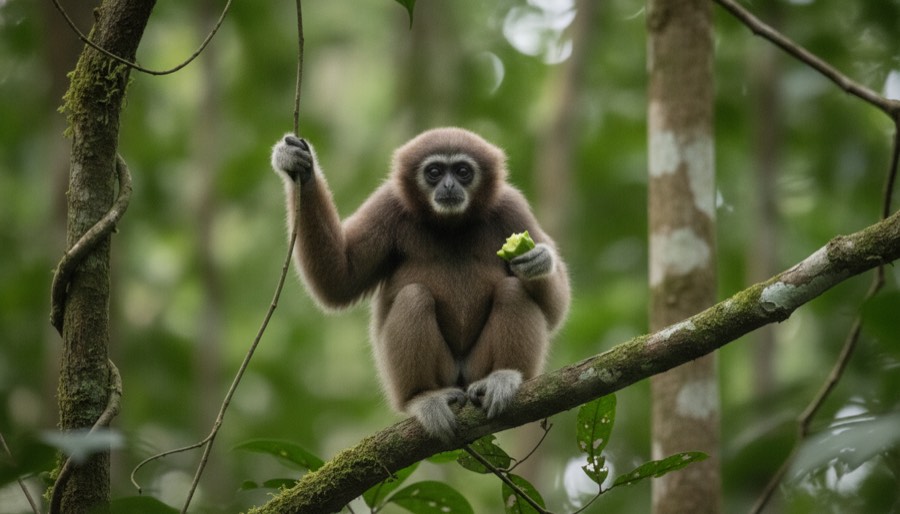
Now it's your turn. Can you whoop like a gibbon? Start low, then go higher and higher. Happy International Gibbon Day!
Where to see a gibbon
In the wild, gibbons live high in the rainforest treetops of Southeast Asia, where they're very hard to spot. For the rest of us, these places have gibbons you can visit.
North America
White-handed gibbons
Oakland Zoo — Oakland, CaliforniaA gibbon family lives in the zoo's tropical rainforest area.
Learn more →Northern white-cheeked gibbons
Houston Zoo — Houston, TexasFind them in the Wortham World of Primates.
Learn more →Gibbons of many kinds
Gibbon Conservation Center — Santa Clarita, CaliforniaA sanctuary just for gibbons, with several different kinds. Visits are by reservation.
Learn more →Around the world
Gibbon Island
Singapore Zoo — SingaporeListen for gibbon songs echoing through the trees.
Learn more →Silvery gibbons
Chester Zoo — Chester, EnglandSilvery gibbons live in the zoo's Realm of the Red Ape.
Learn more →Gibbon Rehabilitation Project
Phuket, ThailandA sanctuary that cares for gibbons that were hurt or mistreated. Visitors watch from a respectful distance.
Learn more →Animals sometimes move between zoos — check the zoo's own website before you visit.
For grown-ups
The white-handed (lar) gibbon, the one in the Wild Atlas app, is listed as Endangered on the IUCN Red List, mostly because rainforests are being cleared and because gibbons are caught for the pet trade. Please check the IUCN Red List for the latest status before you quote it.
There's a hopeful story: in Phuket, Thailand, the Gibbon Rehabilitation Project has been caring for gibbons that were hurt or kept as pets since 1992, and works to return them to the forest once they're ready.
Gibbons need whole forests with tall trees. This week, try choosing paper and wood products with a forest-friendly label, and reuse a sheet of paper before recycling it. It's a small way to look after the trees that animals call home.
Starters: "How do you think gibbons know whose song is whose?" "If you lived in the treetops, what would you sing about?"
If your kid asks will gibbons disappear? — this holds up: "Gibbons are having a hard time because their forest homes are shrinking. But lots of people care about them and work hard to protect them — and every time we learn about gibbons, we're helping, too."
Keep exploring
Gibbons are part of the Legends of the Wild pack in Wild Atlas — with narrated facts, the full scale comparison against a 5-year-old, and the song a gibbon really sings. Legends of the Wild is a paid pack.
Meet the gibbon in Wild Atlas →
For more, visit the IUCN Red List.
 Subscribe and the Farm Friends pack ($3.99) is free — yours to keep even if you unsubscribe.