Meet the gorilla! People around the world celebrate it on World Gorilla Day, every September 24 — a day for one of the gentlest giants in the forest.
- World Gorilla Day · Friday, September 24 — Started in 2017 by the Dian Fossey Gorilla Fund and partners, on the 50th anniversary of Karisoke Research Center. Source
Read this one out loud together — save your softest, deepest voice for the gorilla hum.
Gorillas build a brand new bed every single night!
A gorilla bends branches and leaves into a cozy nest. Sometimes it's on the ground. Sometimes it's up in a tree. In the morning, the nest is left behind, and tonight the gorilla builds another one.
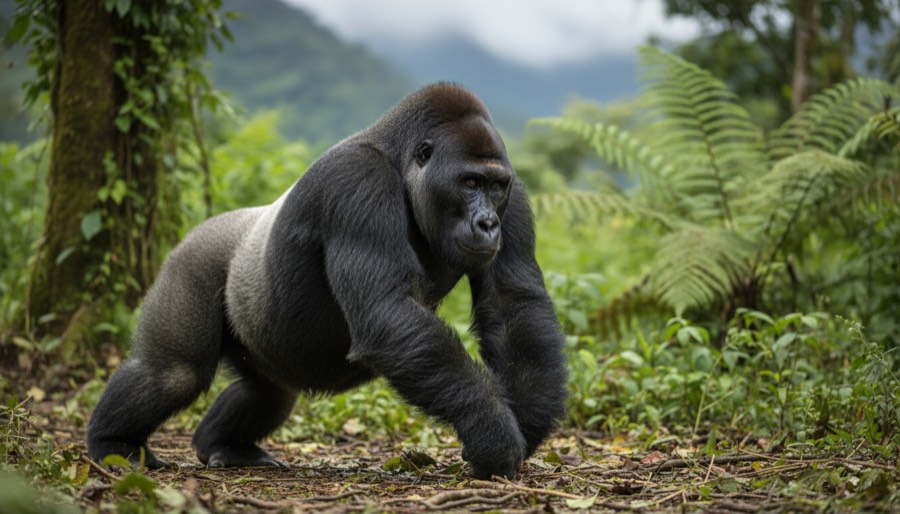
Gorillas are the biggest apes in the whole world. They live in the forests of central Africa.
Gorillas are gentle giants. They mostly eat plants — leaves, stems, bamboo, and fruit. And here's a happy surprise: when gorillas are enjoying a good meal, they hum and sing!
Can you hum a happy, munching song, just like a gorilla?
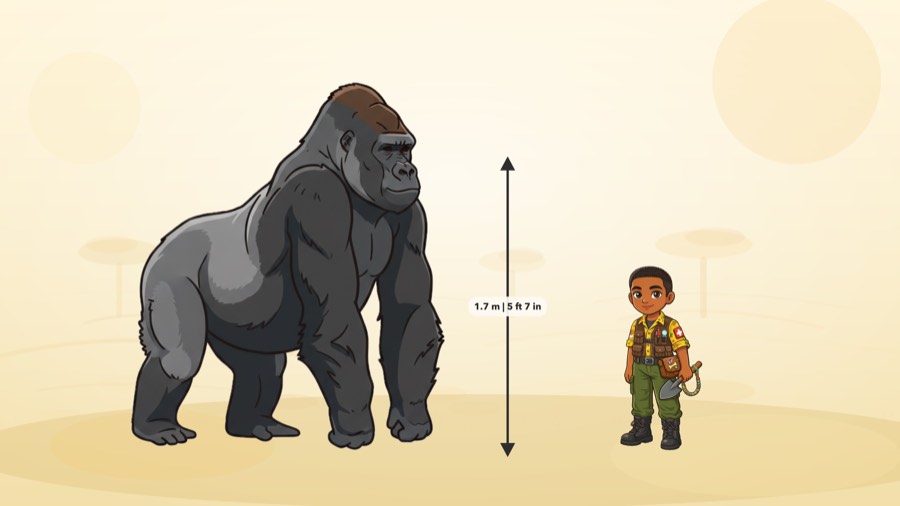
A big gorilla standing up is about 1.7 meters (5 feet 7 inches) tall. That's about 60 centimeters (2 feet) taller than a 5-year-old, and about as tall as many grown-ups.
A big gorilla can weigh around 180 kilograms (397 pounds). That's about as much as ten 5-year-olds, all standing on one big scale together!
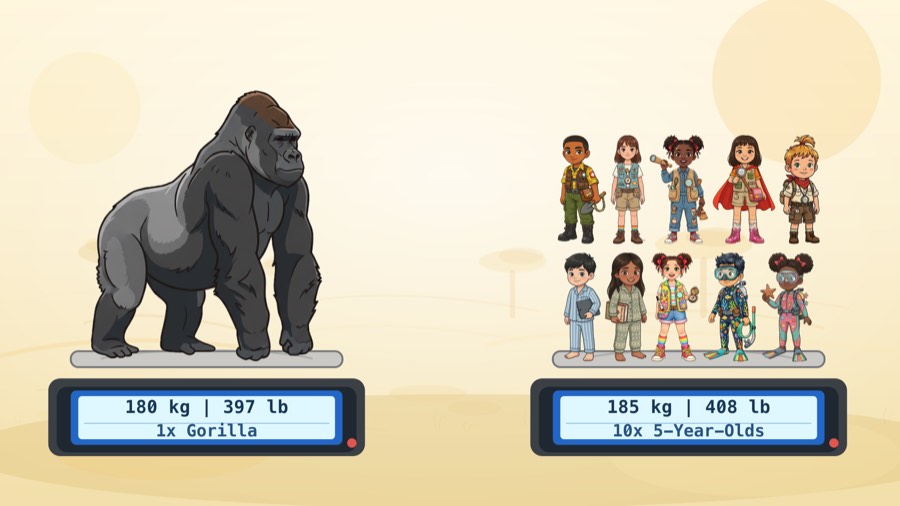
Can you count to ten friends on that scale?
A gorilla family is called a troop. It's usually led by one big male called a silverback. When a boy gorilla grows up, silver hair grows on his back — that's how he gets his name. The silverback looks after everyone in his family.
Sometimes a gorilla pats its chest with a pa-pa-pa sound. It's one way a gorilla says, "I'm here!"
Can you pat your chest gently, like a gorilla? Not too hard!
Baby gorillas stay very close to their moms. A baby rides on its mom's back until it's about three years old.
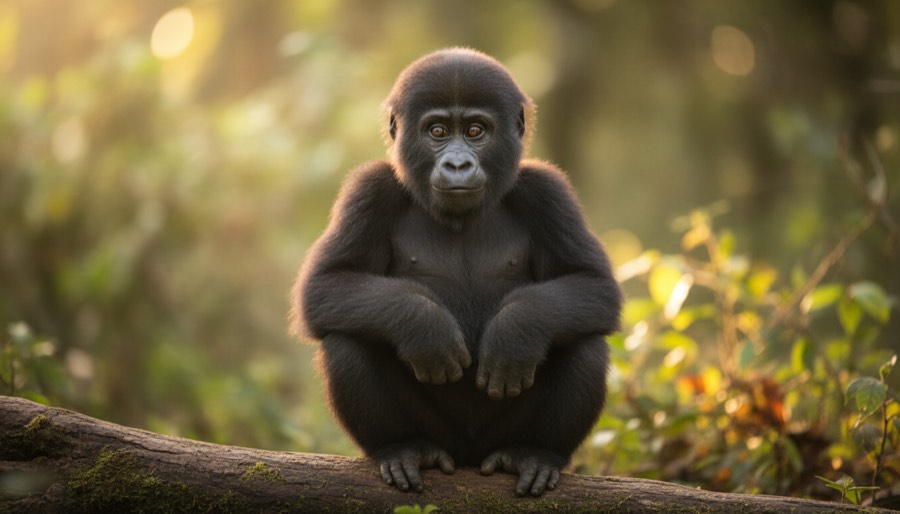
Gorillas talk with soft grunts. They hoot when they're happy. And if they need to say "please stay back," they can roar — but mostly, they're calm and peaceful.
Tonight, when you snuggle into bed, think of a gorilla building its leafy nest. Sweet dreams!
Where to see a gorilla
In the wild, gorillas live in the rainforests and mountain forests of central Africa. For the rest of us, these accredited zoos have gorilla families you can visit.
North America
Gorillas at Cincinnati Zoo
Cincinnati Zoo — Cincinnati, OhioWestern lowland gorillas live here in several family groups, each led by a silverback.
Learn more →Gorillas at Columbus Zoo
Columbus Zoo and Aquarium — Powell, OhioA western lowland gorilla troop shares an outdoor habitat here.
Learn more →Gorillas at Zoo Atlanta
Zoo Atlanta — Atlanta, GeorgiaThe Ford African Rain Forest has several habitats, each home to its own gorilla group.
Visit Zoo Atlanta →Gorillas at the Los Angeles Zoo
Los Angeles Zoo — Los Angeles, CaliforniaWestern lowland gorillas live in the zoo's Campo Gorilla Reserve.
Learn more →Around the world
Gorillas at Bristol Zoo Project
Bristol Zoo Project — South Gloucestershire, EnglandA gorilla troop lives in the new African Forest habitat, which is much bigger than their old home.
Learn more →Gorillas at Melbourne Zoo
Melbourne Zoo — Melbourne, AustraliaWestern lowland gorillas live in the Gorilla Rainforest, and some visitors can meet them with a keeper.
Learn more →Gorillas at Taronga Zoo
Taronga Zoo — Sydney, AustraliaA gorilla troop lives here, and keeper talks explain how the family works.
Learn more →Animals sometimes move between zoos — check the zoo's own website before you visit.
For grown-ups
The gorilla is listed as Critically Endangered, mostly from habitat loss, hunting, and disease. There's a hopeful story: mountain gorillas, one kind of gorilla, fell to about 242 in 1981. Park rangers, researchers, and local communities have protected them ever since, and their numbers have now passed 1,000. The IUCN has moved them from Critically Endangered to Endangered. The Dian Fossey Gorilla Fund calls them the only wild ape population known to be growing.
Gorillas need big, quiet forests. This week, try giving old phones, tablets, or other electronics a second life by recycling them instead of leaving them in a drawer. Some of the minerals in electronics are mined in places near gorilla homes, so reusing what we already have is a small way to ask for less digging.
Starters: "Why do you think a gorilla builds a new nest every night?" "What would you hum if you were really happy while eating?"
If your kid asks are gorillas dangerous? — this holds up: "Gorillas are mostly calm and gentle. They like quiet days of eating and napping with their family. Like any big animal, they want space, so people who watch them in the wild keep a polite distance and move slowly."
Keep exploring
Wild Atlas has a whole page built around this animal — narrated facts, the full scale comparison against a 5-year-old, and the sounds a gorilla actually makes. The gorilla is part of the Safari Stars pack.
Meet the gorilla in Wild Atlas →
For more, visit the Dian Fossey Gorilla Fund.
 Subscribe and the Farm Friends pack ($3.99) is free — yours to keep even if you unsubscribe.