Meet the great white shark! People around the world celebrate it on Shark Awareness Day, July 14 — a day for learning why sharks matter to the ocean.
- Shark Awareness Day · Wednesday, July 14 — Grew organically in the US in the early 2000s from aquariums and ocean groups; no documented founder. Source
Read this one out loud together — it's more fun with a slow, deep, ocean-narrator voice.
A great white shark has about 300 teeth — and when one falls out, a new one moves forward to take its place!
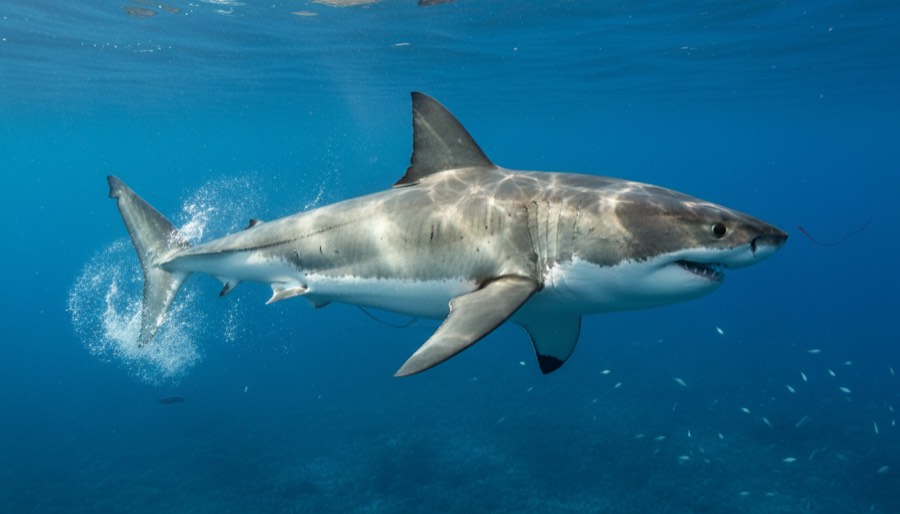
Meet the great white shark. It lives in cool oceans all around the world. Its back is grey-blue, so from above it blends in with the dark water. Its belly is white, so from below it blends in with the bright surface. Clever!
Its teeth are shaped like triangles with zigzag edges, a bit like tiny bread knives, all lined up in rows. When a front tooth wears out, the next one steps forward. It never runs out.
This shark also has a super sense of smell. It can notice tiny scents in the water from far away. And it's a fast swimmer — it can zoom in short bursts when it's chasing a snack.
Can you make a zoom sound like a speedy shark? Whoooosh!
Here's a big one. The biggest great whites are about 6 meters (almost 20 feet) long — as long as a minibus. A typical one is a bit smaller, but still much longer than you.
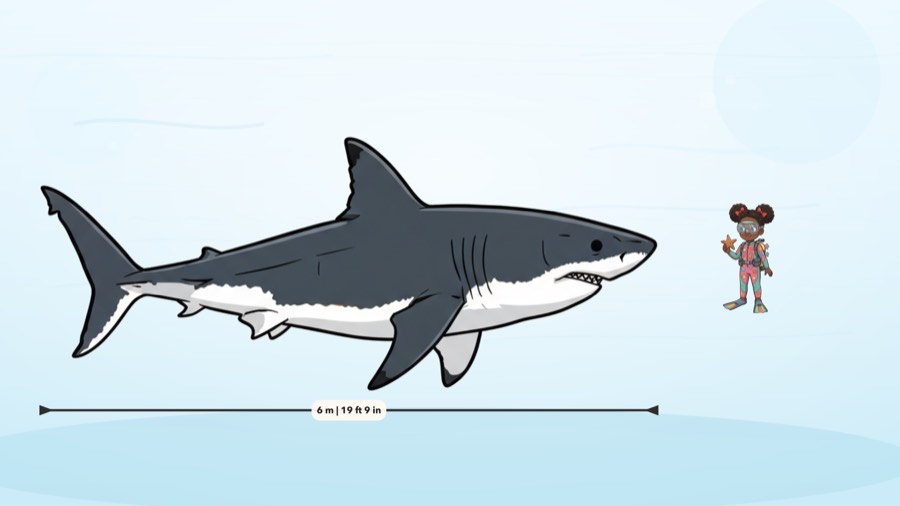
Can you stretch your arms out wide? Now picture more than five of you lying head to toe. That's one very big shark!
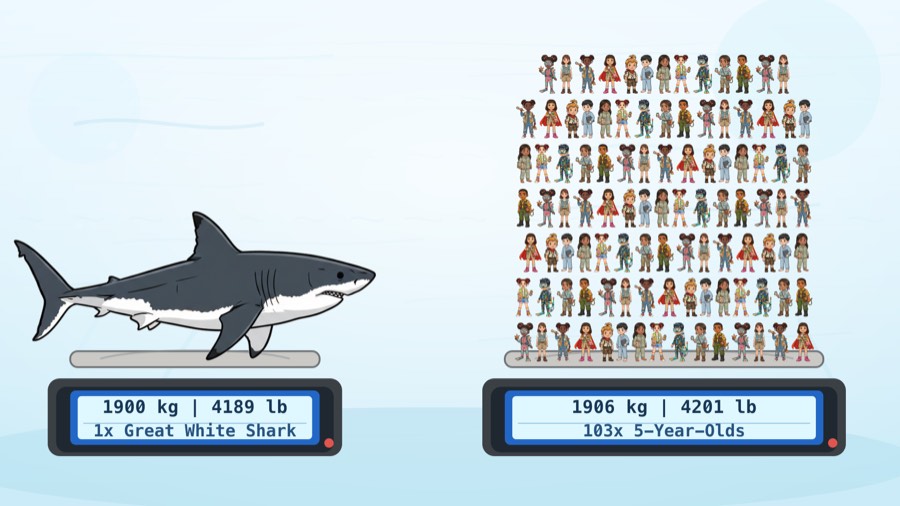
It's heavy, too. A big great white can weigh about 1,900 kilograms (4,190 pounds). That's about as much as 103 five-year-olds, all standing on one giant scale together!
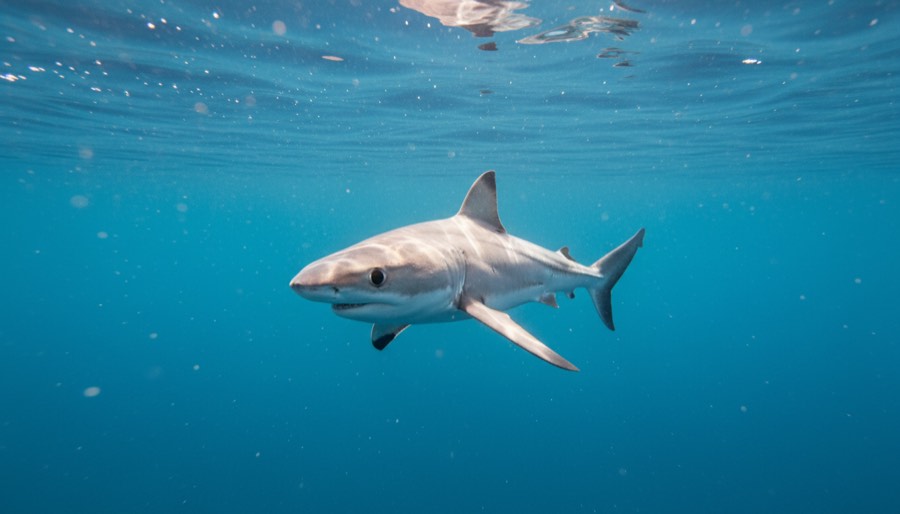
Baby great whites are called pups. A pup is already about as long as you are when it's born, and it knows how to swim and find food right away. Nobody has to teach it.
Great whites can even leap right out of the water! It's called breaching, and it makes a giant splash.
Can you jump like a shark? Whoosh — splash!
Great whites have been swimming in the ocean for a very, very long time, and some live to be 70 years old. They're a big part of keeping the ocean healthy and in balance.
Where to meet a great white shark
In the wild, great whites swim in cool coastal oceans around the world, and they're best left to scientists and trained guides. For the rest of us: great whites don't do well in aquariums, so no aquarium keeps one long-term. You can still meet other amazing sharks at an aquarium near you.
Find the nearest places with sharks →Monterey Bay Aquarium in California has shown young great whites for a few months at a time, and each one was returned to the ocean. None is on display right now — check the aquarium's own website before you visit.
For grown-ups
Great white sharks are listed as Vulnerable on the IUCN Red List. Their numbers have dropped mostly because of fishing — they're often caught by accident — and because they grow slowly and have few pups, so populations recover slowly.
There's hopeful news: great whites are now protected in many places, and scientists tag and track them to learn where they travel and where pups are born, so those places can be looked after.
This week's hope action: next time you're at the beach, leave no litter behind — a clean shoreline is a healthier ocean for every animal in it, sharks included.
Starters: "Why do you think a shark's back is dark and its belly is white?" "What do you think the ocean would be like without sharks?"
If your kid asks would a shark want to eat me? — this holds up: "Sharks aren't hunting people. They like seals and fish, and they're curious about new things. Swimming with a grown-up, where lifeguards say it's okay, keeps everyone happy — you and the sharks."
Keep exploring
Wild Atlas has the great white shark in the Ocean Creatures pack — narrated facts, the full scale comparison against a 5-year-old, and a weight chart that stacks up 103 kids.
Meet the great white shark in Wild Atlas →
For more, visit the IUCN Red List.
 Subscribe and the Farm Friends pack ($3.99) is free — yours to keep even if you unsubscribe.