Meet the grizzly bear! People around the world celebrate it on World Bear Day, March 23 — a day for learning about bears and the wild places they call home.
- World Bear Day · Tuesday, March 23 — Origins not well documented (said to date from 1992); promoted by World Animal Protection. Source
Read this one out loud together — it's even better with a big, low, rumbly bear voice.
A grizzly bear can sniff out a snack from very, very far away!
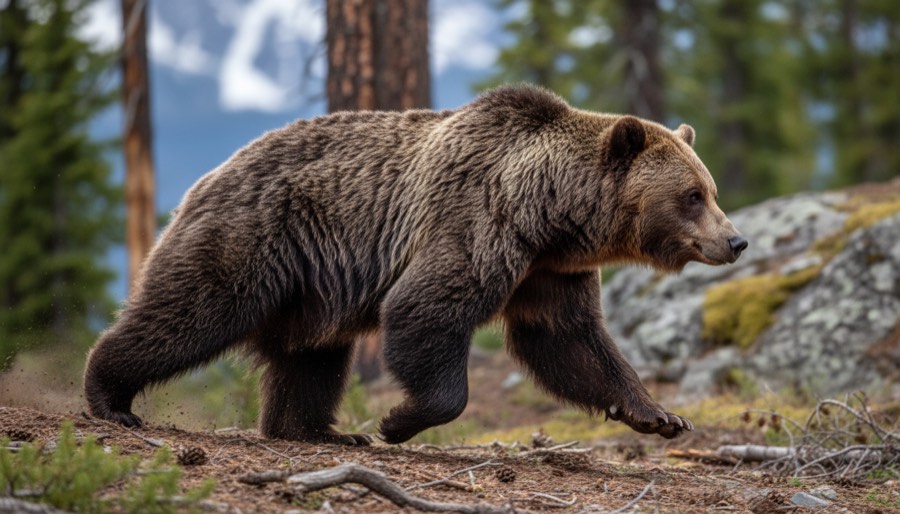
A grizzly's nose is much stronger than yours. It can smell berries, fish, and tasty roots from a long, long way off. Sniff, sniff, sniff!
See the big hump on its back? That's pure muscle. It helps the grizzly dig for roots and climb up hills.
Grizzlies are fast, too. A grizzly can run as fast as a horse, up to 55 kilometers per hour (about 34 miles per hour). Can you run like a bear? Stomp, stomp, stomp!
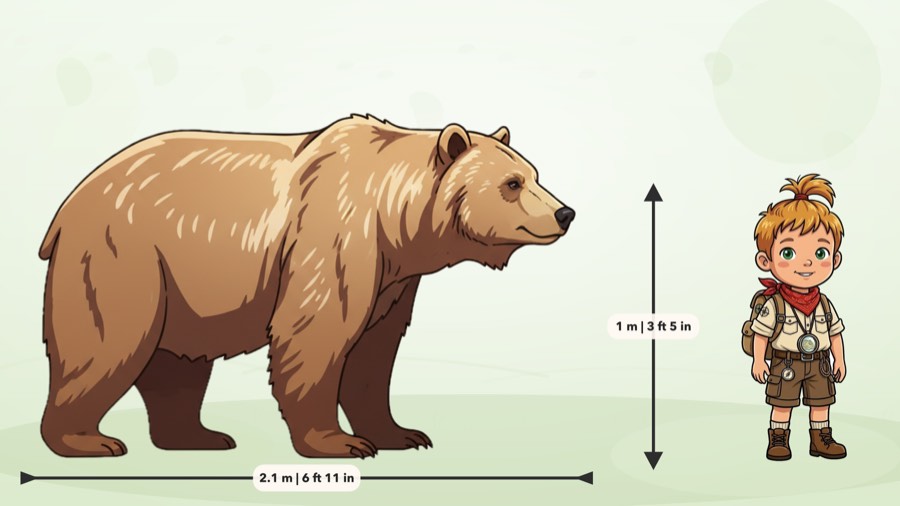
On all fours, a grizzly's shoulders come up to about as high as you are: around 1 meter (3 feet 4 inches). When it stands up on its back legs, it's nearly twice as tall as you!
A big grizzly weighs about 270 kilograms (595 pounds). That's about as much as 15 five-year-olds all standing on one big scale together!
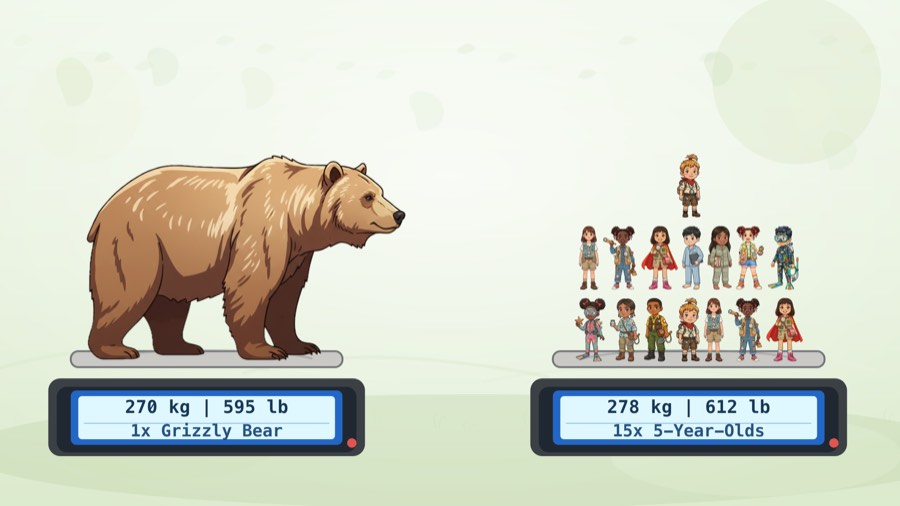
Can you picture 15 friends on one big scale?
Grizzlies love to catch salmon. They stand in the river and scoop the jumping fish right out of the water with their big paws. Their claws can be as long as your fingers, which is perfect for digging.
In winter, a grizzly can sleep in a cozy den for up to seven months, without eating or drinking. And here's the sweetest surprise: baby bears, called cubs, are born while their mom is sleeping in the den. They're tiny when they're born, and they snuggle in close for warmth.
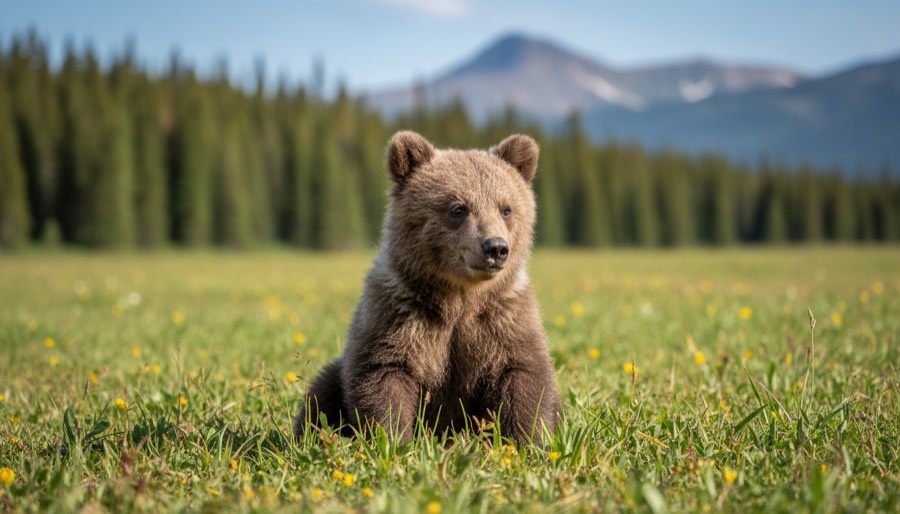
When spring comes, the cubs follow their mom out into the sunshine. They learn to find food, splash in rivers, and shake themselves dry, just like a dog!
Can you shake like a wet bear? Wiggle, wiggle, wiggle!
Where to see a grizzly bear
In the wild, grizzly bears live in the forests, mountains, and river valleys of western North America. For the rest of us, these accredited zoos and sanctuaries have grizzlies you can visit.
North America
Grizzly Ridge
Saint Louis Zoo — St. Louis, MissouriA bear-sized habitat where grizzlies can explore, splash, and dig.
Learn more →Living Northwest Trail
Woodland Park Zoo — Seattle, WashingtonGrizzlies share a trail with a stream, a pool, and a cozy cave for winter naps.
Learn more →Wild Canada
Wilder Institute / Calgary Zoo — Calgary, AlbertaThe zoo has cared for grizzlies since 1938, in a zone inspired by Canada's wild places.
Learn more →Canadian Domain
Toronto Zoo — Toronto, OntarioMeet a grizzly in the zoo's Canadian Domain.
Learn more →Grizzly & Wolf Discovery Center
West Yellowstone, MontanaA nonprofit wildlife park beside Yellowstone's west entrance, home to grizzlies that couldn't safely live in the wild.
Learn more →Around the world
Grizzly bears
Sofia Zoo — Sofia, BulgariaOne of the few zoos in Europe where you can meet a grizzly bear.
Learn more →Animals sometimes move between zoos — check the zoo's own website before you visit.
For grown-ups
Brown bears as a species are listed as Least Concern by the IUCN, but the grizzly (a kind of brown bear) is more fragile in the lower 48 U.S. states, where it is protected under the U.S. Endangered Species Act. There's a hopeful story in Yellowstone: grizzlies there numbered only about a hundred or so in the 1970s, and a 2017 estimate counted more than 700. Protection, careful research, and people learning to share the land helped that recovery along.
Grizzlies do best when people and bears give each other space. This week, a simple family hope: whenever you picnic or camp, pack out every crumb and keep food and trash locked away, so wild animals stay wild and healthy.
Starters: "What do you think a grizzly smells when it sniffs the air?" "Why might a bear sleep all winter?"
If your kid asks are bears dangerous? — this holds up: "Bears aren't looking for trouble. They mostly want berries, roots, and fish, and they'd rather be left alone. They're big and strong, so we give them lots of space and never go near them, just like we do with any wild animal."
Keep exploring
Wild Atlas has a whole page built around this animal — narrated facts, the full scale comparison against a 5-year-old, and the sound a grizzly actually makes. The grizzly bear is part of the Wild Americas pack.
Meet the grizzly bear in Wild Atlas →
For more, visit the U.S. Fish and Wildlife Service.
 Subscribe and the Farm Friends pack ($3.99) is free — yours to keep even if you unsubscribe.