Meet the horse! People in the United States celebrate it on National Day of the Horse, every December 13.
- National Day of the Horse · Sunday, December 13 — Created by US Senate Resolution 452 in 2004 (sponsor Ben Nighthorse Campbell). Equine groups have kept observing it every year since. The animal is domestic, not wild. Source
Read this one out loud together. It's more fun with a gentle neigh and a snort.
Horses can sleep standing up!
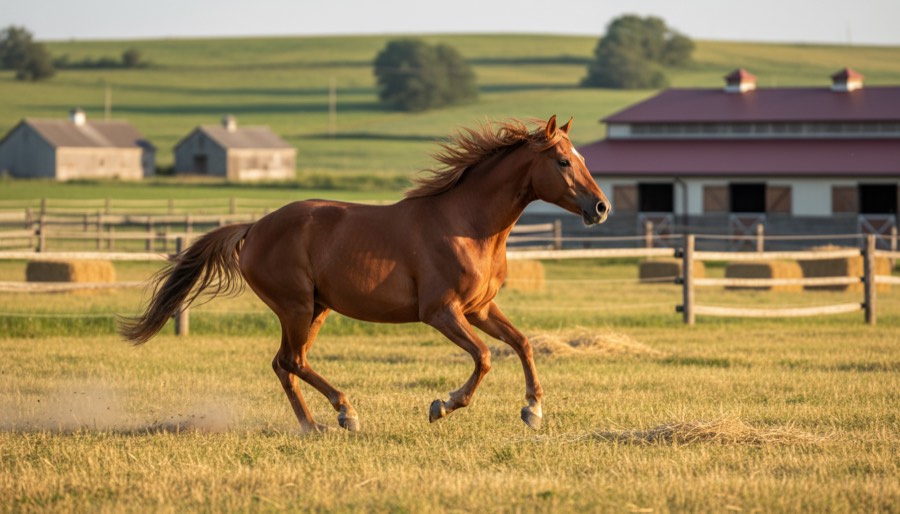
A horse can lock its knees so it doesn't tip over. That's how it takes a nap on its feet. For a deep sleep, though, it still lies down, just like you.
Horses have been our partners for thousands of years. People first tamed them on the grasslands of Eurasia more than five thousand years ago.
Horses also talk without words. They use their ears, eyes, and nostrils to show how they feel. A horse might neigh to call a friend, or snort when it's excited.
Can you make a gentle neigh like a horse? Try one!
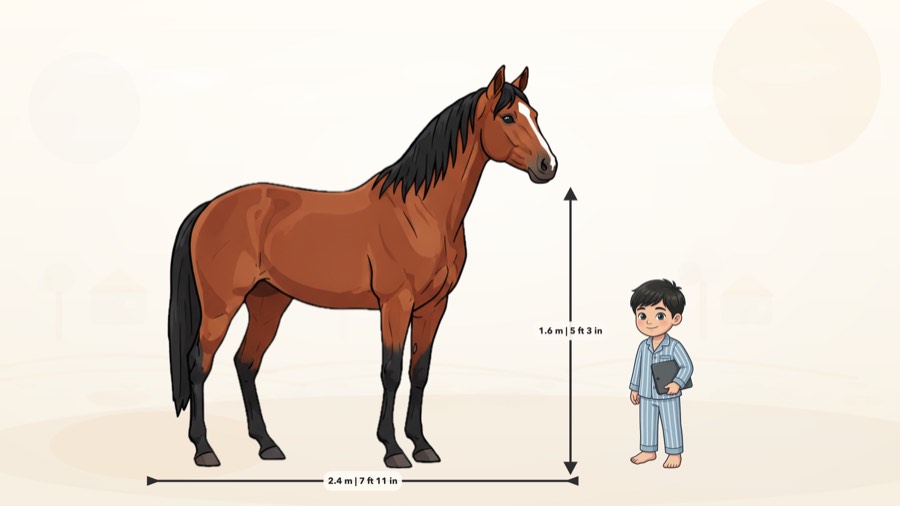
A horse is big! At the shoulder, it stands about 1.6 meters (5 feet 2 inches) tall. That's a lot taller than a 5-year-old, who is about 1.1 meters (3 feet 7 inches).
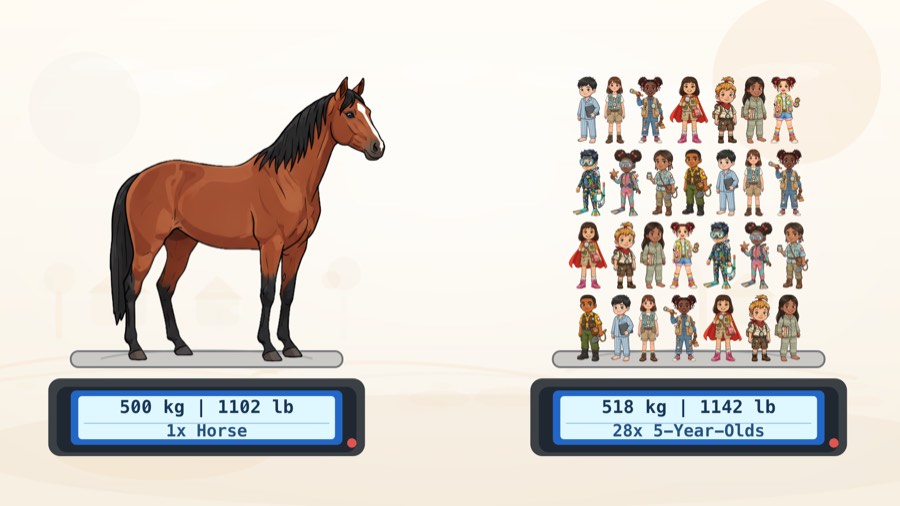
One horse weighs about 500 kilograms (1,100 pounds). That's about as much as 28 five-year-olds all standing on one big scale together!
Can you picture 28 friends on one big scale?
Here's a surprise. A horse's hoof is made of the same stuff as your fingernails! It's like a very big, very tough toenail.
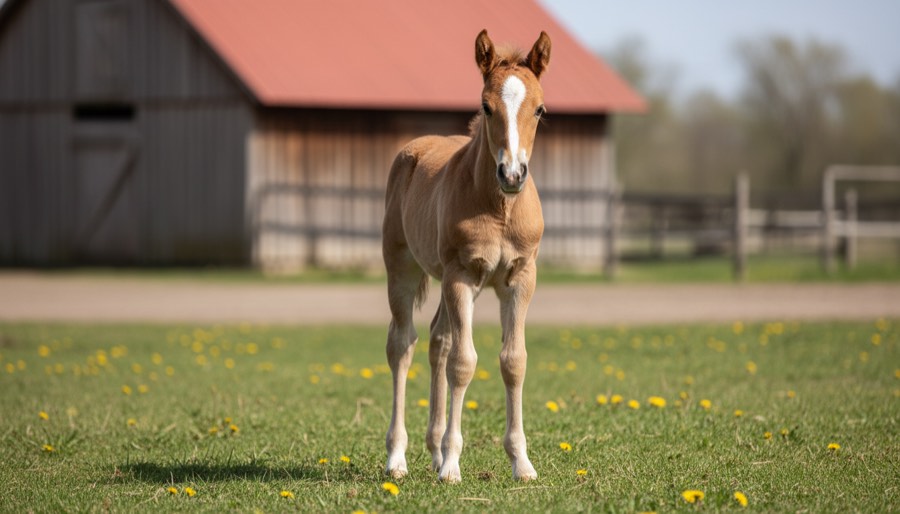
A baby horse is called a foal. A foal can stand up and walk within a couple of hours of being born. That's very fast! It needs its long legs ready, because horses are always on the move.
Horses also have big, round eyes, among the biggest of any land animal. And they have good memories. A horse can remember people it hasn't seen in years.
Can you remember the name of someone you haven't seen in a long time?
Wild horse cousins live in groups called herds, and the herd members take turns keeping watch while the others rest. Isn't that a good way to look after each other?
Where to meet a horse
In the wild, a few herds of horse cousins roam the grasslands of Mongolia and China. For the rest of us: horses live on farms, ranches, and riding stables all over the world, and many animal sanctuaries and county fairs have them too.
Find the nearest places with horses →Always ask a grown-up who looks after the horses before you pet one. A good rule is to wait for them to say hello first, and to stay calm and quiet. Check a farm or stable's own website for visiting hours.
For grown-ups
The domestic horse isn't rated by the IUCN Red List, the way wild animals are. Its closest wild relative, Przewalski's horse, is rated Endangered. There's a hopeful story here: by the middle of the 1900s only a small number of these horses were left, all of them in zoos and breeding centers. Careful breeding rebuilt the herd, and since the 1990s, horses have been brought back to the grasslands of Mongolia and China. A few hundred now roam free there again, and the rest live in zoos and reserves.
A family hope action: if you visit a stable or a farm, spend a minute learning how the horses are cared for, like what they eat and where they rest.
Starters: "What do you think a horse is saying when it snorts?" "What would it be like to sleep standing up?"
If your kid asks can a horse be my friend? — this holds up: "Horses can get to know people and remember them, but they're big, so the best way to be friends is slowly. Walk up calmly beside a grown-up (never from behind), let the horse sniff your hand, and let it decide how close to come."
Keep exploring
Wild Atlas has a whole page built around this animal, with narrated facts, the full scale comparison against a 5-year-old, and the sound a horse actually makes. The horse is in the Farm Friends pack, which is a paid pack.
Meet the horse in Wild Atlas (Farm Friends pack) →
For more, visit the Smithsonian's National Zoo and Conservation Biology Institute, on Przewalski's horse.
 Subscribe and the Farm Friends pack ($3.99) is free — yours to keep even if you unsubscribe.