Meet the hummingbird! People celebrate it on National Hummingbird Day, every September 5 — a day for one of the tiniest, speediest birds in the world.
- National Hummingbird Day · Saturday, September 4 (always the first Saturday in September) — Usually credited to wildlife rehabilitator Penny Elliston in 1996, though sources disagree on the first year. Source
Read this one out loud together — try a fast little humming sound whenever you get to the wings.
Hummingbirds are so small, you might mistake one for a bumblebee!
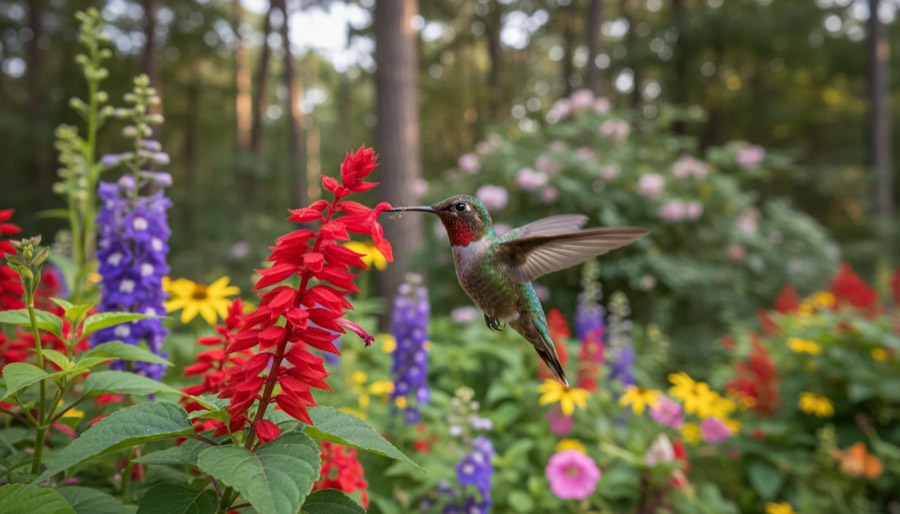
Their wings flap so fast that they make a humming sound. That's where the name comes from! Some hummingbirds flap about 80 times every second. Too fast to see!
And here's a wow: hummingbirds can hover. They hang in the air like a tiny helicopter. They can even fly backwards, which almost no other bird can do.
Why so busy? Hummingbirds sip sweet nectar from flowers with a long tongue that flicks in and out. Then they snack on tiny bugs, too. A hummingbird visits hundreds of flowers a day. It even remembers which ones it has visited!
Can you flap your arms as fast as you can? Now imagine doing it all day!
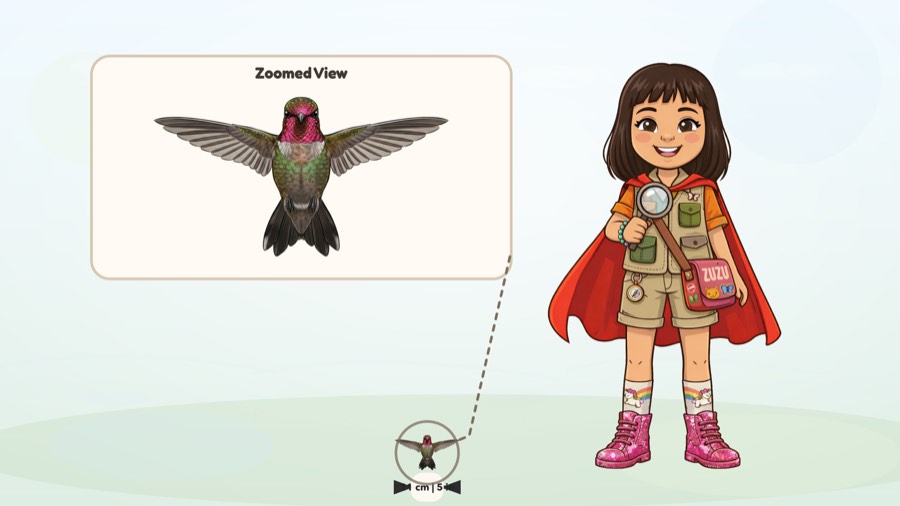
A hummingbird is tiny. Many are shorter than your hand. And they weigh next to nothing: about 4 grams (0.14 ounces), less than a coin. It would take around 4,600 hummingbirds to weigh as much as one 5-year-old!
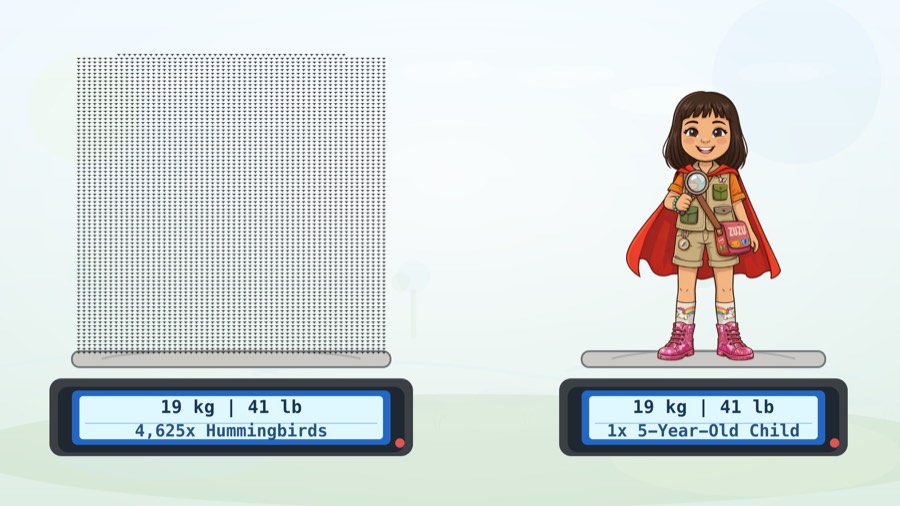
Can you picture that many tiny birds on one big scale?
Here's one more wow. All that zooming takes lots of energy. So at night, a hummingbird goes into a deep, sleepy rest called torpor. Its heart slows way down so it can save its energy until morning.
A baby hummingbird hatches in a tiny nest, smaller than a teacup. Its mother builds it from soft plant fluff and sticky spider silk. She feeds her baby until it's ready to fly.
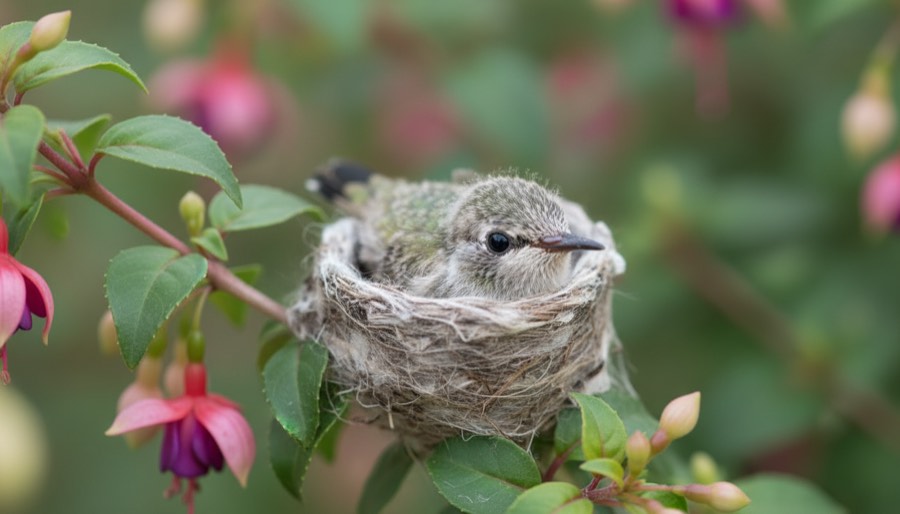
Can you whisper like a tiny nest? Shh. Someone is sleeping.
Where to see a hummingbird
In the wild, hummingbirds live only in the Americas, from Alaska all the way down to Chile, wherever there are lots of flowers. For the rest of us: a few places keep hummingbirds in big walk-through gardens, and a flower pot by a window might bring a wild visitor, too.
North America
Hummingbird Habitat
San Diego Zoo — San Diego, CaliforniaWalk through a leafy, waterfall-filled garden where hummingbirds zip around you.
Learn more →Hummingbird Aviary
Arizona-Sonora Desert Museum — Tucson, ArizonaA walk-through aviary where tiny, shiny hummingbirds hover close enough to feel the breeze from their wings.
Learn more →Free-flying hummingbirds
Dallas World Aquarium — Dallas, TexasLook up in the rainforest-style gardens, where hummingbirds fly free among the visitors.
Visit the Dallas World Aquarium →Hummingbirds are rare in zoos, and animals and exhibits change — check each place's own website before you visit. Zoos outside the Americas are not listed because we couldn't confirm any that currently show hummingbirds.
For grown-ups
Hummingbirds are a big family with more than 360 species, and most are doing fine — the one in the app is listed as Least Concern. But a number of species are listed as threatened, mostly because the forests where they live are being cleared. There's a hopeful story: in Ecuador, the black-breasted puffleg, a rare hummingbird with only a small patch of cloud forest left, shares its home with the Yanacocha Reserve. Fundación Jocotoco and Rainforest Trust have worked since 2002 to protect and expand that forest.
Hummingbirds need flowers all year. This week, try planting a few native flowers in a pot or a garden bed, or leaving a patch of yard a little wild. If you put out a feeder, clean it every few days and fill it with plain sugar and water — no dyes.
Starters: "How many flowers do you think a hummingbird visits before lunch?" "What would it feel like to flap your arms that fast?"
If your kid asks will hummingbirds disappear? — this holds up: "Lots of hummingbirds are doing well, and some are rare because their forests got smaller. People are looking after those forests, and you can help by planting flowers where hummingbirds can find them."
Keep exploring
Wild Atlas has a whole page built around this animal, in the Feathered Friends pack — narrated facts, the full scale comparison against a 5-year-old, and the soft hum a hummingbird makes.
Meet the hummingbird in Wild Atlas →
For more, visit Rainforest Trust.
 Subscribe and the Farm Friends pack ($3.99) is free — yours to keep even if you unsubscribe.