This week's Wild Atlas Spotlight: the humpback whale. We missed World Whale Day last month (it was February 21), so here's our make-up celebration — and once you hear about a male humpback's song, you'll understand the wait.
About this day: There's no official day for the humpback whale this week, so this one is a Wild Atlas Spotlight.
Read this one out loud together — it's short, and it's even better with a long, low singing voice.
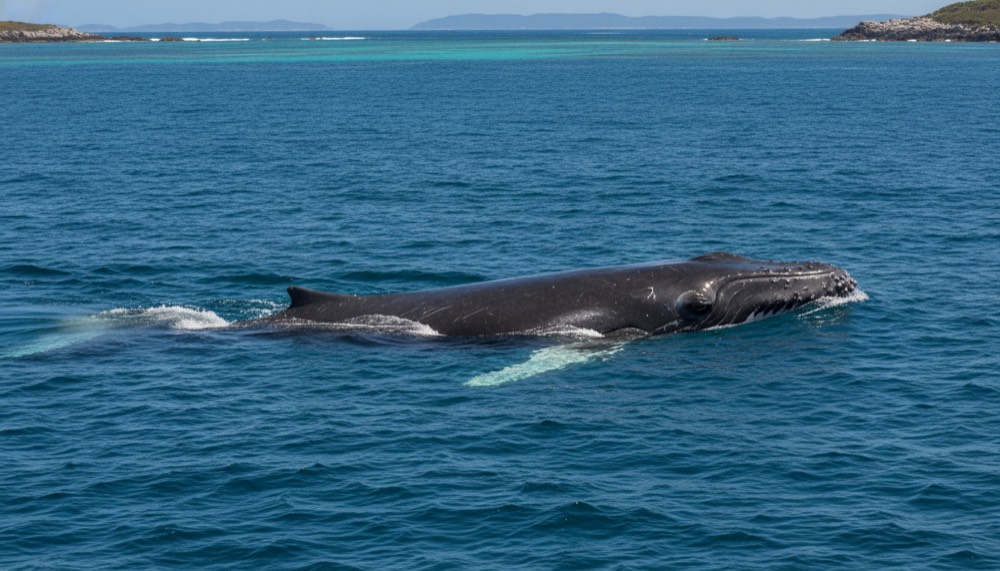
Humpback whales are the singers of the sea. The males sing long, beautiful songs that travel for miles underwater!
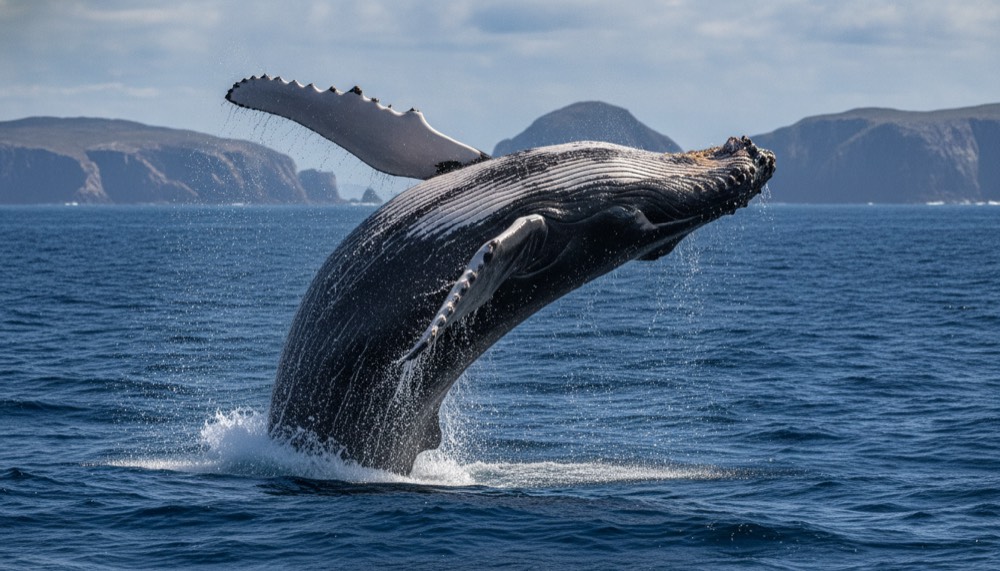
Nobody knows for sure why they sing — scientists are still learning. But the same whale can sing the same song for hours, over and over, and slowly, over time, the song changes into something new.
A humpback doesn't have teeth. It has hundreds of bristly plates called baleen, and it uses them like a strainer to catch tiny krill and small fish. You're much too big for a humpback to ever swallow.
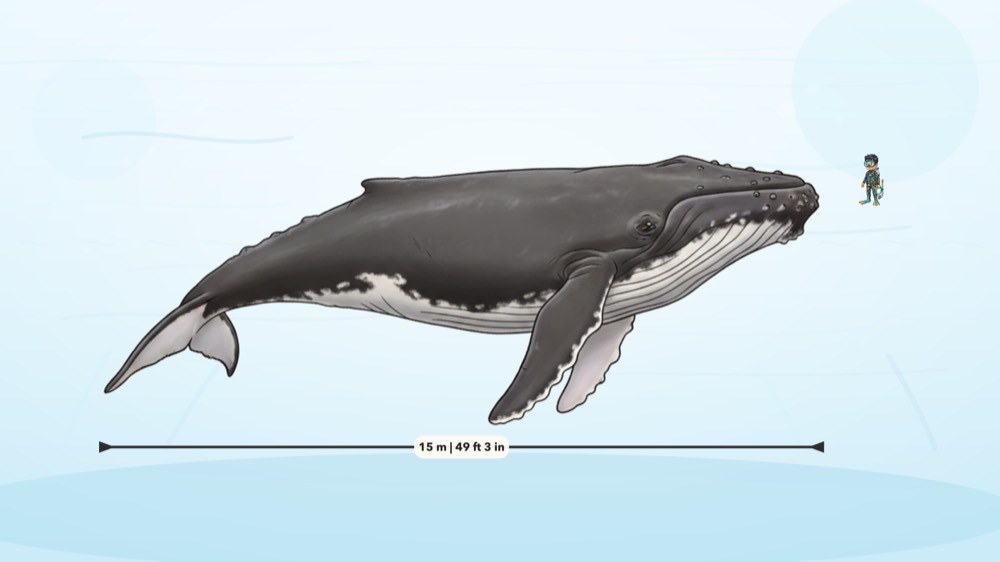
A grown-up humpback is about as long as 14 five-year-olds lying head to toe — around 15 meters (49 feet)! Its front flippers are so long that the first part of its scientific name, Megaptera, actually means "big-winged." One flipper alone can be longer than a car.
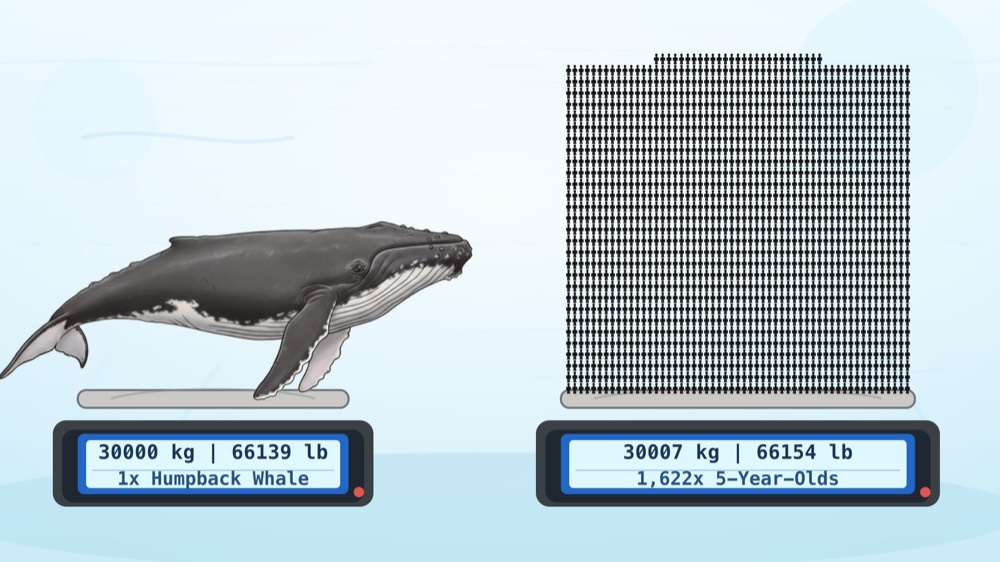
Can you picture more than 1,500 five-year-olds all standing on one giant scale together? That's about how much a big humpback weighs.
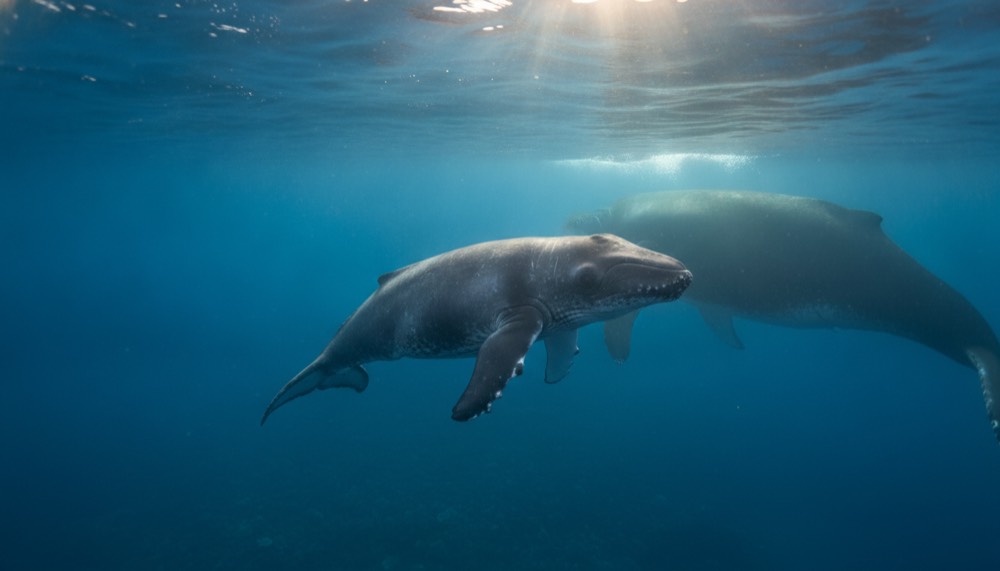
A brand-new baby humpback, called a calf, is already about 4 times as long as a 5-year-old is tall, and it swims right beside its mom from the very first day. Later, they travel together all the way to colder water — sometimes 5,000 miles, one of the longest journeys of any mammal.
Some humpbacks are team players, too. They work together to blow a giant circle of bubbles underwater, trapping fish inside it, then burst up through the middle with their mouths wide open!
Can you hum one long, low note like a whale song, and hold it as long as you can? Can you stretch your arms out wide like big flippers? Now rise up on your tiptoes, then swoosh back down — that's how a humpback breaches, leaping out of the water and landing with a big splash!
Where to see a humpback whale
In the wild, humpback whales gather in places like Hawai'i's warm bays and Alaska's icy fjords to feed, breed, and raise their calves. For the rest of us, no zoo or aquarium anywhere keeps a humpback whale — they're much too big, and they swim across whole oceans. The only way to see a real one is from a boat or a beach, in places where whales visit every year. Most of us will meet a humpback through photos, videos, and stories like this one, and that's a real way to get to know them too.
North America
Winter calving waters
Hawaiian Islands Humpback Whale National Marine Sanctuary, Hawai'iEvery winter, thousands of humpbacks swim to warm Hawaiian waters to have their babies — and in March, many are still there. Sometimes you can spot one right from the beach!
Learn more →Summer feeding grounds
Glacier Bay National Park, AlaskaIn summer, humpbacks travel to these icy Alaskan waters to feast on krill and little fish. The park has special rules that make boats slow down to help keep the whales safe.
Learn more →Around the world
A resting stop for travelers
Hervey Bay, Queensland, AustraliaOn the far side of the world, humpbacks rest in this calm bay with their calves partway through their long journey.
Learn more →Cold northern feeding waters
Húsavík, North IcelandFar up north, humpbacks visit Iceland's cold waters each summer to feed before heading south again.
Learn more →Humpback whales visit different oceans in different seasons, so where and when you might see one changes through the year — check before you plan a trip.
For grown-ups
Humpback whales are listed as Least Concern by the IUCN, and their comeback is one of the great ocean recovery stories — though a few populations, like the humpbacks of the Arabian Sea, are still endangered. In the 1960s, only about 5,000 humpbacks were left in the whole world after decades of whaling. Today there are roughly 135,000.
One population tells the story best. Humpbacks that breed off Brazil numbered nearly 27,000 in 1830. Whaling drove them down to only about 450 by the mid-1950s. People stopped hunting them, and a 2019 study found they'd recovered to about 93% of their original numbers.
Humpbacks still face real risks today — ships, fishing gear, and ocean noise can hurt them. This week's hope action: be a whale-watching helper. Practice saying "Slow down, whales around!" and draw a boat keeping its distance from a whale. A drawing won't slow a real ship, but knowing that whales need space is how whale helpers start.
Starters: "If you could sing a song that traveled for miles underwater, what would you want other whales to know?" "What do you think it feels like to swim thousands of miles, with your mom right beside you the whole way?"
If your kid asks could a whale swallow me? — this holds up: "No — a humpback has no teeth, and its throat is far too narrow to swallow a person. It eats tiny things like krill and small fish, strained through bristly plates in its mouth. You're much too big."
Keep exploring
The humpback whale isn't in Wild Atlas — but its giant cousin, the blue whale, the largest animal known to have ever lived, is in the Ocean Creatures pack, along with 250+ other animals across Wild Atlas, each with narrated facts to explore.
Meet the blue whale in Wild Atlas →
For more, visit NOAA Fisheries.
 Subscribe and the Farm Friends pack ($3.99) is free — yours to keep even if you unsubscribe.