Happy International Polar Bear Day! Every February 27, people everywhere celebrate the polar bear — and the timing matters: this is the season when polar bear moms and cubs are snug in their snow dens, and the very first cubs are starting to peek outside.
About this day: International Polar Bear Day was started by Polar Bears International and falls on February 27, when polar bear mothers and cubs are snug in their snow dens. Source
Read this one out loud together — it's short, and it's more fun with a cold, blustery voice.
A polar bear's fur isn't really white. Each hair is see-through — and underneath all that fluff, its skin is black!
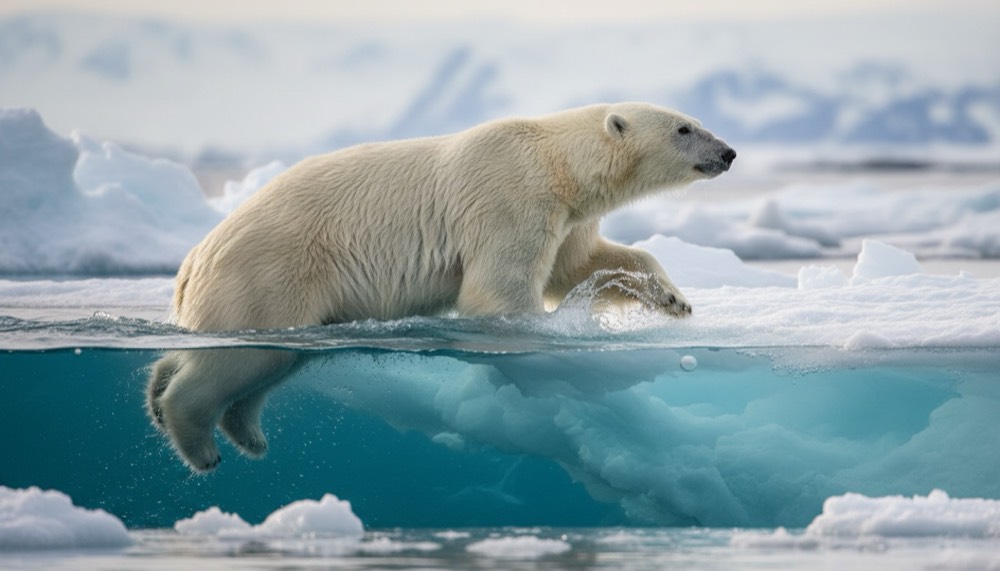
Yes, really. Every single hair is clear, like a tiny icicle. It only looks white because it scatters light, the way snow does. Underneath, a polar bear's skin is black — and so are its nose and lips.
Polar bears live way up at the top of the world, in the frozen Arctic, where the ocean turns to ice. They're one of the biggest meat-eaters that lives on land, and their favorite food is seals, which they catch out on the ice.
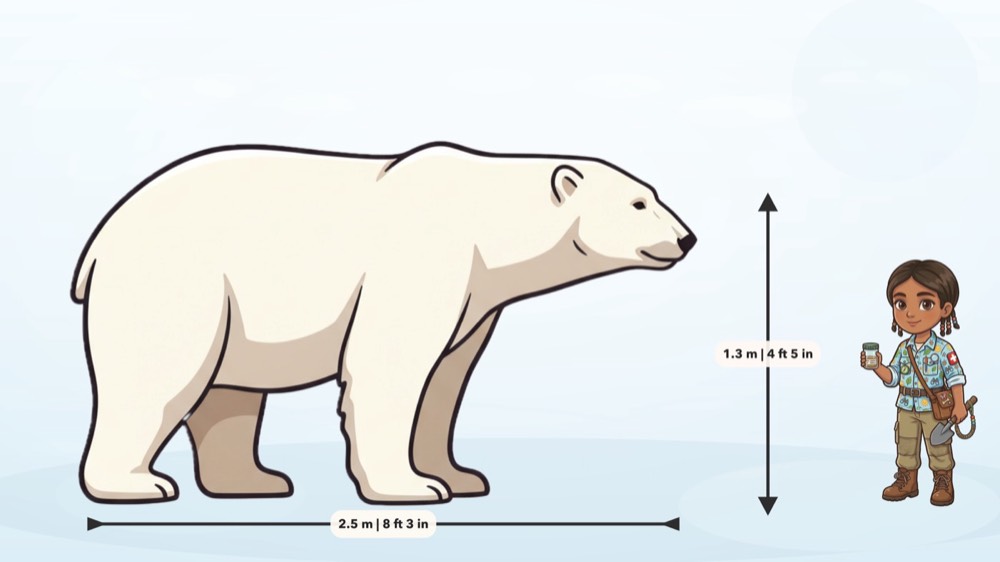
Even standing on all four feet, a grown-up polar bear's back — about 1.3 meters (4 feet 5 inches) tall at the shoulder — is taller than the top of a 5-year-old's head. Nose to tail, a big bear stretches 2.5 meters (8 feet 3 inches) long: longer than two kids lying down in a row!
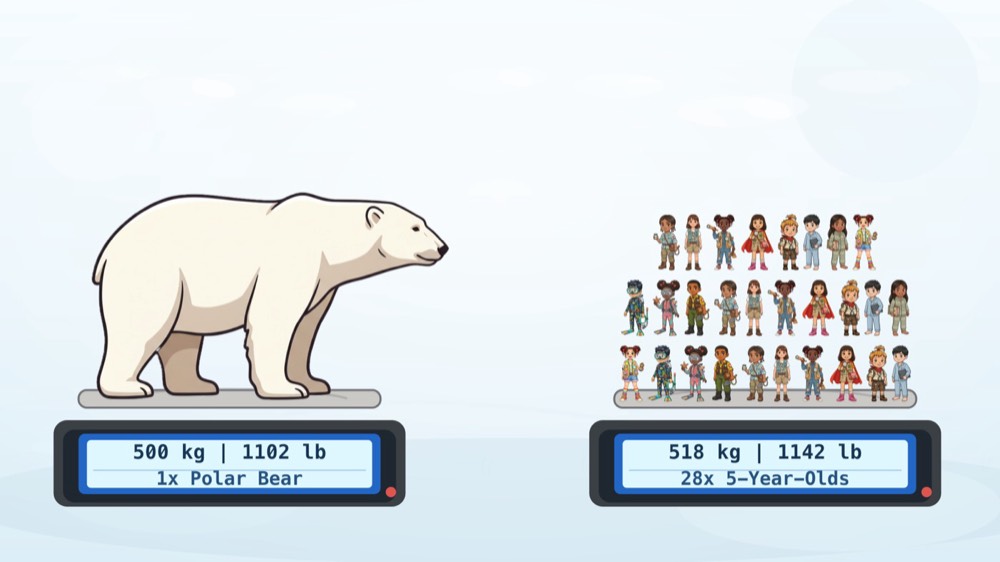
Can you picture 28 five-year-olds on one big scale? That's about how much one big dad polar bear weighs — 500 kilograms (1,102 pounds)!
Polar bears are champion swimmers, too. Their science name, Ursus maritimus, means "sea bear," and they paddle with their giant front paws. Some have swum for days without stopping!
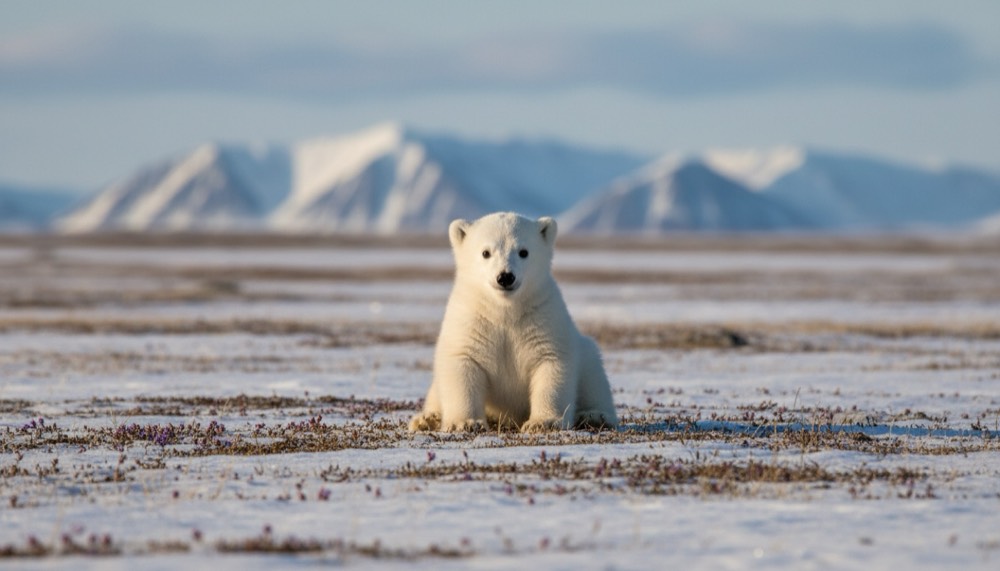
A newborn cub weighs about as much as a loaf of bread, and its eyes aren't even open yet! It stays cozy in a snow den with its mom, drinking her milk, for months — and polar bear moms usually have twins. Right about now, the very first cubs of the year are starting to peek outside their dens for a look at the world.
Can you curl up small in a den, like a mother bear with her cubs? Can you take big, wide steps like a polar bear's snowshoe paws? Can you sniff the air like a polar bear using its super-strong nose?
Where to see a polar bear
In the wild, polar bears live only in the frozen Arctic — on the sea ice and coasts of Canada, Alaska, Greenland, Norway and Russia, far from where most of us live. For the rest of us, a number of zoos around the world care for polar bears, and today is a good day to go say hello to one.
North America
Kali, Suka and Haley
Detroit Zoo, Arctic Ring of Life — Royal Oak, MichiganKali came to Detroit in 2026, after being rescued as a cub in Alaska years ago. Look for him, and for Suka and Haley, diving into the pool.
Learn more →Aurora and Lee
Columbus Zoo and Aquarium, Polar Frontier — Powell, OhioGet close enough at Polar Frontier to see just how enormous a polar bear's paddle-paws really are.
Learn more →Tundra Trek
Toronto Zoo — Toronto, Ontario, CanadaWalk through a Canadian-Arctic-style landscape and watch the zoo's polar bears swim and play.
Learn more →A safe home for rescued cubs
Assiniboine Park Zoo, Journey to Churchill — Winnipeg, Manitoba, CanadaThis zoo gives rescued cubs who need extra help a safe place to grow up. Its underwater tunnels let you watch a polar bear swim right over your head.
Learn more →Around the world
Arktos and Walker
Highland Wildlife Park — Kincraig, ScotlandTwo fast friends who love to chase, wrestle and swim together at Scotland's only polar bear home.
Learn more →The Boys
Yorkshire Wildlife Park, Project Polar — Doncaster, EnglandSix polar bear buddies share a ten-acre home with grassy hills, rocky beaches and big splashing pools.
Learn more →Tonja and Hertha
Tierpark Berlin — Berlin, GermanyA polar bear mom and her grown-up daughter, who was born right there at the zoo, live together in Germany's capital.
Learn more →Animals sometimes move — check the zoo's own website before you visit.
For grown-ups
Polar bears are listed as Vulnerable by the IUCN. Their total number — around 26,000 — is hard to pin down, but some groups are already shrinking as the sea ice they rely on for hunting forms later and melts sooner than it used to.
There's a hopeful story here. In 1973, in the middle of the Cold War, the five countries with polar bears — Canada, Denmark (for Greenland), Norway, the US and the Soviet Union — still sat down and agreed to stop hunting bears from airplanes and icebreakers and to protect their habitat. It worked: numbers in some hard-hit groups grew back. Today's biggest threat is different — melting sea ice — but helping again will take that same kind of teamwork, this time on climate.
This week, try being a Den Detective: build a cozy "snow den" out of blankets and pillows, crawl in together, keep it quiet and dark like a real polar bear mom, and count how many stuffed animals fit inside as "cubs." Then tell someone why moms and cubs need a safe, quiet den.
Starters: "What do you think it's like to walk on ice and swim in freezing water your whole life?" · "A mother polar bear digs a den in the snow to keep her cubs safe — what would you build to keep your family cozy?" · "What's one small thing our family could do for icy, faraway places?"
If your kid asks could a polar bear hurt me? — this holds up: "Polar bears are wild and very strong, so grown-ups who live near them always keep their distance and know how to stay safe. Here at home, you're not anywhere near one."
Keep exploring
Wild Atlas has a whole page built around this animal — narrated facts, the full scale comparison against a 5-year-old, and more — in the Planet Pioneers pack.
Meet the polar bear in Wild Atlas →
For more, visit Polar Bears International.
 Subscribe and the Farm Friends pack ($3.99) is free — yours to keep even if you unsubscribe.