Happy International Day of the Seal (also called International Seal Day)! Every March 22, people celebrate seals — and right about now, far out on the frozen sea near Canada, fluffy white harp seal pups are resting on the ice.
About this day: In 1982 the U.S. Senate named a 'Day of the Seal' to help protect seals, and today people around the world celebrate seals every March 22. Source
Read this one out loud together — it's short, and it's even better with your best seal-bark voice.
A baby harp seal is born on floating ice in a fluffy white coat. In less than two weeks, drinking its mom's super-rich milk, it grows to three times its birth weight!
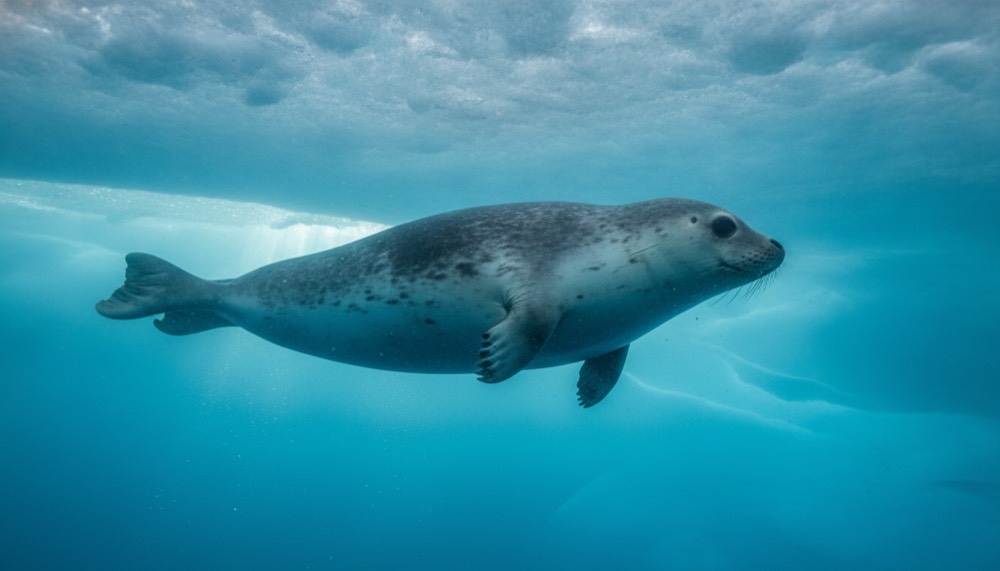
A brand-new harp seal pup is already about as heavy as a big bag of dog food, and almost as long as you are tall. Harp seal milk is super creamy — much, much richer than the milk in your fridge — and the pup gains weight fast. By the time it's ready to be on its own, it weighs as much as two five-year-olds.
Can you guess how a grown-up harp seal got its name? Look closely at its back — there's a dark, curvy mark shaped just like a harp!
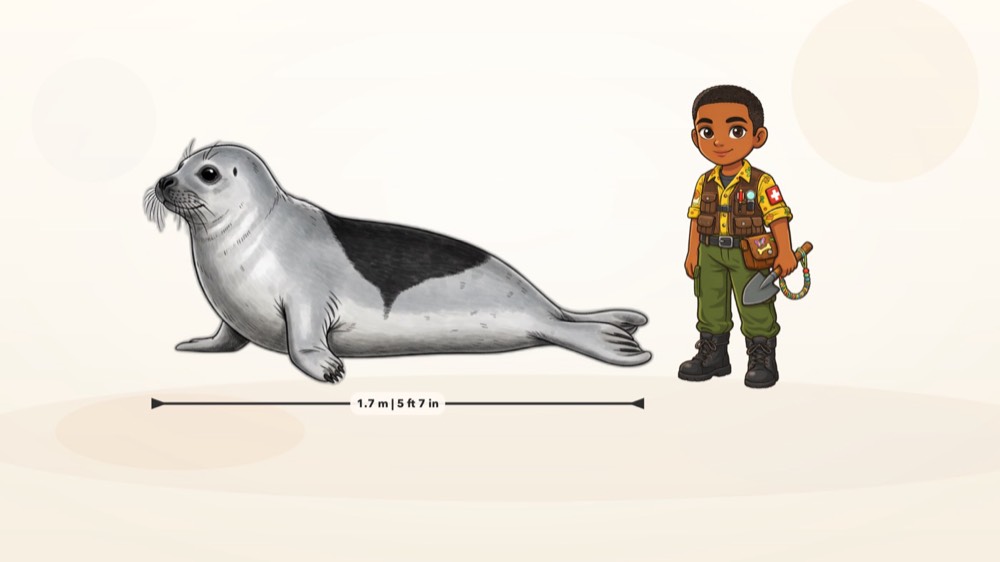
A grown-up harp seal is about as long as one and a half kids lying head to toe in a row, and it weighs about as much as seven or eight five-year-olds put together.
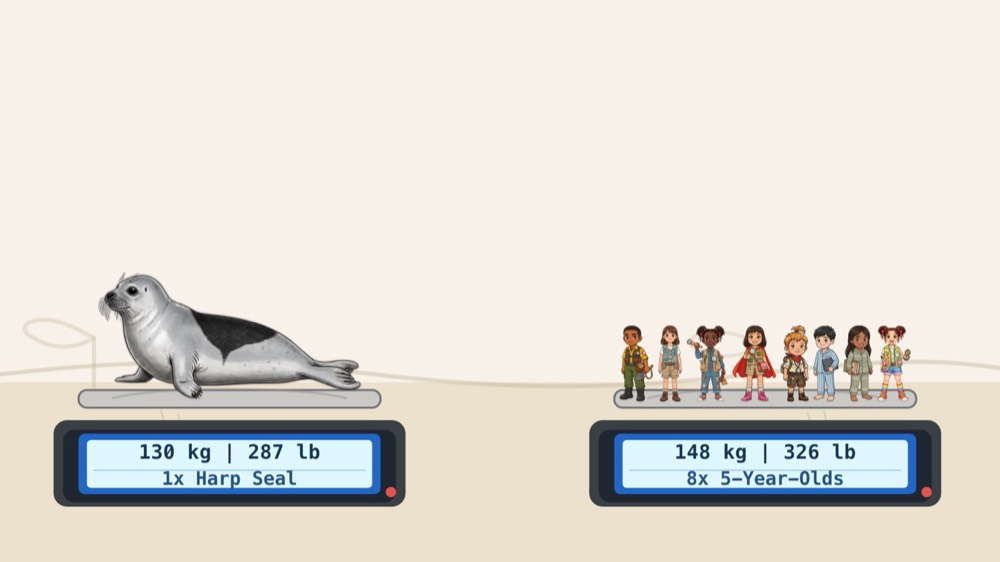
It takes eight kids on the other side of the scale to out-weigh one seal — can you count them?
Harp seals can hold their breath for about as long as a whole cartoon episode, and dive about 400 meters (1,300 feet) down — deeper than most skyscrapers are tall. Underwater, they're chatty too — they warble, trill, and chirp, and pups call out to their moms.
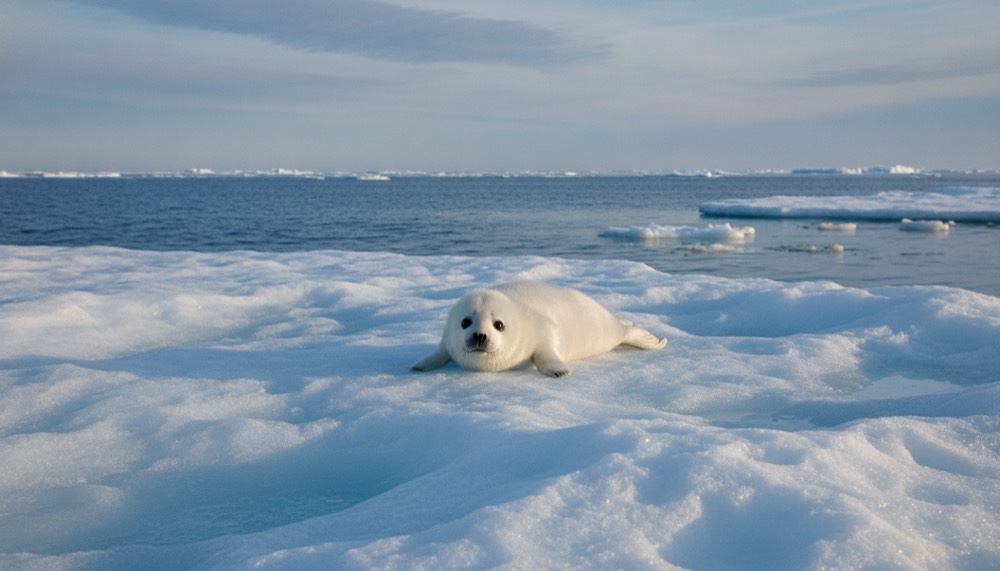
Baby harp seals wait on the ice until they're big and strong enough to swim. While they wait, the fluffy white coat falls away, and a smooth grey coat is underneath.
Can you curl up small and fluffy like a baby seal on the ice? Can you wiggle across the floor like a seal, without using your hands?
Harp seals live in the icy North Atlantic and Arctic Ocean, near Canada, Greenland, Norway, and Russia — and every March, more fluffy white pups are born on the sea ice. Seal pups often rest alone on the beach while their mom is off fishing — that's normal! If you ever see one, the kind thing to do is watch quietly from far away and tell a grown-up.
Where to see a harp seal
In the wild, harp seals live in the icy North Atlantic and Arctic Ocean, and every late winter, mothers give birth to fluffy white pups on the floating sea ice near places like Québec's Magdalen Islands. For the rest of us, harp seals are very rare in aquariums — only a handful of places in the world care for one.
North America
Harp seals in the Arctic exhibit
Aquarium du Québec — Québec City, Québec, CanadaIn the Arctic area of this aquarium, you can see harp seals swimming — the same kind of seal whose fluffy white pups are born on the sea ice farther down the St. Lawrence, in the Gulf of St. Lawrence.
Visit Aquarium du Québec →Harp seals are rarely on display — but sometimes a young one gets help from a rescue team, like the young harp seal Mystic Aquarium in Connecticut nursed back to health and released to the ocean in March 2026. Animals sometimes move — check the aquarium's own website before you visit.
For grown-ups
Harp seals are listed as Near Threatened by the IUCN (2025), up from Least Concern, mainly because the sea ice they need for giving birth, nursing, and resting is melting as the Arctic warms about four times faster than the rest of the world. There are still millions of harp seals — one of the most numerous seals on Earth — and there's a hopeful precedent: by the late 1960s, heavy hunting had cut the Northwest Atlantic herd to about 2 million, but in 1987 Canada banned the commercial hunting of whitecoat pups, and the herd grew back into the millions. Hunting of older seals continues legally today, so the story isn't finished, but it shows that when people change the rules, seal numbers can bounce back. And in March 2026, a young harp seal found weak and dehydrated on a beach in Barnstable, Massachusetts, was nursed back to health at Mystic Aquarium and released to the ocean on March 20, 2026 — just two days before International Day of the Seal.
Be a Seal Scientist this week: draw a grey seal with its dark, harp-shaped mark on its back, then add a fluffy white pup beside it on an ice floe. For an extra hope action, do one "ice-saver" thing together, like turning off lights when you leave a room.
Starters: "Did you know a harp seal pup is born with fur as white as snow?" "Why do you think a fluffy coat helps keep a baby seal warm on the ice?" "What do you think it feels like to dive deeper than a building is tall?"
If your kid asks do people hurt seals? — this holds up: "Long ago, people took too many baby seals for their fur. Grown-ups made a rule in 1987 to protect the babies, and people keep working to keep seals and their ice safe."
Keep exploring
Wild Atlas has a whole page built around this animal, part of the Legends of the Wild pack — narrated facts, the full scale comparison against a 5-year-old, and more.
Meet the harp seal in Wild Atlas →
For more, visit NOAA Fisheries.
 Subscribe and the Farm Friends pack ($3.99) is free — yours to keep even if you unsubscribe.