Happy International Sloth Day! Every October 20, people everywhere celebrate every kind of sloth, both two-toed and three-toed — a day started back in 2010 by Colombia's AIUNAU Foundation. Today we're spending it with a three-toed sloth, the slow-motion superstar of the rainforest.
About this day: International Sloth Day was started in 2010 by AIUNAU, a sloth rescue group in Colombia, to help people learn about sloths and protect them. Source
Read this one out loud together — it's short, and it's even better with a big, slow, sleepy yawn.
A sloth's fur is like a tiny garden — green algae grows right in it, and little moths live there too!
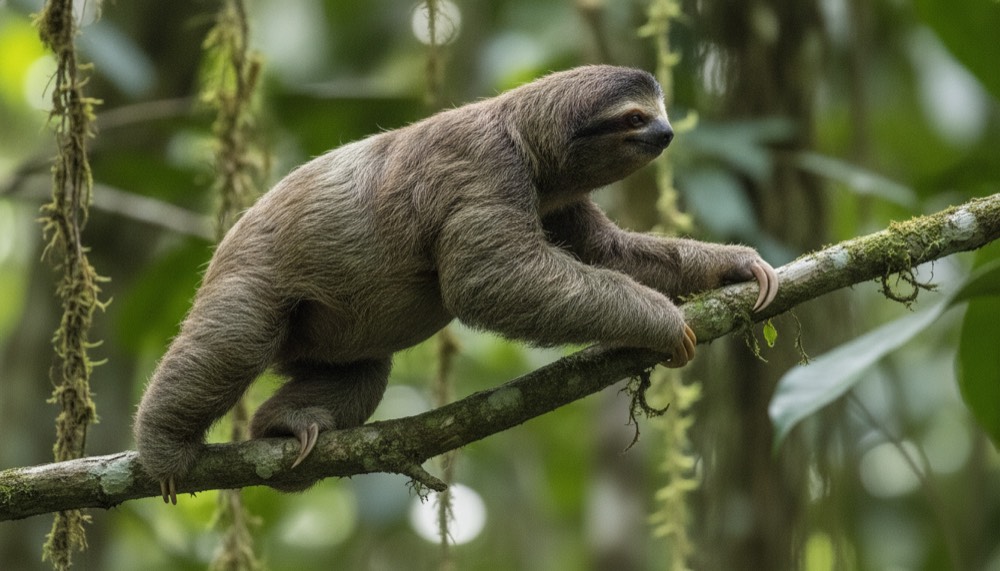
Meet the three-toed sloth — one of the slowest-moving mammals in the world. It hangs from branches using three long, curved claws on every hand and foot, like built-in hooks, and it almost never lets go.
Can you hang your arms over a couch cushion the way a sloth hangs from a branch?
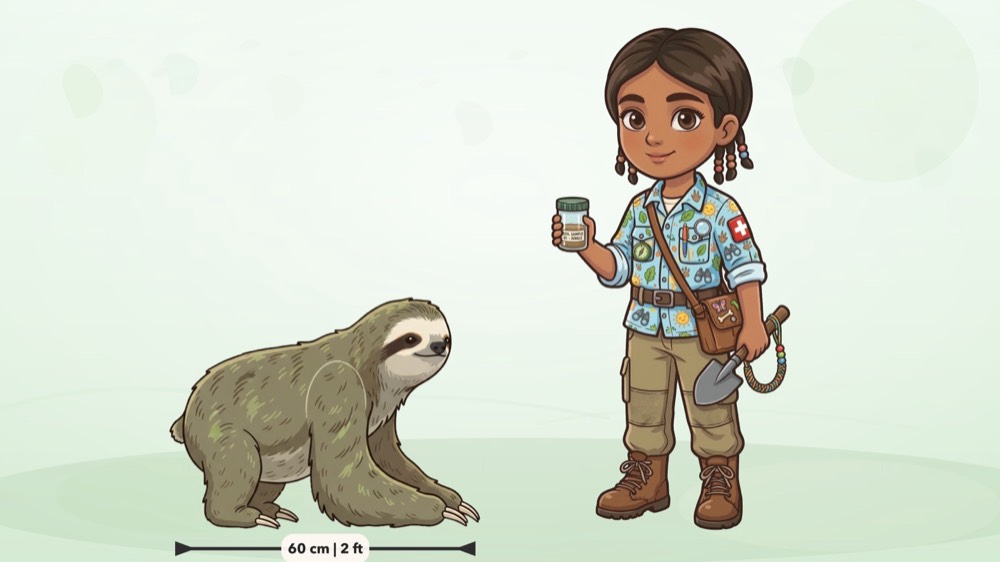
A grown-up sloth is about as long as your arm and shoulder together — around 60 centimeters. Line up about two sloths nose to tail, and they'd be as tall as you!
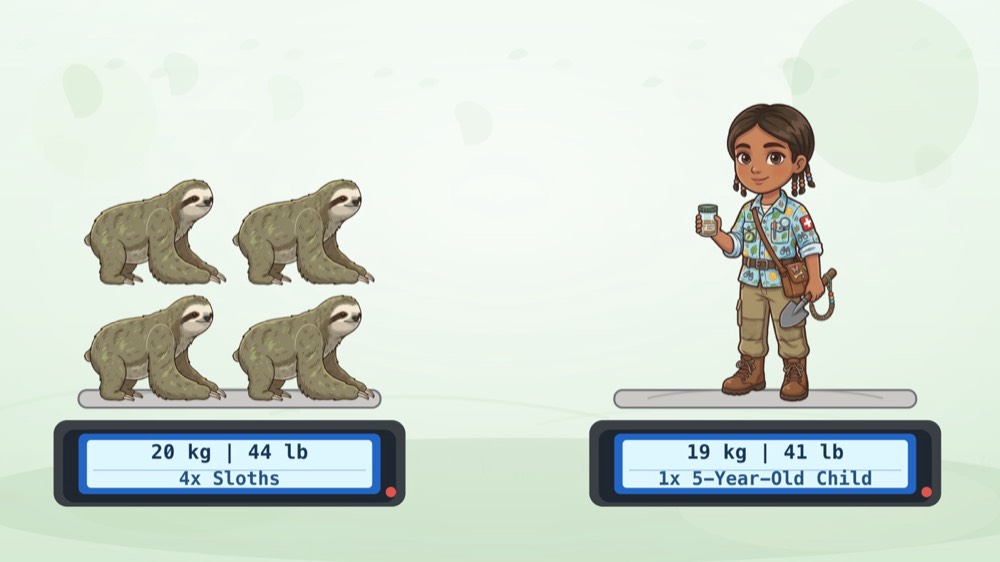
It's light, too — it would take about four sloths to weigh as much as you. A sloth moves so little that in a whole day, it might only travel about as far as across a playground. But don't count it out: sloths are surprisingly good swimmers.
Here's a wow fact: most animals with fur, like us, have seven bones in their necks — but a sloth can have up to nine! Those extra bones let it turn its head almost all the way around.
Can you turn your head almost all the way around, like a sloth's extra neck bones let it do?
About once a week, a sloth climbs all the way down its tree — just to poop. The moths that live in its fur ride along and lay their eggs in the poop. When the baby moths grow up, they fly up into the trees to find a sloth of their own.
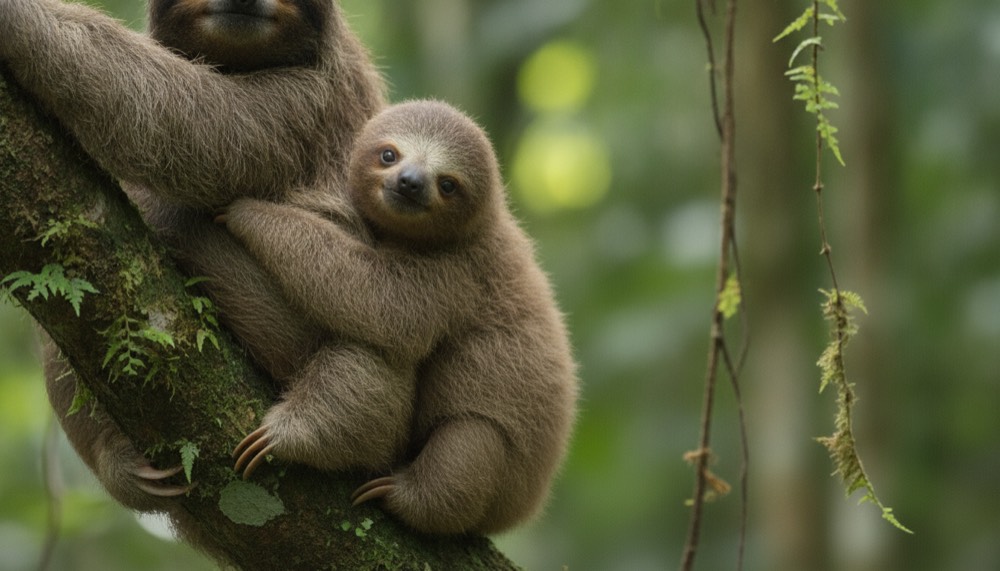
A baby sloth is born weighing less than a big bottle of water. It hangs onto its mom's tummy and rides along for months, learning which leaves are good to eat.
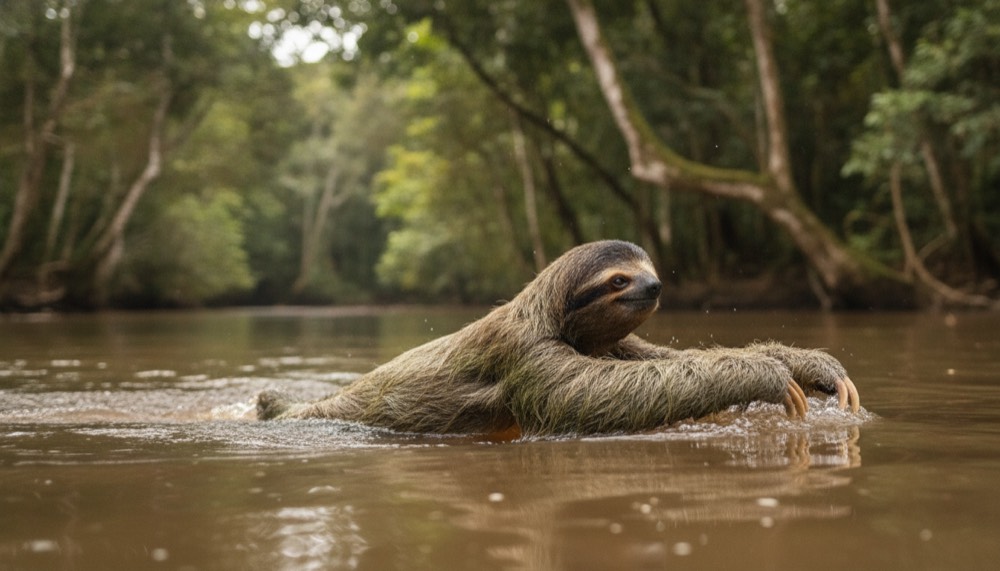
Can you move as slowly as you possibly can across the room, like a sloth?
Where to see a three-toed sloth
In the wild, three-toed sloths live high in the rainforest canopy of Central and South America — in Costa Rica and Panama, a guide can sometimes spot one curled up in a treetop, to look at, not touch. For the rest of us, three-toed sloths are hard to keep outside the rainforest, so almost no zoos have them — most sloths you'll meet at a zoo are two-toed sloths, close cousins, but a different kind. These rescue and rehabilitation centers in Costa Rica care for sloths and return them to the wild — visits are guided, and visitors never hold the sloths.
Costa Rica
Sloth kindergarten
Jaguar Rescue Center — Puerto Viejo de Talamanca, Costa RicaThis rescue center takes in more than 300 sloths a year. Babies go through "sloth kindergarten" and even "sloth university" before they're strong enough to go back to the forest.
Learn more →Saving Sloths Together
Toucan Rescue Ranch — San Isidro de Heredia, Costa RicaThis rescue ranch cares for orphaned and hurt sloths, both two-toed and three-toed, and helps them learn to climb and find leaves again so they can go home to the rainforest. Visits are by guided tour.
Learn more →Rescued sloths go home to the forest when they're ready, so check the center's own website and book a tour before you visit.
For grown-ups
Brown-throated three-toed sloths — the kind in this post — are listed as Least Concern, but they're losing forest in many places. Deforestation pushes sloths down onto roads and power lines they never evolved to cross, and some tourist stops let visitors pay to hold a wild sloth, which stresses the animal. (The pygmy three-toed sloth, a smaller cousin found on one tiny island in Panama, is in much more serious trouble — but that's a different species from our brown-throated three-toed sloth today.)
The hopeful part: the Sloth Conservation Foundation has been building rope "Sloth Crossing" bridges through the rainforest canopy in Costa Rica, so sloths and other animals can cross roads and gaps without ever climbing down. The foundation says it had installed 374 bridges by the end of 2025, reconnecting more than 8,000 hectares of forest, and it installed its 400th bridge in July 2026.
This week's hope action: wild sloths should be watched, not held. If you ever see one in the wild, stay back, stay quiet, and let it hang out — and if you see a photo of someone hugging a wild sloth, tell a grown-up that sloths are happiest left in their trees.
Starters: "If you had to move as slowly as a sloth all day, what would be hard about it?" "Why do you think having algae in your fur might actually be useful?"
If your kid asks do sloths ever get hurt? — this holds up: "Sometimes — mostly when roads cut through their forest, and they have to crawl across the road or climb along a power line to reach the next tree. That's why people in Costa Rica have built hundreds of rope bridges high in the trees, so sloths can cross safely instead."
Keep exploring
Wild Atlas has the sloth, narrated, in the Rainforest Explorers pack — the full scale comparison against a 5-year-old, the weight scale showing four sloths, and a close-up of a baby sloth hugging a mossy tree.
Meet the sloth in Wild Atlas →
For more, visit IUCN SSC Anteater, Sloth & Armadillo Specialist Group.
 Subscribe and the Farm Friends pack ($3.99) is free — yours to keep even if you unsubscribe.