Happy International Zebra Day! Every January 31, people everywhere celebrate the zebra — and especially the one thing that makes every single zebra different from every other: its stripes.
About this day: Its origins aren't well documented, but zoos and conservation groups around the world mark International Zebra Day every January 31.
Read this one out loud together — it's short, and it's even better in a snorty, horse-like voice.
Every zebra has its very own stripe pattern — no two are exactly alike, anywhere in the world.
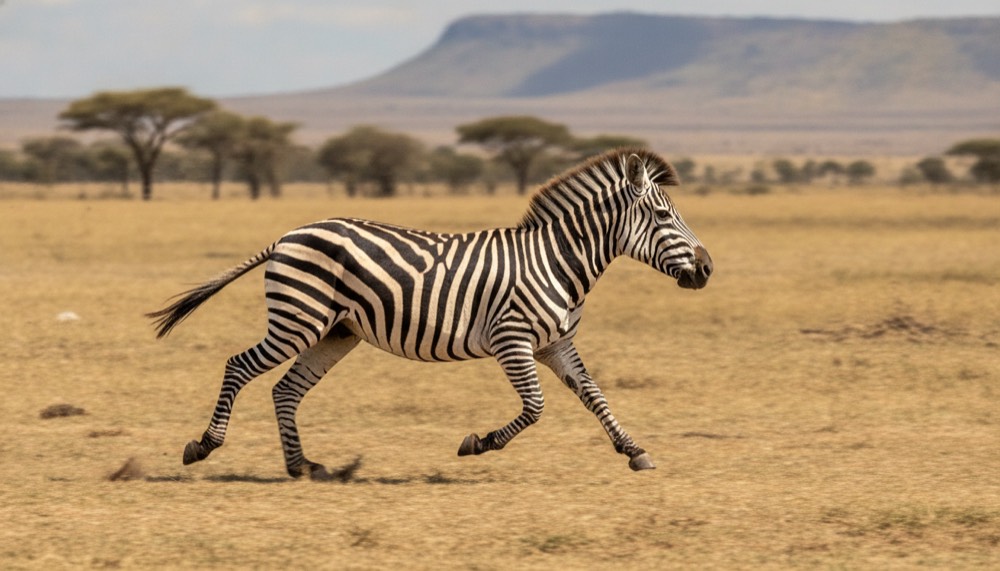
That's not just a fun fact — it matters to zebras. A newborn foal has to learn its own mom — her stripes, her smell and her voice — fast, so it can find her again in a big, busy herd. For the first little while, Mom keeps the rest of the herd at a distance so her foal has time to learn her.
There are three kinds of zebra, and the plains zebra — the one you'll see most often — lives on the grassy plains of eastern and southern Africa.
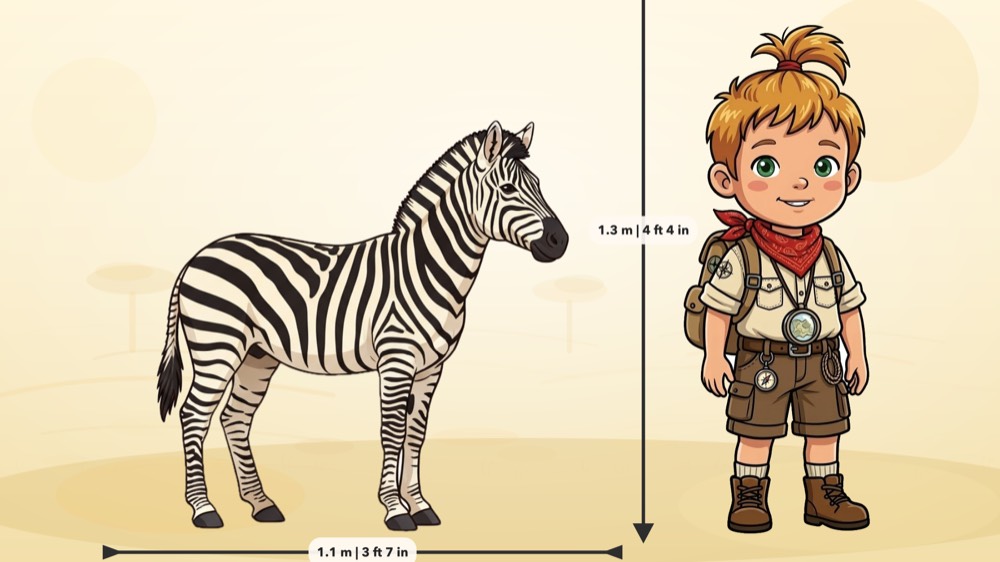
Stand up nice and tall. A grown-up zebra's back is still higher than the top of your head — about 1.3 meters (4 feet 4 inches) at the shoulder, taller than a 5-year-old.
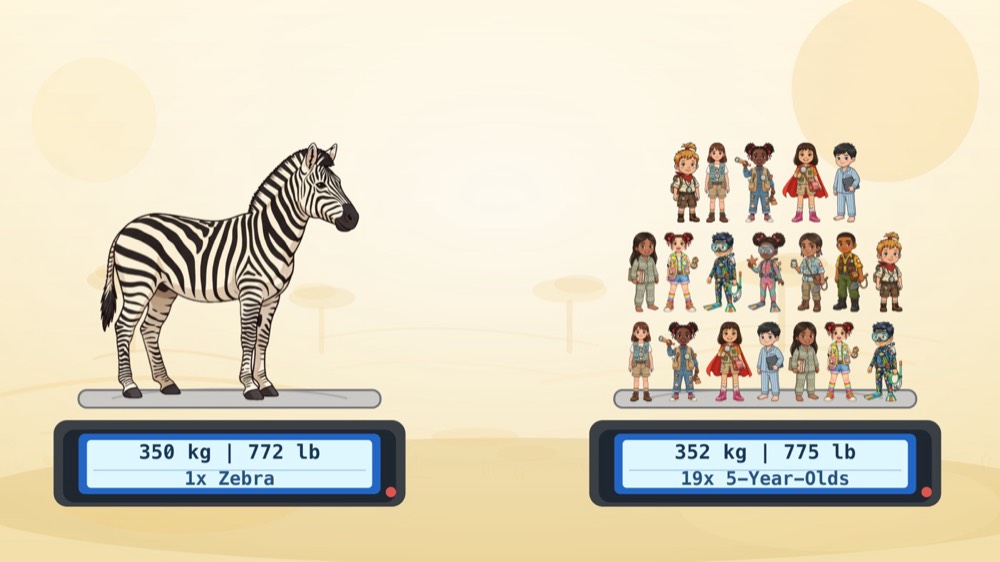
Can you picture 19 five-year-olds all standing on one giant scale? That's about how much one big zebra weighs — 350 kilograms, or 772 pounds!
Here's a mystery even scientists are still working on: stripes seem to muddle biting flies. The flies circle and circle, but they have a much harder time landing on all those stripes than they do on a plain-colored animal.
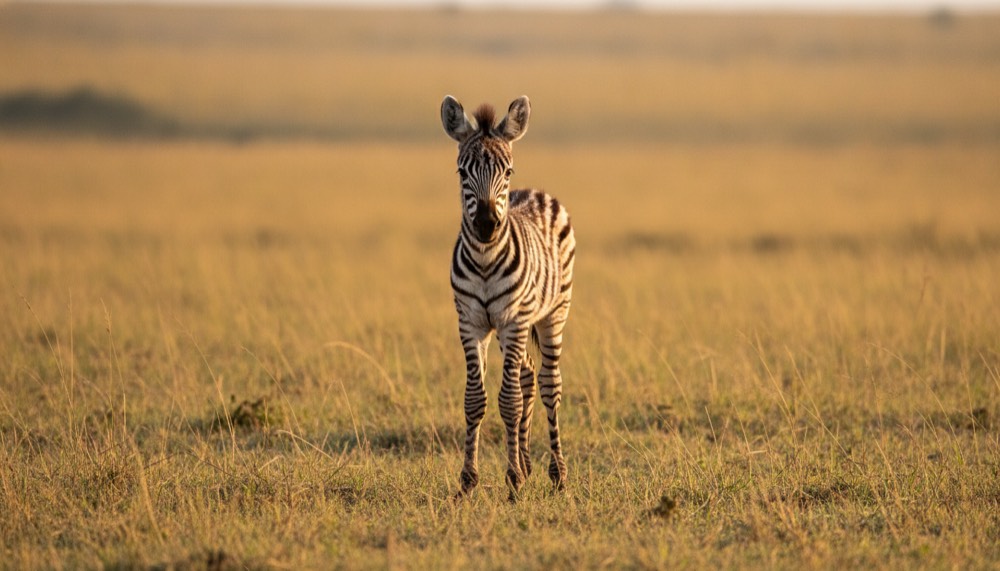
A brand-new baby zebra weighs almost as much as two five-year-olds — and here's the wildest part: it can stand up and walk within about 20 minutes of being born! Its stripes even start out soft and brown, and slowly turn black as it grows.
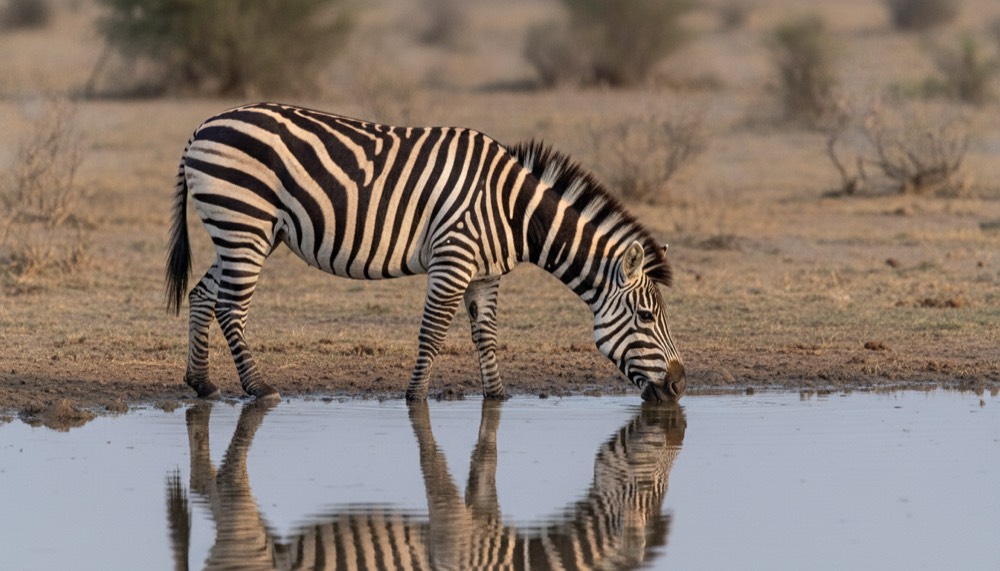
Zebra families join up into huge herds like this one — hundreds of stripes, moving together across the grass.
Can you make a zebra sound — a snort or a bark? Can you draw your own one-of-a-kind stripe pattern? Can you stand really still, like a zebra napping on its feet?
Where to see a zebra
In the wild, plains zebras roam the grasslands of eastern and southern Africa in enormous herds — places like Kenya's Maasai Mara, Tanzania's Serengeti and South Africa's Kruger, where you can watch them from a safari vehicle. For the rest of us, a number of zoos around the world care for zebras, and today is a good day to go say hello to one.
North America
Lyra
Oklahoma City Zoo, Expedition Africa — Oklahoma City, OklahomaLook for a family of plains zebras. The youngest, Lyra, was born in late 2025 and lives with her mom, dad and big sister.
Learn more →Grant's zebras
Oakland Zoo, African Savanna — Oakland, CaliforniaGrant's zebras are a kind of plains zebra, and they can spend up to 19 hours a day munching grass.
Learn more →A herd that takes turns resting
Houston Zoo — Houston, TexasZebras in a herd take turns resting — some doze while others stay awake and alert.
Learn more →Gwen
Cape May County Park & Zoo — Cape May Court House, New JerseyThis free zoo has a herd of seven Grant's zebras. One of the youngest, Gwen, was born in the summer of 2025.
Learn more →Around the world
Zebras on the safari bus route
Werribee Open Range Zoo — near Melbourne, AustraliaHop on the safari bus and ride across a grassy savanna where plains zebras graze, every one wearing its own stripe pattern.
Learn more →Zebras on the African Savannah
Taronga Western Plains Zoo — Dubbo, AustraliaDrive, cycle or walk around this big open-range zoo to spot zebras out on the savannah.
Learn more →Chapman's zebras, with faint "shadow stripes"
Rotterdam Zoo (Diergaarde Blijdorp) — Rotterdam, NetherlandsLook closely between the black stripes for faint gray "shadow stripes" — something you won't see on every kind of zebra.
Learn more →Animals sometimes move — check the zoo's own website before you visit.
For grown-ups
Plains zebras are listed as Near Threatened by the IUCN, with a decreasing population trend. There are still roughly 500,000 of them, but fewer than there used to be — about a quarter fewer since the early 1990s, mainly because of habitat loss and hunting, with farms and fences cutting off the long-distance migrations some herds depend on to find fresh grass. People are working to help, and there's good news below.
There's a hopeful story here. Mozambique's Gorongosa National Park was nearly emptied of large grazers, zebras included, during the country's civil war. In recent years, people have been carefully bringing zebras back from other reserves. An October 2024 aerial count found 47 zebras in the survey area, up from 20 two years earlier, helped by 32 newly released zebras. Even better, the biggest group of the park's own original zebras — 11 animals — was "larger than ever observed before."
This week, try being a stripe detective: draw your own one-of-a-kind stripe pattern, then compare it with a sibling's or a friend's. Nobody's will match — just like real zebras.
Starters: "If your own stripes were one-of-a-kind, what pattern would you want?" · "Why do you think zebras like to stay close together in a big group?" · "How do you think a baby zebra learns to find its own mom in a big herd?"
If your kid asks do lions eat zebras? — this holds up: "Sometimes, yes — that's part of how the grasslands work, everything there is connected. But zebras are fast, alert, and they stick together in big groups, which helps keep them safe most of the time."
Keep exploring
Wild Atlas has a whole page built around this animal — narrated facts, photos, and more — in the Safari Stars pack.
Meet the zebra in Wild Atlas →
For more, visit San Diego Zoo Wildlife Alliance.
 Subscribe and the Farm Friends pack ($3.99) is free — yours to keep even if you unsubscribe.