Meet the leopard! People around the world celebrate it on International Leopard Day, every May 3 — one of the most graceful cats we know.
- International Leopard Day · Monday, May 3 — Proposed in 2022 by the Cape Leopard Trust, Panthera and Saving the Survivors; first observed in 2023. Source
Read this one out loud together — it's short, and it's more fun with a soft, sneaky whisper.
A leopard's spots are shaped like tiny roses!
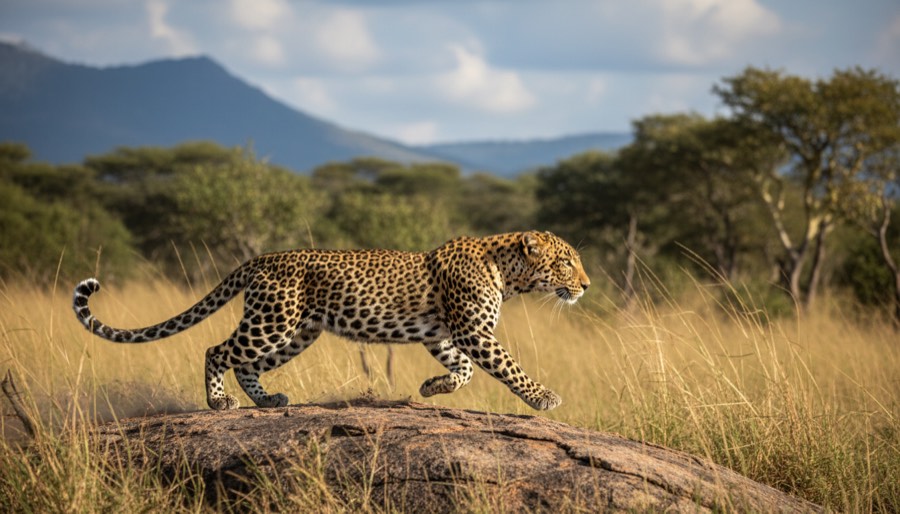
Those spots are called rosettes, because they look like little flowers. And every leopard's pattern is different, a bit like a fingerprint. No two leopards look exactly alike.
Leopards are wonderful climbers. A leopard can even carry its dinner up a tree, to keep it safe from other hungry animals. Some leopards are strong enough to haul up an animal heavier than themselves!
Can you tiptoe like a leopard? Leopards walk very, very quietly. They sneak up slowly, so they hardly make a sound.
Leopards can leap more than 6 metres (20 feet) forward. That's longer than a car! They can also jump about 3 metres (10 feet) straight up, which is taller than a door.
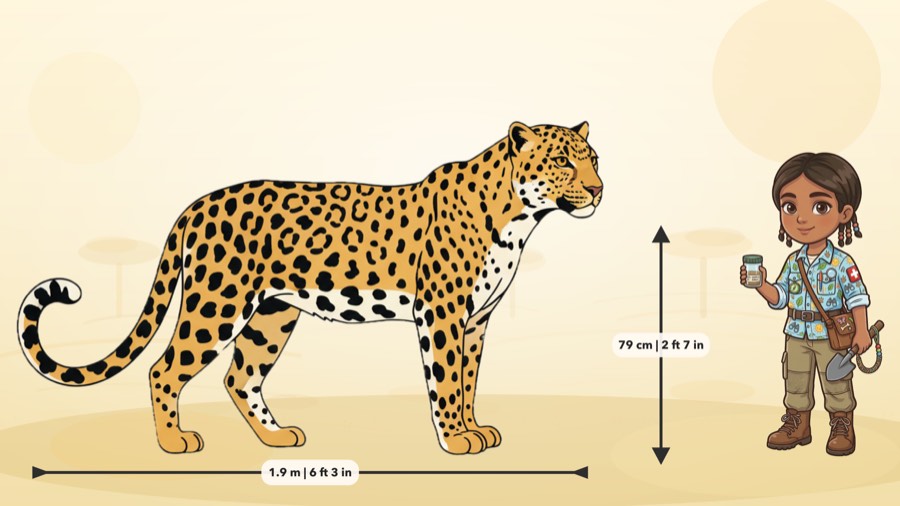
On all fours, a leopard stands about 79 centimetres (2 feet 7 inches) tall at the shoulder. That's about up to your chest, if you're five. From nose to tail, it can be about 1.9 metres (6 feet 3 inches) long.
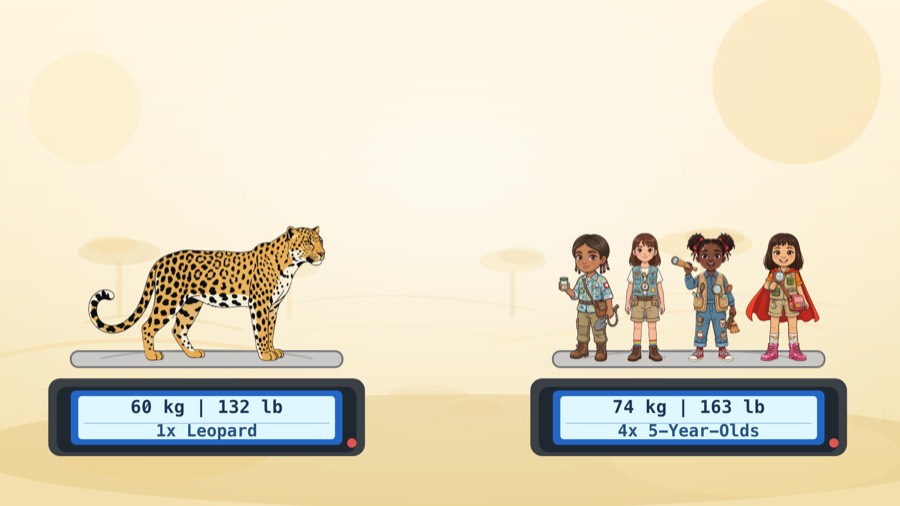
A leopard weighs about 60 kilograms (132 pounds). That's about as much as three or four five-year-olds standing together on one big scale.
Can you picture three or four friends on a scale?
Have you heard of a black panther? It's really a leopard with dark fur! Look closely in bright sunlight, and you can still see its spots.
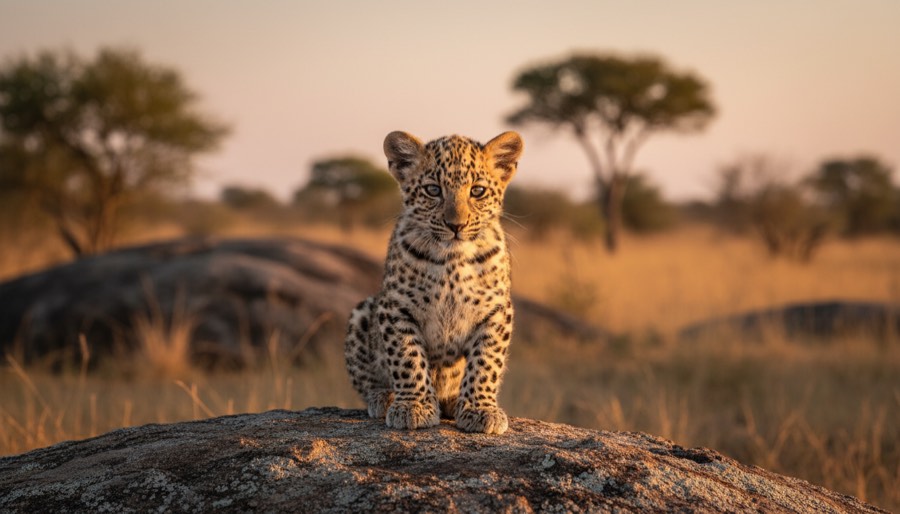
A baby leopard is called a cub. Cubs have thick, fuzzy fur and big, curious eyes. They stay close to their mom while they learn how to climb, hide, and sneak.
Leopards are mostly quiet, but they do make sounds. They make deep growls and a rasping, sawing call that carries across the grass.
Where to see a leopard
In the wild, leopards live in forests, grasslands, and mountains across Africa and Asia, and they're very good at staying hidden. For the rest of us, these zoos have leopards you can visit.
North America
Amur leopards
Saint Louis Zoo — St. Louis, MissouriLook for the leopards in Big Cat Country, in the Red Rocks zone.
Visit Saint Louis Zoo →Amur leopards
Nashville Zoo — Nashville, TennesseeLeopard Forest is home to this rare kind of leopard from the Russian Far East.
Learn more →Amur leopards
San Diego Zoo — San Diego, CaliforniaMeet a leopard from the forests of far eastern Russia and northeastern China.
Learn more →Leopards
The Maryland Zoo — Baltimore, MarylandLook for the Amur leopard in the African Journey area.
Learn more →Around the world
Amur leopards
Yorkshire Wildlife Park — Doncaster, EnglandLeopard Heights is a huge open-topped home with plenty of room to prowl.
Learn more →Animals sometimes move between zoos — check the zoo's own website before you visit.
For grown-ups
Leopards are listed as Vulnerable, mostly from losing habitat and prey, and from hunting. Some kinds of leopard are in much more trouble than others. There's a hopeful story: the Amur leopard of far eastern Russia and northeastern China was down to an estimated 84 in 2014–15, and by 2023 researchers estimated about 128–130 adults and sub-adults. Protected forest and careful camera-trap monitoring have helped it begin to recover.
Leopards need room, and so does a lot of other wildlife. This week, try planting something flowering for local insects and birds, or choosing paper and wood products with a forest-friendly label. It won't reach an Amur leopard's forest directly, but it's the same idea: wild places stay wild when the people nearby look after them.
Starters: "Why do you think a leopard's spots help it hide?" "What would you do if you were a leopard and wanted a safe place to rest?"
If your kid asks would a leopard hurt me? — this holds up: "Leopards are shy and usually try to stay out of sight. They're strong, wild animals who want to be left alone, so people who study them watch from a safe distance and let leopards be leopards."
Keep exploring
Wild Atlas has a whole page built around this animal — narrated facts, the full scale comparison against a 5-year-old, and the sound a leopard actually makes. The leopard lives in the Safari Stars pack, one of the app's paid packs.
Meet the leopard in Wild Atlas (Safari Stars pack) →
For more, visit the IUCN Red List.
 Subscribe and the Farm Friends pack ($3.99) is free — yours to keep even if you unsubscribe.