Happy Monkey Day! Every December 14, people celebrate monkeys — and their primate cousins too, so apes, lemurs and tarsiers get to join the party. Two art students started the tradition in 2000, just for fun, and it stuck. This year we're celebrating with one of the most surprising monkeys in the world: the golden snub-nosed monkey.
About this day: Monkey Day was started in 2000 by two art students, Casey Sorrow and Eric Millikin, at Michigan State University. It's a fun, unofficial day for all primates. Source
Read this one out loud together — it's short, and it's even better with a shiver and a snuggle.
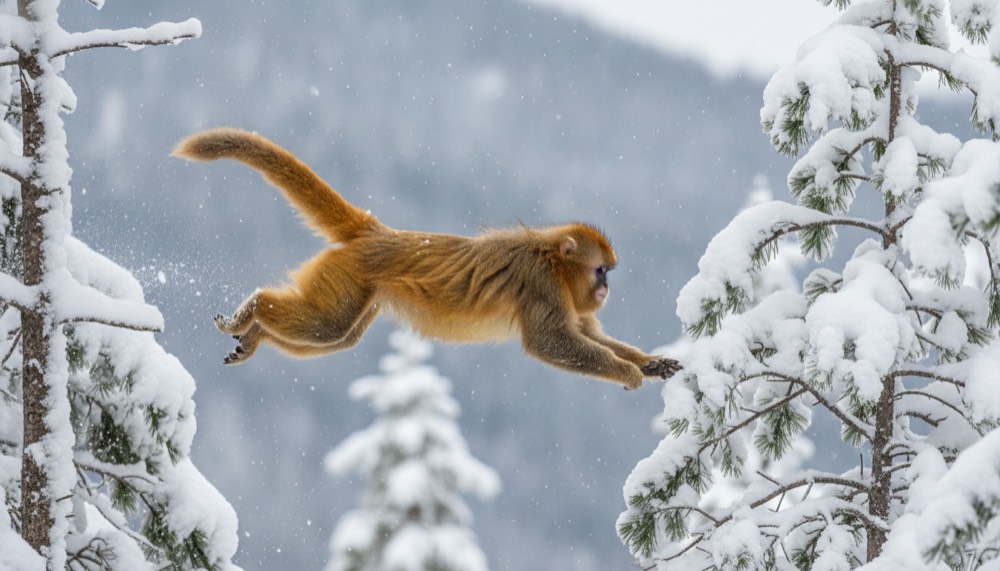
High in China's snowy mountains lives a monkey with golden fur, a blue face and a tiny turned-up nose — and when it's cold, the whole family snuggles up together to stay warm.
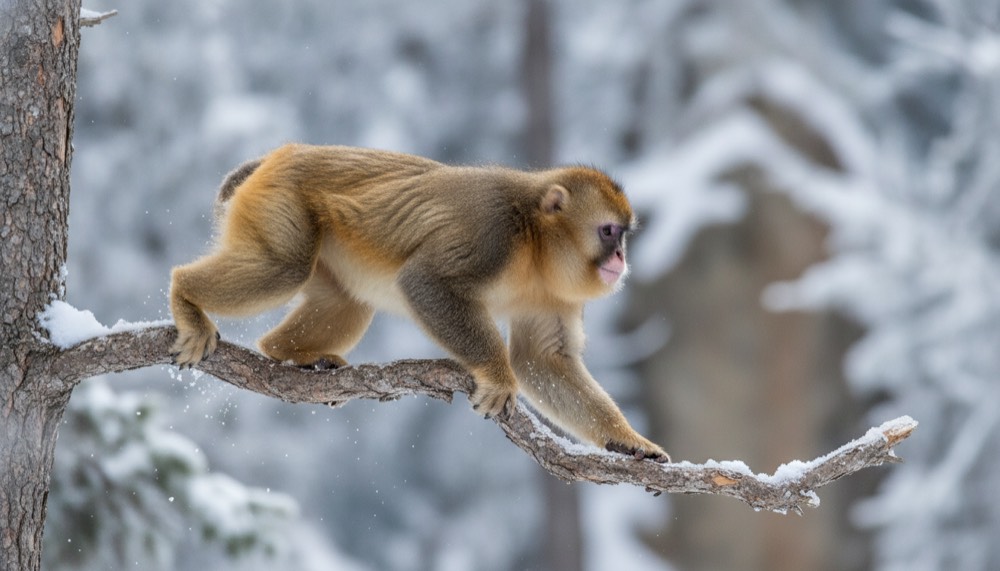
Golden snub-nosed monkeys live in only one place on Earth: the mountain forests of central China, where snow covers the ground for months at a time. Their thick golden coats help keep them warm, and their tiny turned-up noses make them look like they're always smiling up at the sky.
Can you scrunch up your nose like a golden monkey?
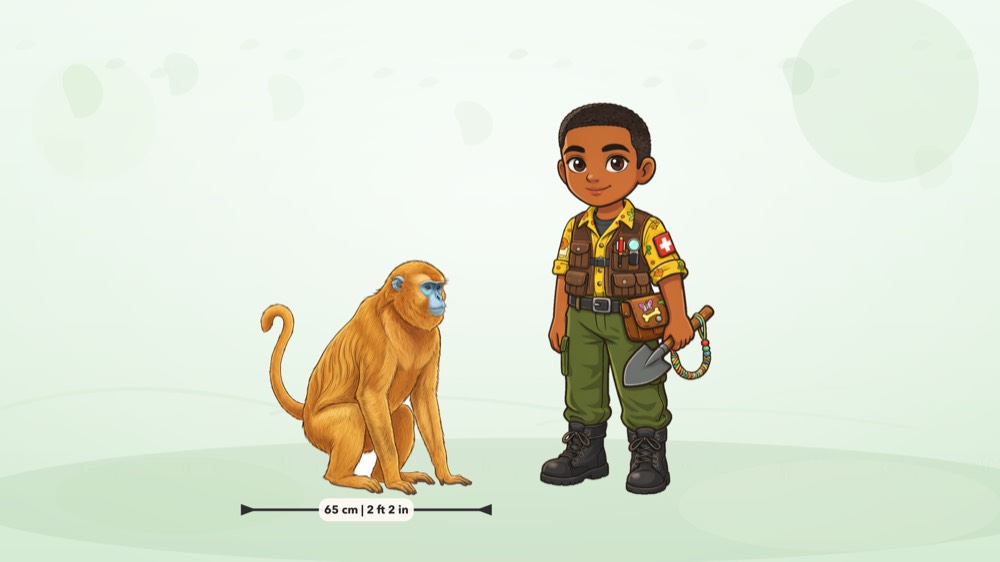
A big boy golden monkey's body alone is a little more than half as long as a 5-year-old is tall. But add his tail — which is about as long as his whole body — and nose to tail-tip, he can be as long as a 5-year-old is tall, or even longer!
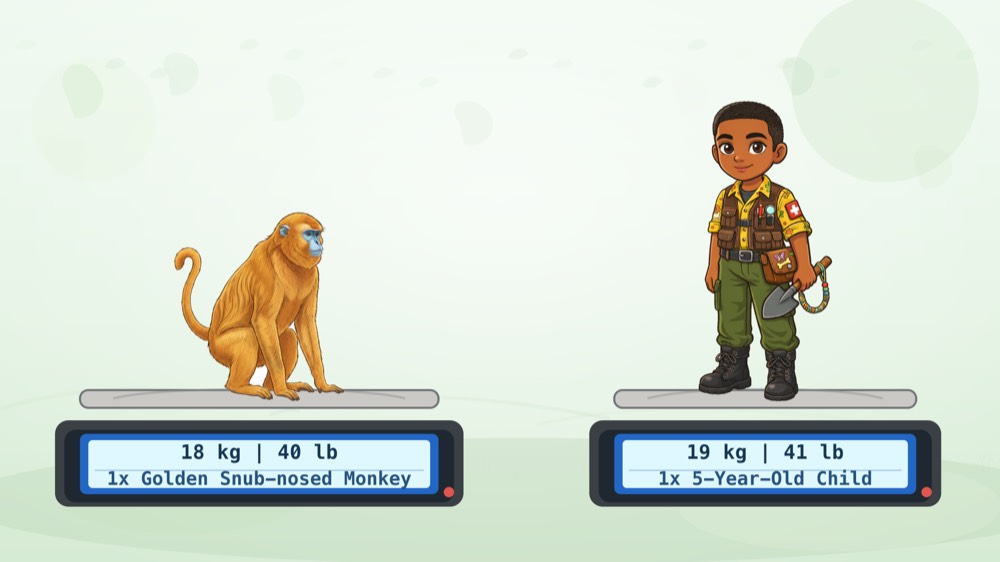
And here's a surprise: a full-grown male golden monkey weighs about as much as one 5-year-old child!
In winter, golden monkeys munch on lichen — a stringy, fuzzy growth that hangs from tree branches — along with bark, buds and seeds. They spend almost all their time up in the trees.
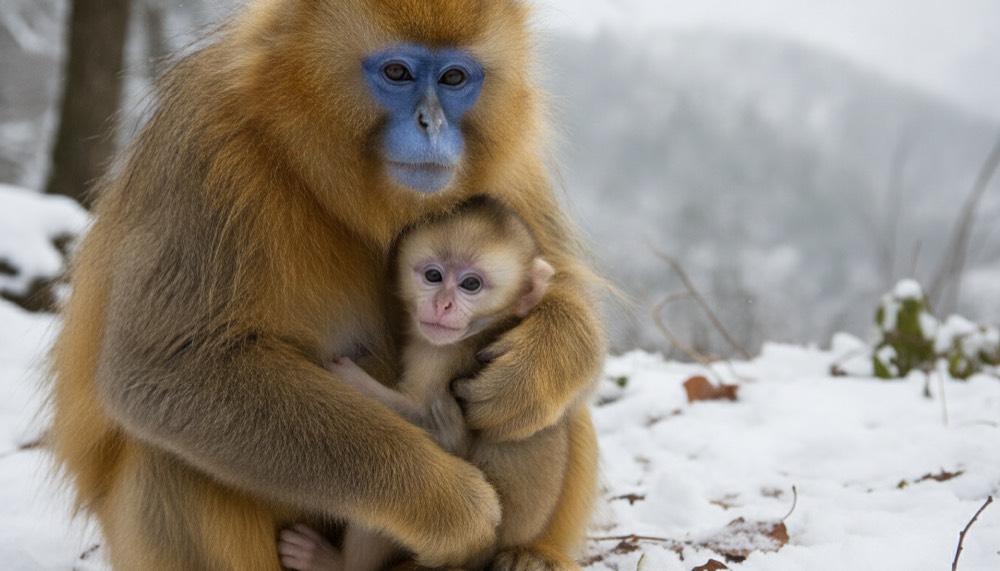
Baby golden monkeys are born in spring, and they start out grey, not golden — their golden color comes in later. Babies get looked after by their mom, and sometimes by grandmas and aunties too, who help feed them.
Can you huddle close with your family to stay warm, like a monkey troop does in the snow?
Golden monkey families join together into huge neighborhoods — sometimes hundreds of monkeys, all living in the same forest. When it gets really cold, families press close together in a big furry huddle, and the huddle gets even bigger the colder it gets.
Can you point to something gold nearby, like a golden monkey's fur?
Where to see a golden snub-nosed monkey
In the wild, golden snub-nosed monkeys live only in the snowy mountain forests of central China — nowhere else on Earth. For the rest of us, no zoo in North America has one right now, but two zoos in Europe do, and both welcomed baby monkeys for the first time in 2026.
Around the world
Jindou and Jinbao
ZooParc de Beauval — Saint-Aignan, FranceIn March 2026, Jindou and Jinbao welcomed a baby here — the first golden snub-nosed monkey ever born in a zoo outside Asia — and a second baby followed a few weeks later. Look for the family in the Chinese Highlands area, near the giant pandas.
Learn more →Liu Yun, Lu Lu, and Juan Juan
Pairi Daiza — Brugelette, BelgiumThese monkeys live in "The Middle Kingdom" section of the park. In spring 2026 two babies were born here, a first for Belgium.
Learn more →Animals sometimes move — check the zoo's own website before you visit. Not near either zoo? You can read more about each monkey family on the zoos' own pages, linked above.
For grown-ups
Golden snub-nosed monkeys are listed as Endangered, and overall their numbers are still going down, mainly because their mountain forests have gotten smaller, though in some places they've started to hold steady. But there's a hopeful story. In Shennongjia, a protected park in China, park scientists report that about 500 golden monkeys lived there forty years ago — and after decades of protecting the forest and building green "bridges" of trees so monkey families could find each other again, there are now more than 1,600.
This week's hope action: go outside and look for lichen — the grey-green fuzz that grows on trees and rocks. Golden monkeys eat lots of lichen in winter, especially the stringy kind that hangs from branches. Draw what you find (don't scrape or eat it). It won't reach the monkeys in China directly, but noticing the living things around you is where caring for wild places starts.
Starters: "What do you think it would feel like to have fur warm enough for snowy mountains?" "If your family had lots of aunties helping take care of the babies, like a golden monkey troop, who would you want to help?"
If your kid asks are golden monkeys going to disappear? — this holds up: "Golden snub-nosed monkeys are endangered because their mountain forests got smaller, but in one part of China people protected the forest and built green bridges of trees, and the monkey families grew from about 500 to more than 1,600."
Keep exploring
Wild Atlas doesn't have the golden snub-nosed monkey yet, but it's home to more than 250 other animals — narrated facts, scale comparisons against a 5-year-old, and close-up looks at how each one lives.
Explore 250+ animals in Wild Atlas →
For more, visit the Wisconsin Primate Info Net fact sheet.
 Subscribe and the Farm Friends pack ($3.99) is free — yours to keep even if you unsubscribe.