Happy National Bird Day! Every January 5, people are reminded to help wild birds stay wild — and today we're meeting one of the most spectacular parrots on Earth, the hyacinth macaw.
About this day: National Bird Day was started in 2002 by the Avian Welfare Coalition, working with Born Free USA, to help people care about birds kept as pets and birds in the wild. Source
Read this one out loud together — it's short, and it's even better with a big, squawky parrot voice.
The hyacinth macaw is the longest parrot in the world — from beak to tail, it's almost as long as a 5-year-old is tall!
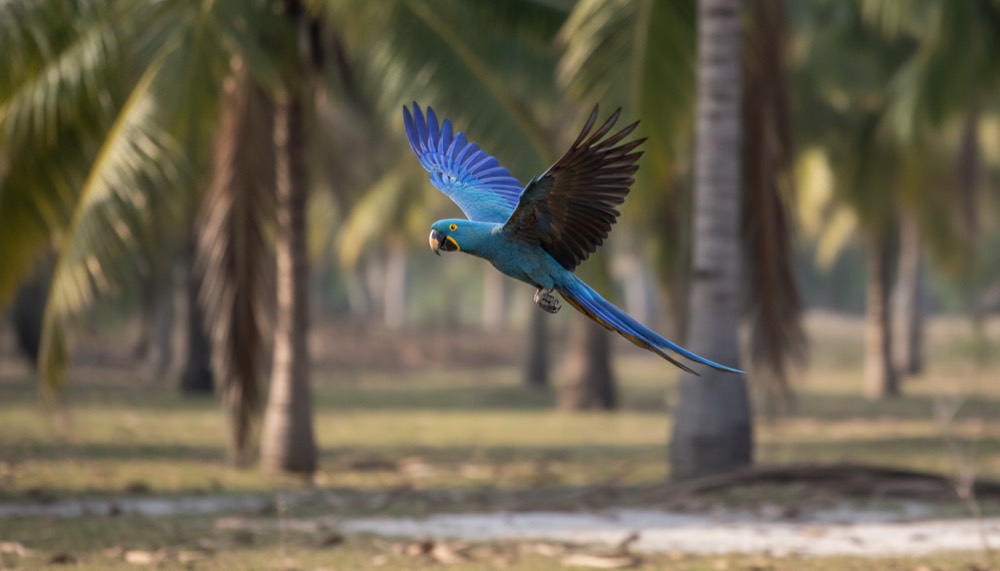
It's cobalt blue all over, with a bright yellow ring around each eye and a little yellow "smile" at the base of its huge, curved beak. Can you squawk as loud as a hyacinth macaw?
That beak is no joke. It's strong enough to crack palm nuts so tough that people would need a hammer to open them. Sometimes the macaw gets help without knowing it — cows eat the soft fruit around a palm nut first, and leave the hard nut behind for a macaw to crack.
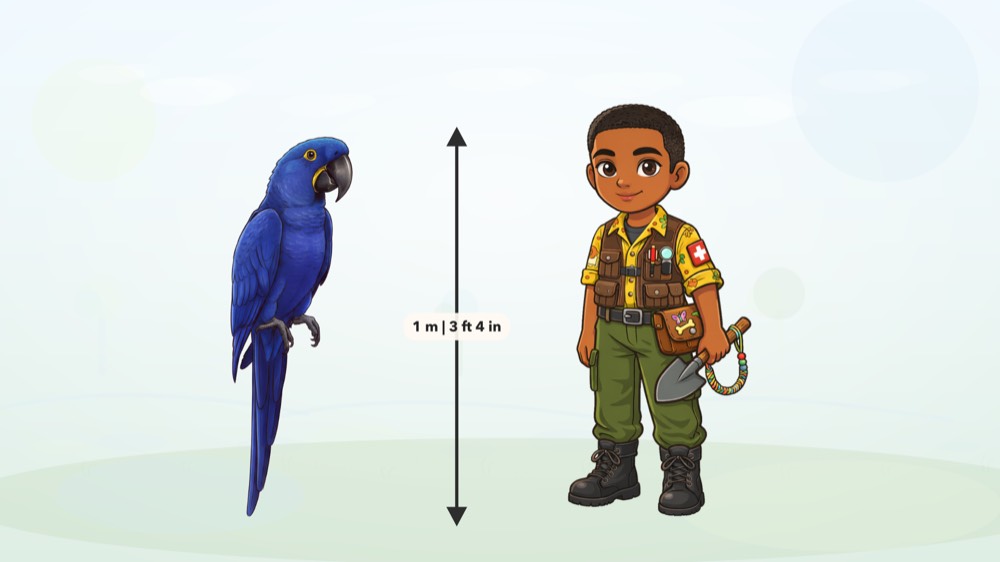
Stood right next to you, that's how long a hyacinth macaw really is — about a meter, or a little over three feet, from beak to tail. Can you guess what else that beak could crack open — a walnut? A coconut? Your cereal box?
All that length doesn't add up to much weight, though. It would take about a dozen hyacinth macaws to weigh as much as one 5-year-old. In the Pantanal, most hyacinth macaws nest in holes in one special kind of tree, called the manduvi. A brand-new chick weighs about as much as a slice of bread. It hatches from one of about two eggs that its mom keeps warm for about a month, while dad brings her food.
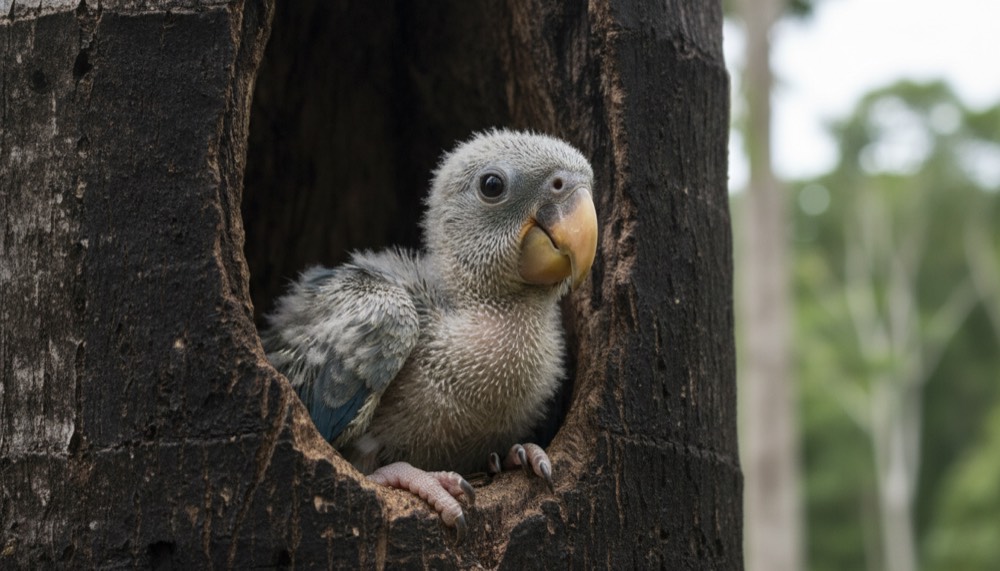
Young macaws can stay close to their parents for more than a year, learning which nuts to crack.
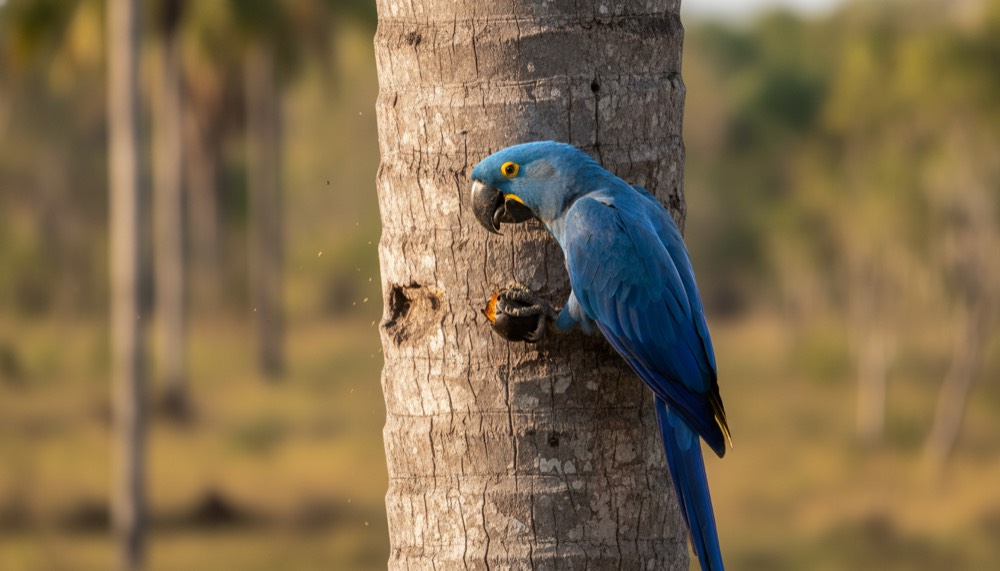
Hyacinth macaws live mostly in the Pantanal, the world's biggest tropical wetland, in Brazil. Can you spread your arms out wide, like a macaw gliding low over the wetlands?
Where to see a hyacinth macaw
In the wild, hyacinth macaws live mostly in the Pantanal wetlands of Brazil, where they nest in the hollows of big old trees on cattle ranches. For the rest of us, these zoos and bird parks around the world have hyacinth macaws you can visit.
North America
Crystal and Ollie
Tulsa Zoo — Tulsa, OklahomaLook for two big blue parrots at the Conservation Center. Crystal and Ollie have been seen preening each other's feathers.
Read the Tulsa Zoo news →Spencer
Zoo Knoxville — Knoxville, TennesseeSpencer is the biggest bird in Max's Aviary, and he's blue from head to tail.
Learn more →Hyacinth Macaws at Entry Village
Nashville Zoo — Nashville, TennesseeRight inside Entry Village, you can see hyacinth macaws the moment you arrive. Keepers hold chats about how these birds crack palm nuts.
Learn more →Curaçao and Kevin
Alexandria Zoo — Alexandria, LouisianaIn 2025, this pair hatched two fluffy chicks — the zoo's first hyacinth macaws ever born there.
Learn more →Around the world
Bird Paradise
Mandai Wildlife Reserve — SingaporeLook for hyacinth macaws among the parrots in the Crimson Wetlands aviary. A hyacinth macaw has starred in the park's Wings of the World show, too.
Learn more →Parque das Aves
Foz do Iguaçu, BrazilThis bird park sits right next to the national park with Iguaçu Falls, in the macaws' home country. Look for the giant blue ones among the red-and-green and blue-and-yellow macaws in the big Macaw Aviary.
Learn more →Parc zoologique et botanique de Mulhouse
Mulhouse, FranceThis French zoo has its own hyacinth macaw page — these parrots are nearly one meter long!
Learn more →Animals sometimes move — check the zoo's own website before you visit.
For grown-ups
Hyacinth macaws are listed as Vulnerable on the IUCN Red List. For a long time, so many were caught to be sold as pets that the wild population dropped sharply — that's one of the two biggest reasons they need our help; losing the big old trees they nest in is the other. There's a hopeful story: in 1987, scientists counted only about 1,500 hyacinth macaws in Brazil's Pantanal wetlands. In 1990, a biologist named Neiva Guedes started what's now the Hyacinth Macaw Institute, and since big nesting trees were scarce, her team began building artificial nest boxes in the early 1990s. By 2005, the Institute's counts put the Pantanal population at about 5,000 macaws, and in 2014 the species was downlisted from Endangered to Vulnerable. Wildfires in 2020 set some of that progress back, and Brazil now lists the macaw as Endangered within its own borders — but the work, and the recovery, continue.
Support the same idea close to home: put up or support a nest box for a native bird near you. Safe places to nest are what's helping hyacinth macaws in Brazil too.
Starters: "If you could pick any bird's blue to paint your room, would it be macaw blue?" "What do you think it would sound like if a macaw and its best friend called to each other across the trees?"
If your kid asks can I have one? — this holds up: "Hyacinth macaws live best wild with their macaw families. Pet birds should only ever come from people who raise them carefully, never caught from the wild."
Keep exploring
Wild Atlas has a macaw page in the Rainforest Explorers pack. It features the red-and-blue scarlet macaw, a colorful cousin of the hyacinth, with narrated facts and a scale comparison against a 5-year-old.
Meet the hyacinth's cousin in Wild Atlas →
For more, visit Instituto Arara Azul.
 Subscribe and the Farm Friends pack ($3.99) is free — yours to keep even if you unsubscribe.