Meet the numbat! People around the world celebrate it on World Numbat Day, held on the first Saturday of November — a day for one of Western Australia's most special little animals.
- World Numbat Day · Saturday, November 6 (always the first Saturday in November) — First held on Nov 7, 2015 by Project Numbat Inc., a volunteer group in Western Australia; now held on the first Saturday of November. Source
Read this one out loud together — it's short, and it's more fun with a tiny tongue-flicking sound.
A numbat has a tongue about as long as your finger — and it uses it to slurp up termites!
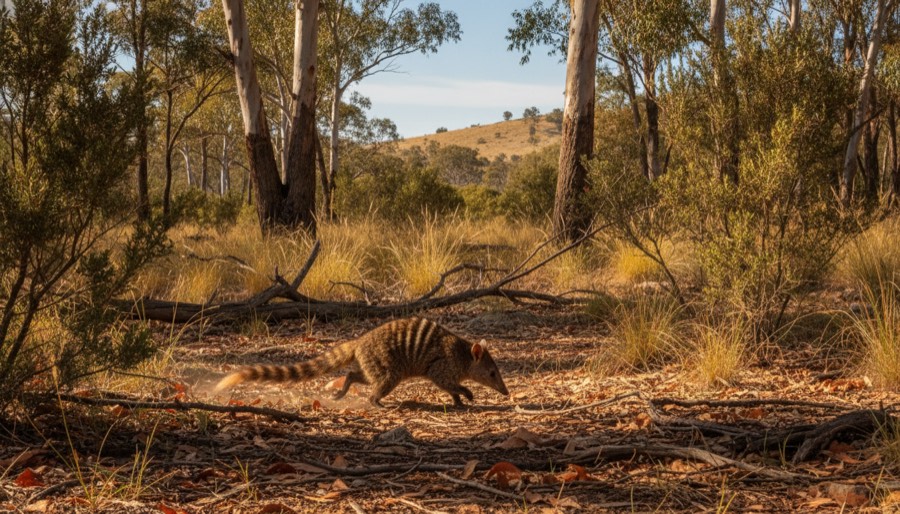
A numbat is a small striped animal from Western Australia. Bold white stripes run across its reddish-brown back, and its tail is big and bushy.
Here's a surprise: it hunts in the daytime. Most of the small marsupials around it are fast asleep, but the numbat is out in the sunshine, sniffing along fallen logs.
What does it hunt? Termites. A numbat can eat up to 20,000 termites in one day! Its sticky tongue is about 10 centimeters (4 inches) long — nearly half as long as its whole body — so it can reach right into tiny tunnels.
Can you stick out your tongue as far as you can? Now imagine it that long and sticky!
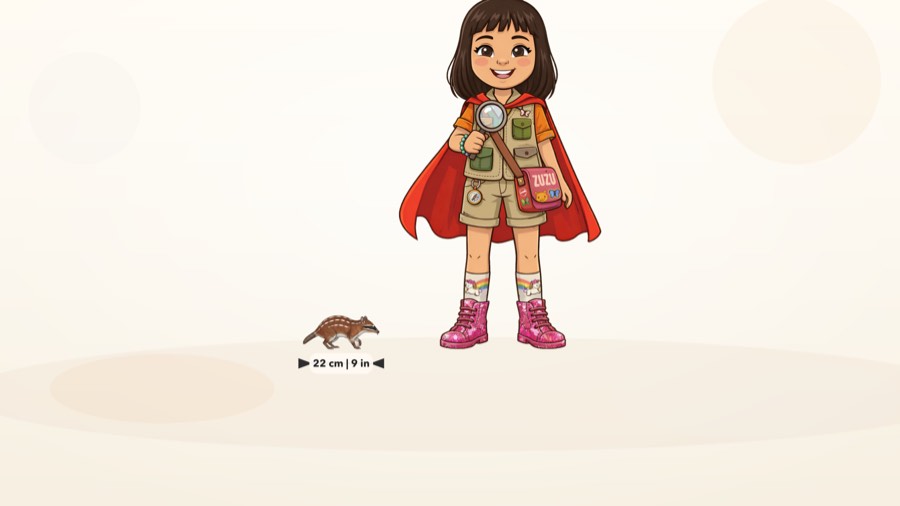
A numbat is small. Its body is only about 22 centimeters (9 inches) long, plus its bushy tail. Next to a 5-year-old, who is about 109 centimeters (3 feet 7 inches) tall, a numbat looks very tiny!
It's light, too. A numbat weighs about half a kilogram (1 pound). A 5-year-old weighs about 18.5 kilograms (41 pounds) — as much as 37 numbats all together!
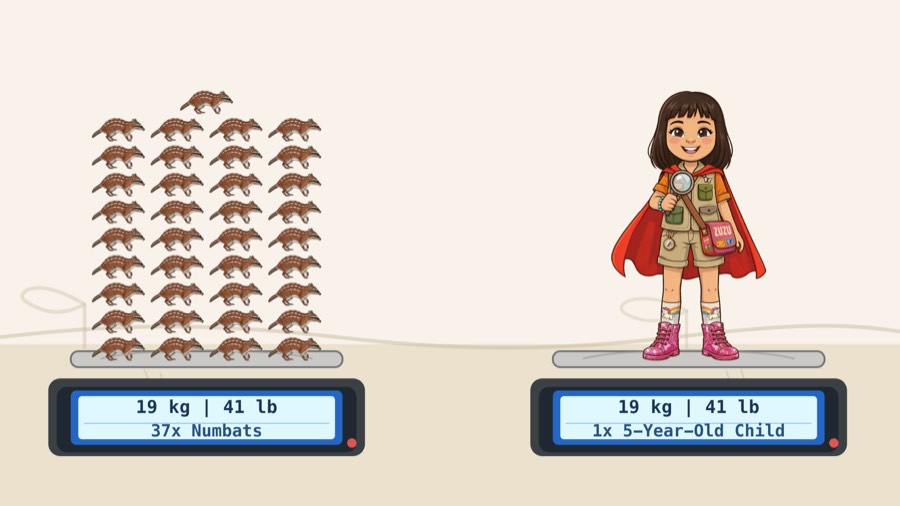
Can you count how many numbats fit on one scale?
At night, a numbat tucks itself into a hollow log, and it may plug the doorway with its furry bottom. Snug!
Numbat mothers don't have a pouch. Their babies cling to her furry tummy while they grow.
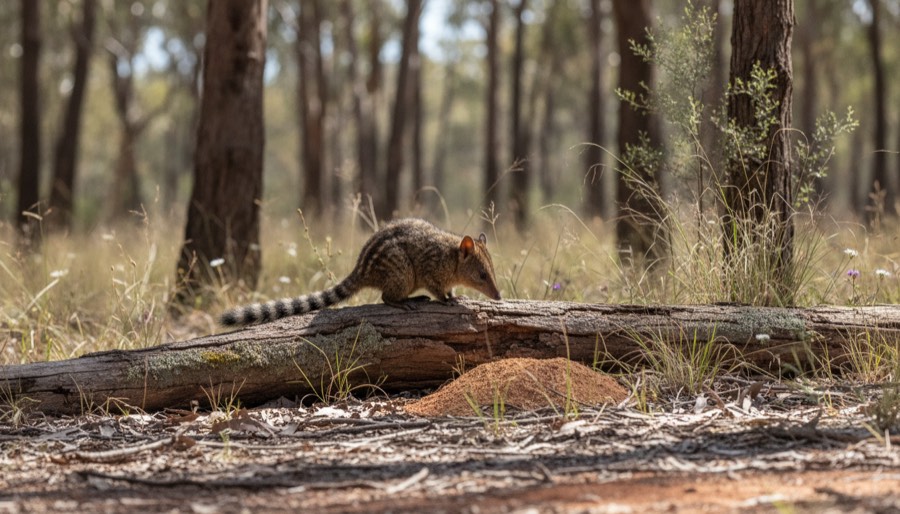
Numbats are quiet animals. If something startles one, it might make a soft clicking sound: tut-tut-tut.
Can you tut-tut like a numbat? Can you tiptoe along like one, with a stripey back and a bushy tail?
There aren't many numbats in the world, but lots of people are working to look after them. And every first Saturday of November, they celebrate on World Numbat Day.
Where to see a numbat
In the wild, numbats live in a few small patches of eucalyptus woodland in Western Australia. For the rest of us: numbats are very rare in zoos, and the one place we could confirm you can visit them is Perth Zoo in Western Australia.
Western Australia
The numbats of the Australian Bushwalk
Perth Zoo — Perth, Western AustraliaLook for numbats among the hollow logs in the Australian Bushwalk. Perth Zoo has been helping numbats for decades by raising young ones to be released into the wild.
Learn more →Numbats are very rare in zoos, and animals sometimes move — check Perth Zoo's own website before you visit. If you're far from Australia, you can still meet the numbat in the app.
For grown-ups
In July 2026 the IUCN Red List moved the numbat from Endangered to Near Threatened. That's a real comeback story: in the late 1970s only about 300 were thought to remain, and today there are an estimated 2,000 to 3,000 adults. The credit goes to fenced safe areas, work to keep feral cats and foxes away, habitat protection, and a Perth Zoo program that has released more than 300 zoo-born numbats into the wild. It isn't a finished story, though — numbats still live in only about 1% of their old range and are still listed as endangered under Australian law, so the work continues.
A family hope action: on World Numbat Day, draw a numbat together and tell someone about it. Small animals only get protected when people know and care that they exist. In Australia, the Project Numbat volunteers hold community events around the day.
Starters: "Why do you think a numbat eats only tiny insects?" "What would you do all day if you were awake while everyone else was asleep?"
If your kid asks will numbats disappear? — this holds up: "Lots of people are working really hard to look after numbats, and it's working! There are more of them now than there used to be. They still need our help, so people keep on caring."
Keep exploring
Wild Atlas has a whole page built around this animal — narrated facts, the full scale comparison against a 5-year-old, and the quiet clicking sound a numbat makes. The numbat is part of the Legends of the Wild pack.
Meet the numbat in Wild Atlas (Legends of the Wild pack) →
For more, visit ABC News, "Numbat conservation efforts pull native species from brink of extinction".
 Subscribe and the Farm Friends pack ($3.99) is free — yours to keep even if you unsubscribe.