Meet the orangutan! People around the world celebrate it on International Orangutan Day, every August 19, and again during Orangutan Caring Week each November.
- International Orangutan Day · Thursday, August 19 — Started around 2016 by orangutan conservation groups, including the Orangutan Outreach network. Source
- Orangutan Caring Week · Starts Sunday, November 14 — Began in 2004 as Orangutan Awareness Week and was renamed by the Orang Utan Republik Foundation, which has held it every November since 2005. It is held for a week in November; the exact dates change each year. Source
Read this one out loud together — it's even better with a slow, low orangutan hoot.
Every single night, an orangutan builds a brand new bed in the treetops!
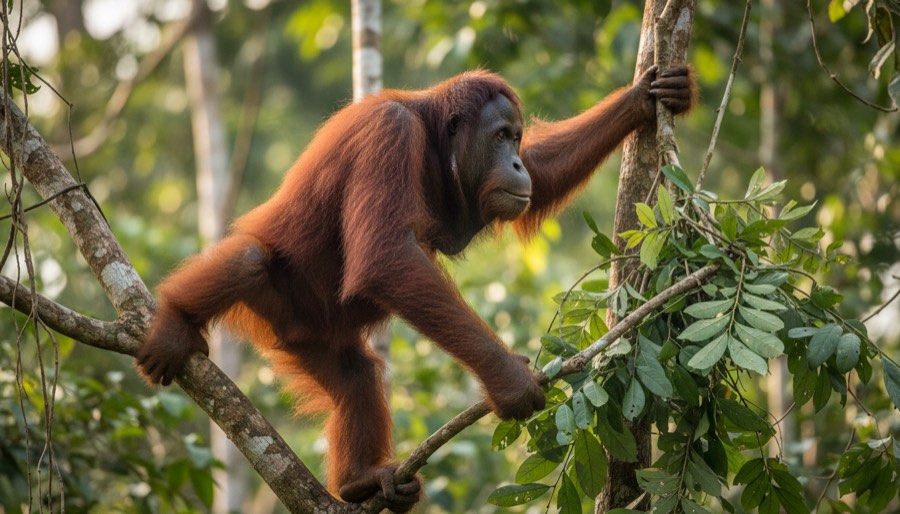
Orangutans are great apes with long orange fur. They live high in the rainforest trees of Borneo and Sumatra. They mostly stay up in the trees, though some orangutans in Borneo do walk on the ground.
Each evening, an orangutan bends branches and piles leaves into a cozy nest. It's like making a treehouse bed before bedtime. Then, the next night, it makes another one!
The word "orangutan" comes from the Malay language. It means "person of the forest."
Can you build a cozy nest out of pillows?
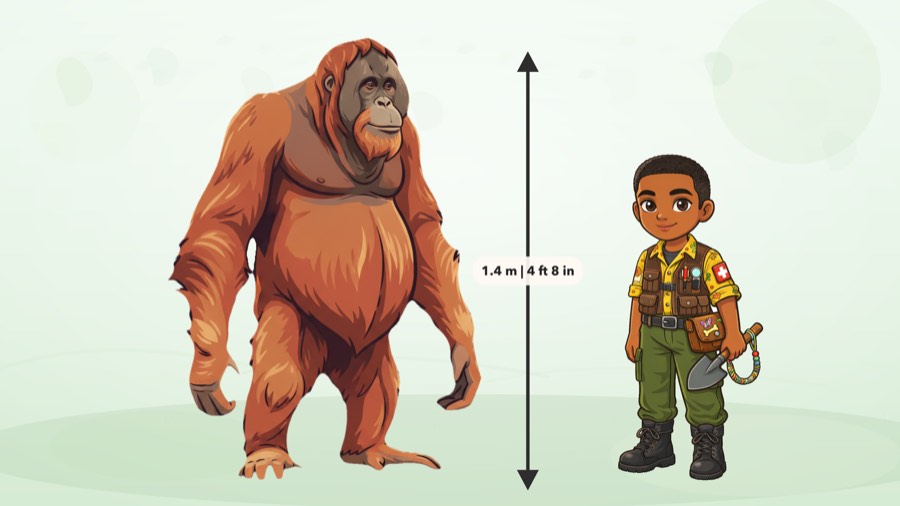
An orangutan is about 1.4 meters (4 and a half feet) tall when it stands up. That's a little taller than a 5-year-old! But its arms are the real wonder. They can stretch about 2 meters (7 feet) from fingertip to fingertip. That's wider than a grown-up is tall! Those long arms help it swing from tree to tree.
Orangutans are very smart. Some use sticks as tools to get bugs out of tree holes. Some even hold big leaves over their heads like umbrellas when it rains!
Can you hold a pretend umbrella over your head?
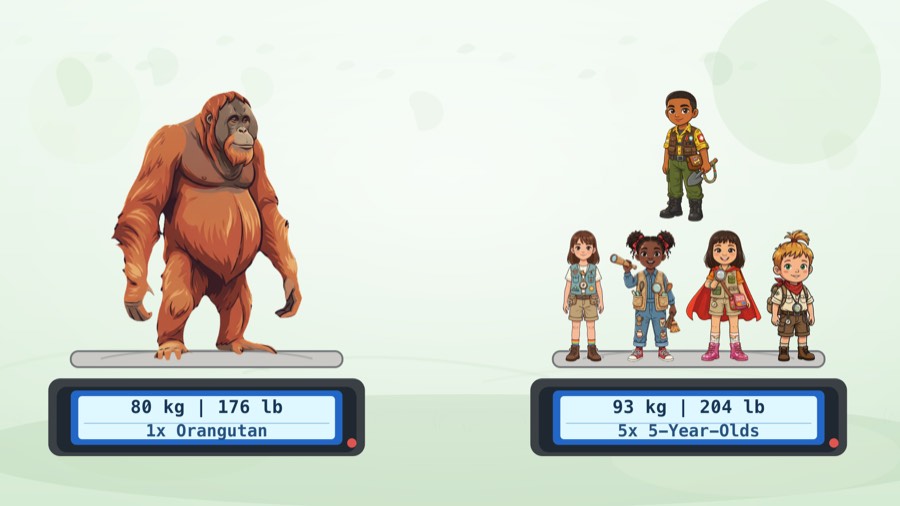
An orangutan can weigh about 80 kilograms (176 pounds). That's about as much as four or five 5-year-olds standing together on one big scale. It's also the biggest mammal that lives in trees!
Orangutans eat more than 300 different kinds of fruit. Yum!
Can you stretch your arms out as wide as they will go?
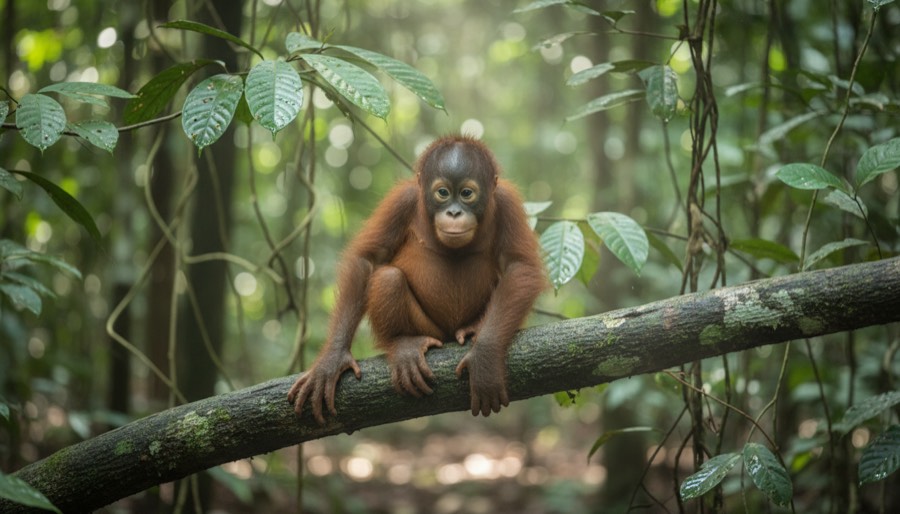
A baby orangutan stays close to its mom for up to eight years. That's longer than almost any other animal. She teaches it which fruits to eat and how to climb safely.
Now you know the orangutan's secrets: a new bed every night, super-long arms, and a name that means "person of the forest."
Where to see an orangutan
In the wild, orangutans live high in the rainforest trees of Borneo and Sumatra, two big islands in Southeast Asia. For the rest of us, these zoos around the world have orangutans you can visit.
North America
Orangutans
Smithsonian's National Zoo — Washington, D.C.Look up! Orangutans travel along the O-Line, a cable path high above visitors' heads.
Learn more →Orangutans
Toronto Zoo — Toronto, OntarioPart of the zoo's great-ape family. Check the zoo's page for where to find them.
Visit Toronto Zoo →Around the world
Orangutan Island
Singapore Zoo — SingaporeA free-ranging orangutan exhibit where they roam among the trees.
Learn more →Bornean and Sumatran orangutans
Chester Zoo — Chester, EnglandVisit the Realm of the Red Ape and the Monsoon Forest.
Learn more →Sumatran orangutans
Zoo Berlin — Berlin, GermanySumatran orangutans have lived at this zoo for a very long time.
Learn more →Sumatran orangutans
Zoo Zürich — Zürich, SwitzerlandHome to Sumatran orangutans, with many babies born here over the years.
Learn more →Animals sometimes move between zoos — check the zoo's own website before you visit.
For grown-ups
All three kinds of orangutan (Bornean, Sumatran, and Tapanuli) are listed as Critically Endangered by the IUCN, mostly because their rainforest homes are being cleared. There's a hopeful story: groups such as the Borneo Orangutan Survival Foundation build island habitats and sanctuary homes where orangutans can be cared for, and some are prepared to return to the wild. Zoo Atlanta named this work as one of its 2026 conservation commitments.
A family hope action: look for products made with palm oil that's certified as sustainable, and talk together about why rainforests matter to the animals that live there.
Starters: "Why do you think the orangutan builds a new bed every night?" "What would you build your nest out of?"
If your kid asks why are orangutans disappearing? — this holds up: "Their forest home is getting smaller, and orangutans need big trees to live in. Lots of people are working to protect the forests and look after orangutans who need help."
Keep exploring
Wild Atlas has a whole page built around this animal — narrated facts, the full scale comparison against a 5-year-old, and the sounds an orangutan really makes. It's part of the Rainforest Explorers pack.
Meet the orangutan in Wild Atlas →
For more, visit the IUCN Red List.
 Subscribe and the Farm Friends pack ($3.99) is free — yours to keep even if you unsubscribe.