Meet the poison dart frog! People around the world celebrate frogs on World Frog Day (March 20) and Save The Frogs Day (April 28).
- World Frog Day · Saturday, March 20 — Origins not well documented; sources disagree on 2009 vs 2014. Not to be confused with Save The Frogs Day in April. Source
- Save The Frogs Day · Wednesday, April 28 — Started in 2009 by SAVE THE FROGS! (Kerry Kriger); since 2023 its official page says Apr 28 every year. Source
Read this one out loud together — it's short, and it's more fun with a tiny, chirpy frog voice.
Some frogs wear colors so bright, they look like jewels on the forest floor!
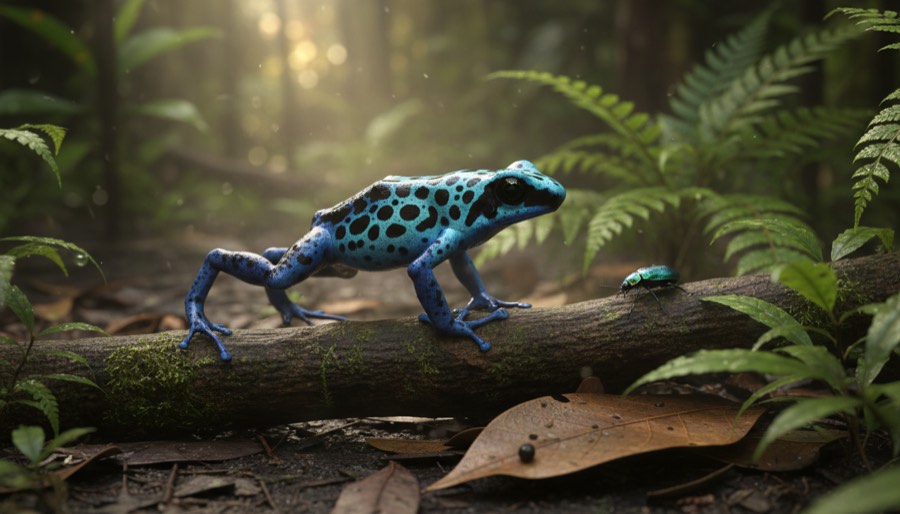
Meet the poison dart frog. It lives in the rainforests of Central and South America. It can be blue, red, yellow, green, or spotty like a strawberry!
Those bright colors are a message. They say, "Stay away — I don't taste good!" In the wild, the frog gets its poison from the tiny bugs it eats, like ants and mites. In a zoo, the frogs eat different bugs, so they aren't poisonous at all.
Most frogs sleep all day and hop around at night. Not the poison dart frog. It's out and about in the daytime, chirping and trilling to its friends.
Can you make a little chirpy frog sound?
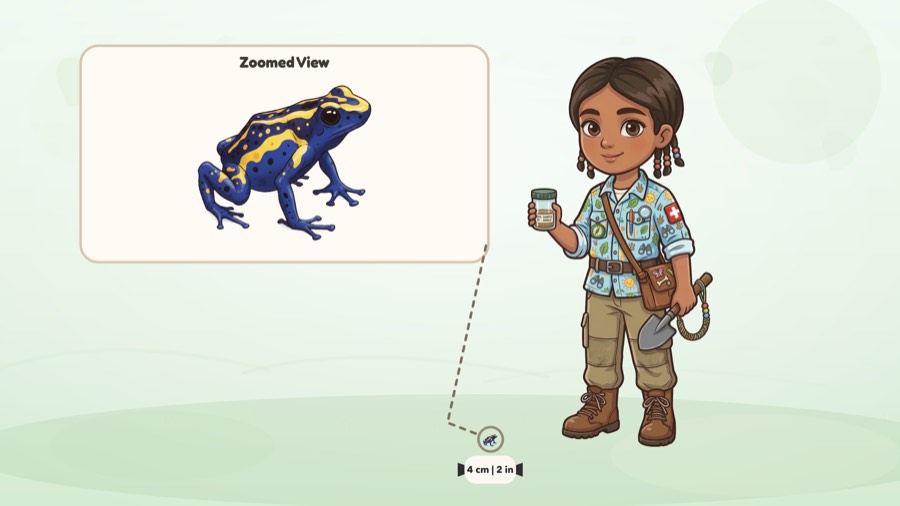
Poison dart frogs are tiny. A big one, like the blue one in our picture, is only about 4 centimeters (1.5 inches) long. That's shorter than your finger!
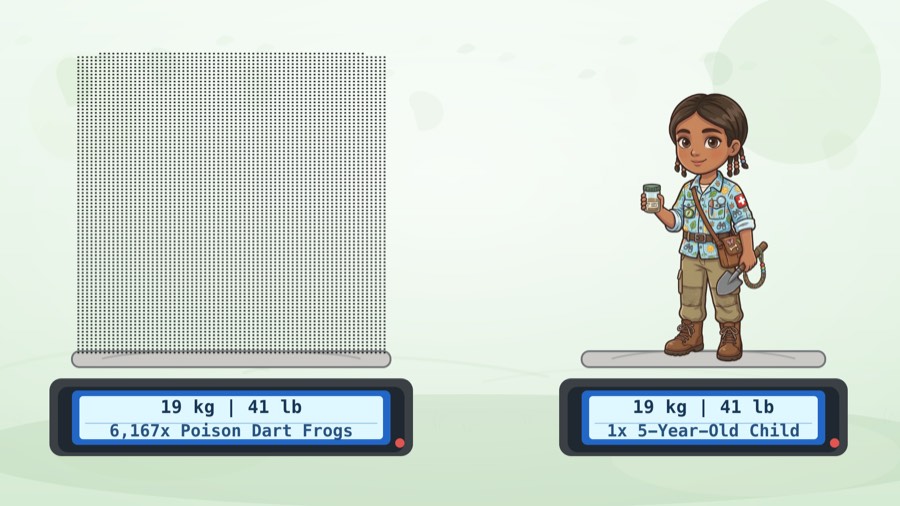
A poison dart frog weighs about 3 grams (0.1 ounce). You would need about 6,000 of them on one big scale to weigh as much as one 5-year-old!
Can you picture a whole crowd of tiny frogs, hopping onto a scale?
And here's the sweetest part. Many poison dart frog parents take great care of their babies. In some kinds, dad frogs carry the tadpoles on their backs. They give them a piggyback ride up into the trees, to a tiny pool of water, tucked in a leaf.
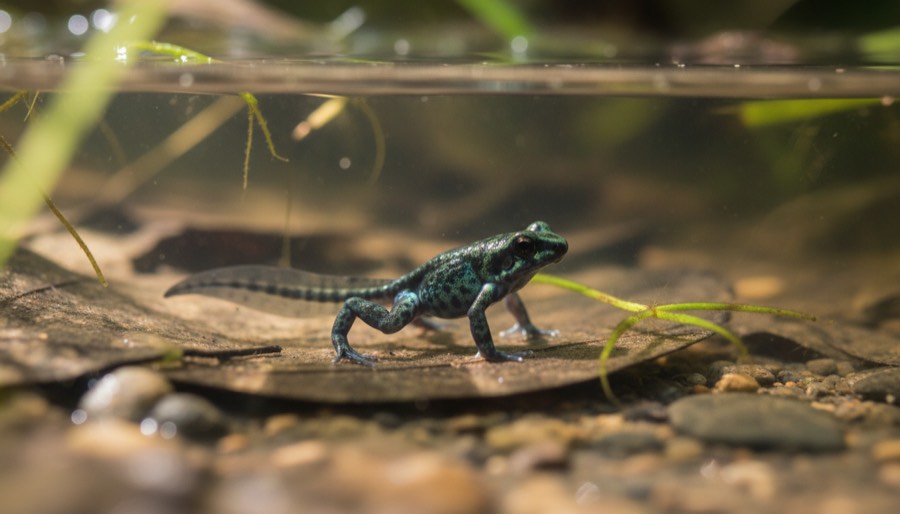
In some kinds, mom frogs even come back to feed their tadpoles special eggs until they grow legs.
Can you tuck yourself in tight, like a tadpole in a leaf?
Where to see a poison dart frog
In the wild, poison dart frogs live on rainforest floors in Central and South America. For the rest of us, these zoos have poison dart frogs you can visit.
North America
Poison frogs
Smithsonian's National Zoo — Washington, D.C.Look for them in the Amazonia and Reptile Discovery Center exhibits.
Learn more →Poison frogs
Detroit Zoo — Royal Oak, MichiganFind several kinds of brightly colored frogs in the National Amphibian Conservation Center.
Learn more →Green and black poison dart frogs
Cincinnati Zoo — Cincinnati, OhioSpot them in the Reptile House, along with other colorful dart frog kinds.
Learn more →Around the world
Golden poison dart frogs
Chester Zoo — Chester, EnglandFind these bright little frogs in the Tropical Realm.
Learn more →Golden poison dart frogs
Zoo Zürich — Zürich, SwitzerlandThis zoo has kept golden poison dart frogs since 1996.
Learn more →Poison dart frogs
Australia Zoo — Queensland, AustraliaCome say hello to the colorful frogs at this Queensland zoo.
Learn more →Animals sometimes move between zoos — check the zoo's own website before you visit.
For grown-ups
"Poison dart frog" covers a whole family of species, so there isn't one conservation status. The golden poison frog is listed as Endangered by the IUCN, and many other species are threatened or too little-studied to rate. The main worries are rainforest loss, the illegal pet trade, and a fungus disease that harms frogs.
There's a hopeful story: in July 2025, Panama's Amphibian Rescue and Conservation Project moved 12 pairs of wild Pratt's poison frogs, after a health check and treatment against the fungus, into Altos de Campana National Park, where the species had been missing for at least 19 years. Researchers hope the frogs will breed on their own, and one pair already has. It's an early step, and the hope is that these frogs help the species return and stay strong.
One family hope action: next time you shop, look for a "sustainable" label together, such as on paper or wood products. Protecting forests starts with everyday choices.
Starters: "Why do you think the frog is so colorful?" "What would you want to see on a rainforest floor?"
If your kid asks could a poison dart frog hurt me? — this holds up: "In the rainforest, their bright colors are a keep-away sign, so they don't have to fight anyone. Frogs in zoos aren't poisonous at all, because they eat different bugs. And we always let wild animals be, so we look with our eyes, not our hands."
Keep exploring
Wild Atlas has a whole page built around this animal — narrated facts, the full scale comparison against a 5-year-old, and the sounds a poison dart frog makes. It's part of the Rainforest Explorers pack.
Meet the poison dart frog in Wild Atlas →
For more, visit Smithsonian's National Zoo.
 Subscribe and the Farm Friends pack ($3.99) is free — yours to keep even if you unsubscribe.