This week's Wild Atlas Spotlight: the quokka. No quokka day falls today — Rottnest Island has held an informal 'Quokka Birthday' in September, and it's long over by December — but once you hear about the island named after a giant-rat mistake, we couldn't wait to tell you.
About this day: There's no official day for the quokka this week, so this one is a Wild Atlas Spotlight.
Read this one out loud together — it's short, and it's even better with your biggest smile.
Quokkas look like they're always smiling — and a whole island got its name because of them!
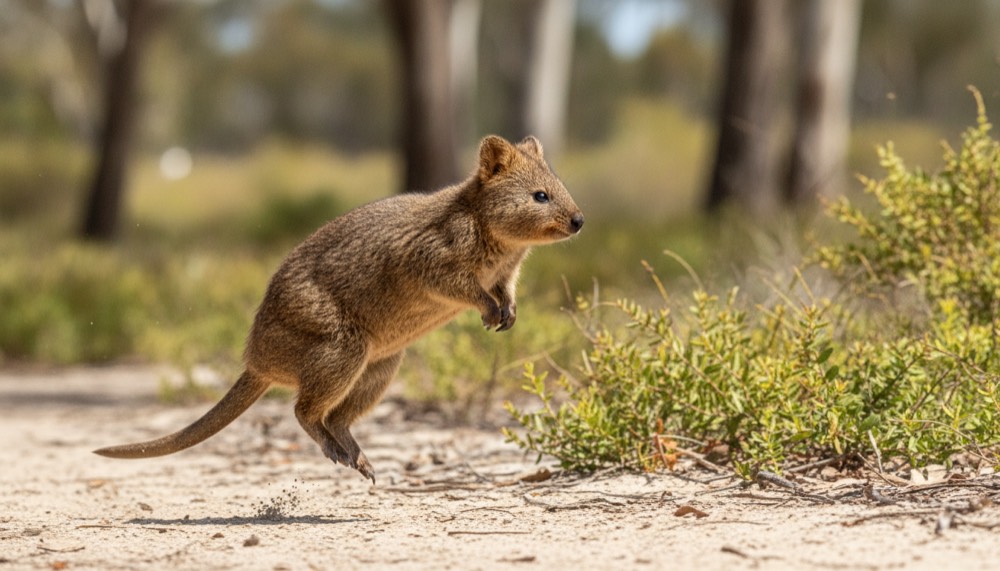
A quokka is a small wallaby, a cousin of the kangaroo. A mum quokka has a soft pouch for her baby. It's about the size of a house cat, with round ears, a short face, and dark eyes. People call it "the world's happiest animal" because of that smiley face — but a quokka isn't smiling on purpose. Its face is just shaped that way!
Can you make your biggest smiley face, like a quokka?
Long ago, in 1696, an explorer sailed to a little island near Australia. He saw quokkas hopping around and thought they looked like giant rats — so he named the island "Rat's Nest." Today we call it Rottnest Island, and it's still home to thousands of quokkas.
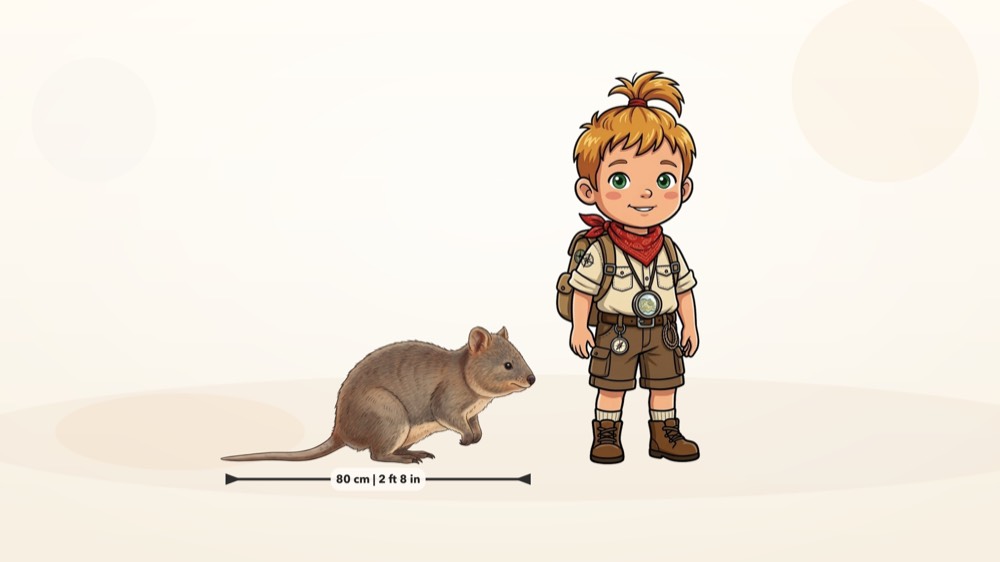
Even a big quokka, from its nose all the way to the tip of its tail, is shorter than you are tall — and without its tail, it's only about half as long!
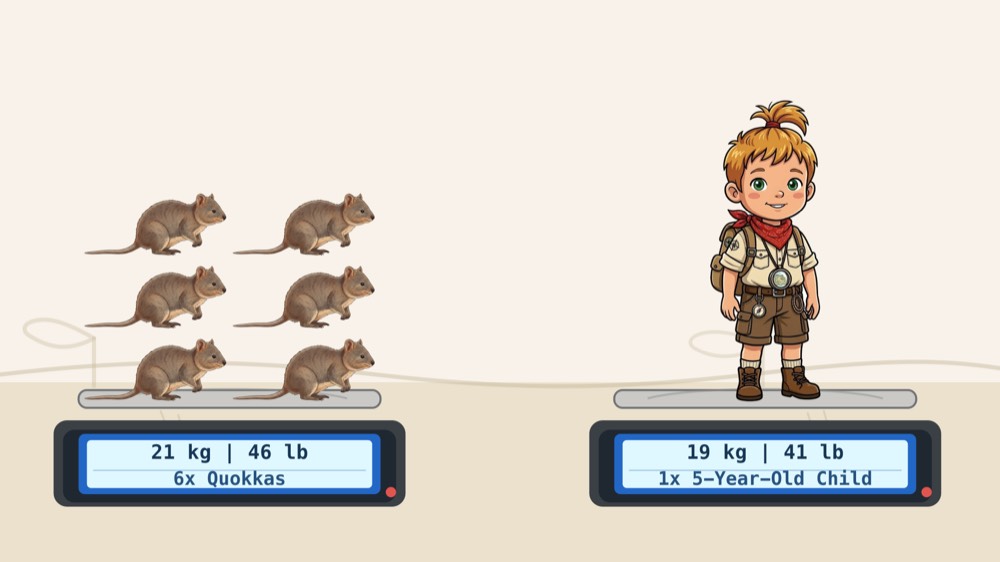
It would take about six quokkas, all stacked up, to weigh a little more than one 5-year-old!
Can you count to six? That's about how many quokkas it would take.
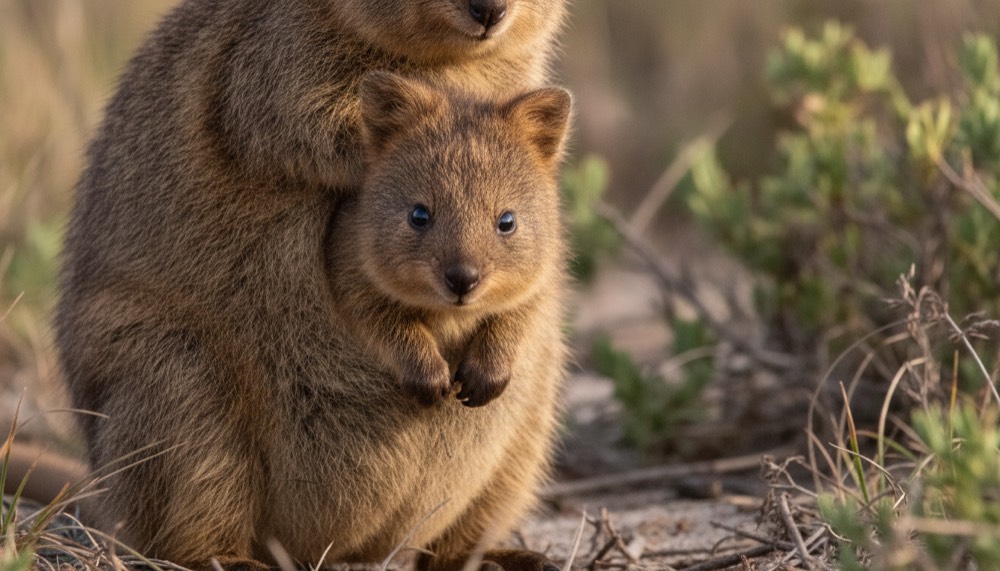
A baby quokka, called a joey, rides in its mum's pouch for about half a year before it starts hopping beside her. Here's a wild secret: a quokka mum's body can keep a tiny extra baby waiting, on pause, and it only starts to grow if it's needed.
Quokkas can even climb a little way up into trees to reach tasty leaves, and they can go a long time without a drink of water.
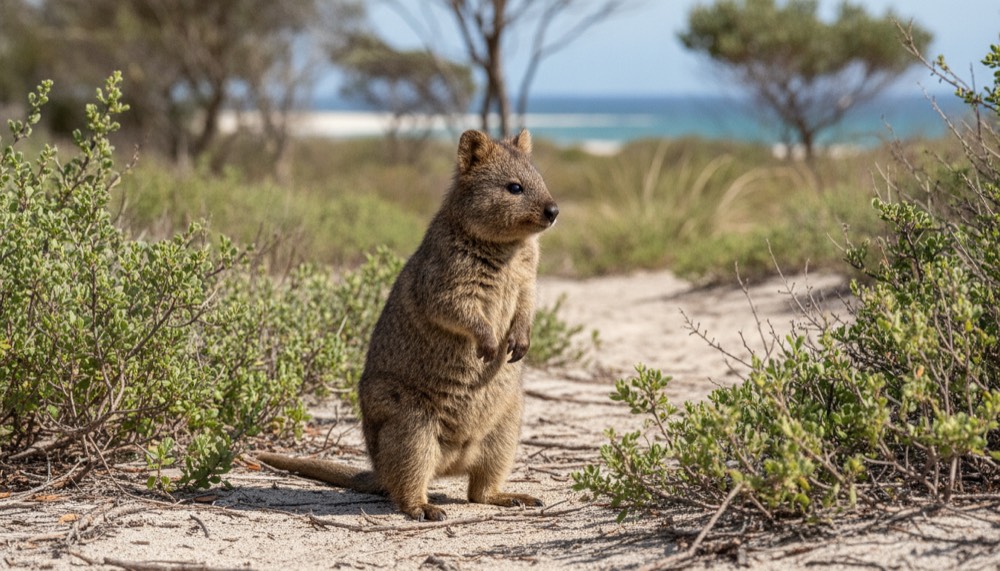
Wild quokkas live in just one corner of the world — the south-west of Western Australia, mostly on Rottnest Island.
Can you hop like a quokka, all the way across the room?
Where to see a quokka
In the wild, quokkas live in just one corner of the world, the south-west of Western Australia — most of all on Rottnest Island (Wadjemup), a short ferry ride from Perth, where families can watch them in the wild. For the rest of us, quokkas are very rare outside Australia, kept at only a small number of zoos anywhere in the world. As far as we know, no zoo in North America has quokkas right now.
In Australia
Quokkas in the Australian Bushwalk
Perth Zoo — Perth, Western AustraliaFind the quokkas in the Australian Bushwalk, not far from where wild quokkas actually live.
Learn more →Home to the Variety Children's Zoo quokkas
Adelaide Zoo — Adelaide, South AustraliaLook for the quokkas in the Variety Children's Zoo — 19 quokka joeys have been born here since 2009.
Learn more →Around the world
The only quokkas in Japan
Saitama Children's Zoo — Higashimatsuyama, JapanThe only place in Japan to see a quokka, with a new indoor viewing room that opened in 2025.
Learn more →The only quokkas in Europe
Wilhelma Zoological-Botanical Garden — Stuttgart, GermanyLook for quokkas in "Terra Australis," Wilhelma's Australia house, which they share with the koalas.
Learn more →Animals sometimes move — check the zoo's own website before you visit.
For grown-ups
Quokkas are listed as Vulnerable on the IUCN Red List. That means there are fewer of them than there used to be, and they need our help. On the mainland, animals like foxes and feral cats sometimes hunt quokkas, which is one reason most quokkas live safely on Rottnest Island, where there are no foxes or cats at all.
There's a hopeful story too. In 2015, a big bushfire hurt the quokkas living near a town called Northcliffe, Western Australia — only 39 were left out of about 600. People worked for years, protecting the survivors from foxes and counting them with cameras, and by 2020 there were about 272 quokkas back in the area, and more were moving back home.
This week's hope action: be a quokka-kind visitor. If your family ever visits Rottnest Island, watch quokkas from a little distance and never feed or touch them — it's the island's rule, and it keeps quokkas wild and healthy. Anywhere in the world, keeping pet cats indoors at night helps protect small wild animals too.
Starters: "If you could visit an island with no foxes or cats, what animal would you want to meet there?" "Quokkas look like they're smiling — what's your favorite animal face?"
If your kid asks did the fire hurt the quokkas? — this holds up: "Yes, it was a hard time for them. But people worked for years to help, keeping them safe from foxes and counting them so they knew they were okay — and the quokkas started coming back."
Keep exploring
Wild Atlas doesn't have the quokka, but it's home to more than 250 other animals — narrated facts, scale comparisons against a 5-year-old, and close-up looks at how each one lives.
Explore 250+ animals in Wild Atlas →
For more, visit the Australian Museum.
 Subscribe and the Farm Friends pack ($3.99) is free — yours to keep even if you unsubscribe.