Meet the raccoon! People around the world celebrate it on International Raccoon Appreciation Day, every October 1 — a day started by a young girl in California.
- International Raccoon Appreciation Day · Friday, October 1 — Started in 2002 by a young girl in California and made international the next year. There is no conservation organiser behind it. Source
Read this one out loud together — it's short, and it's best in a sneaky, tiptoe-y whisper.
A raccoon sees the world with its hands!
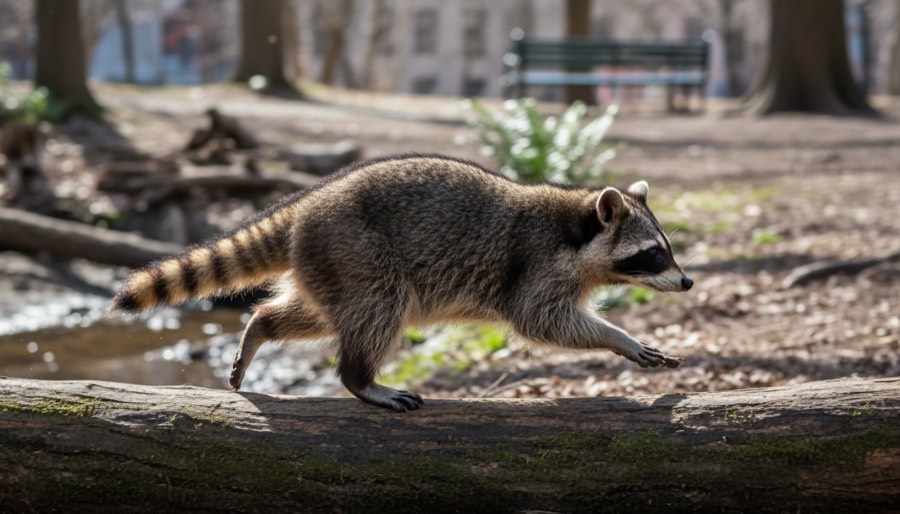
Raccoons wear a black mask, like a little bandit. And their front paws are super clever. The paws are packed with feeling, and they get even more sensitive when they're wet. So a raccoon dips its food in water to feel it better. It looks like washing. It's really feeling!
Can you wiggle your fingers like a raccoon? Pretend you're feeling something in a stream. Is it smooth? Is it bumpy?
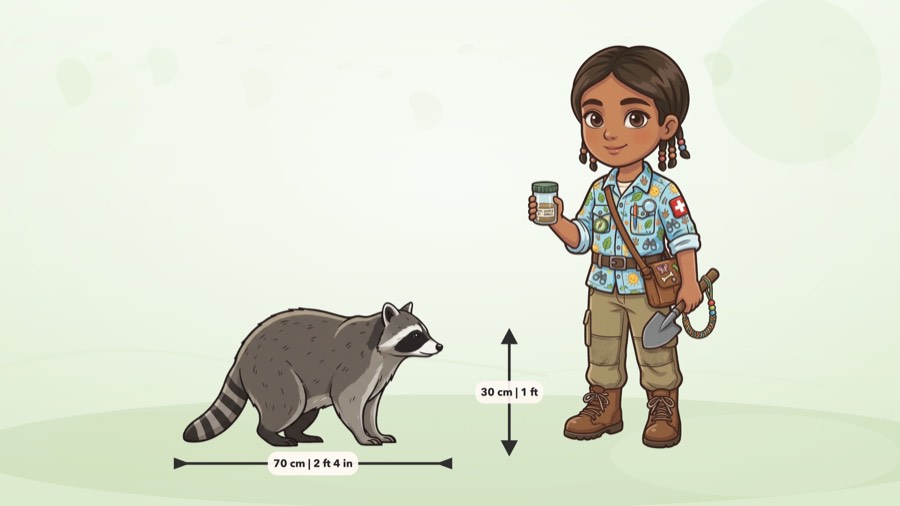
A raccoon is small. On all fours, it comes up to about 30 centimetres (1 foot) at the shoulder. That's about as high as your knee. It's around 70 centimetres (2 feet 4 inches) long, with a ringed tail.
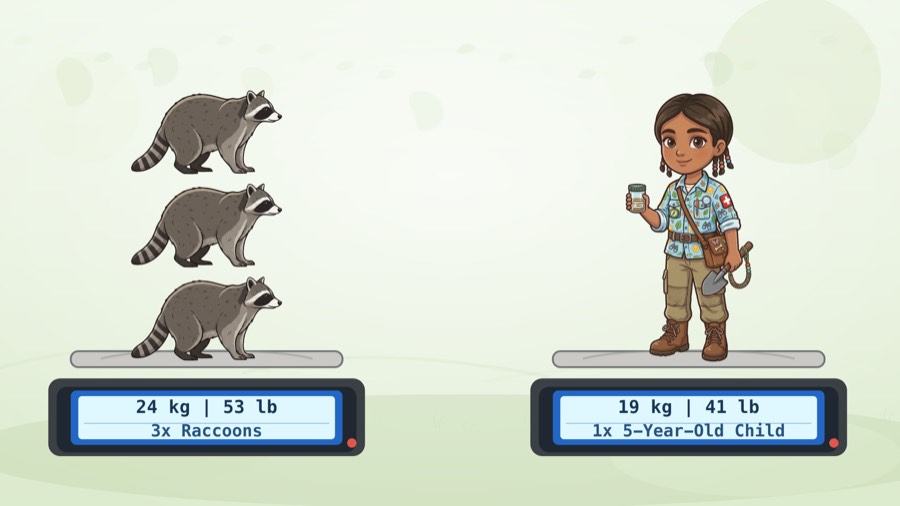
A raccoon weighs about 8 kilograms (18 pounds). That's about as much as a bowling ball. Three raccoons together would weigh a bit more than one 5-year-old.
Raccoons are great climbers. Their back feet can turn around, so they can climb down a tree headfirst. Their bushy tails help them balance up high.
They're clever, too. Raccoons can open jars and unlatch gates. They can remember how to solve a problem for a long time.
Can you picture a raccoon turning a latch? What would it be trying to reach?
Raccoons are fast when they need to be. They can run about 24 kilometres per hour (15 miles per hour). They can swim, too, when they need to.
A baby raccoon is called a kit. Kits stay with their mom for about a year.
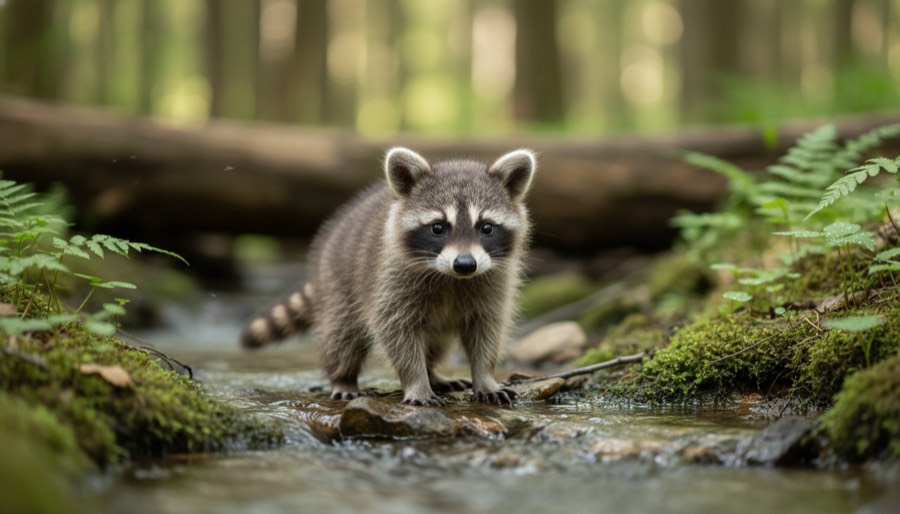
Raccoons will eat almost anything: fruit, nuts, bugs, and fish. At night they chitter and purr when they're happy.
Can you make a raccoon chitter? Say it softly, like a tiny, happy engine.
Where to see a raccoon
In the wild, raccoons live in forests, wetlands, parks, and even towns across North America. For the rest of us, these zoos have raccoons you can visit.
North America
Raccoons
San Diego Zoo — San Diego, CaliforniaWatch clever paws at work, up close.
Visit San Diego Zoo →Raccoons
Minnesota Zoo — Apple Valley, MinnesotaLook for the striped tail first, then the mask.
Visit Minnesota Zoo →Raccoons
Seneca Park Zoo — Rochester, New YorkA neighbourhood animal, up close and safe to admire.
Visit Seneca Park Zoo →Raccoons
Toronto Zoo — Toronto, OntarioSee how a raccoon uses its paws like little hands.
Visit Toronto Zoo →Around the world
Raccoons
Zoo Tábor — Tábor, CzechiaRaccoons have settled in parts of Europe, and you can meet them here.
Visit Zoo Tábor →Animals sometimes move between zoos — check the zoo's own website before you visit.
For grown-ups
Raccoons are listed as Least Concern by the IUCN, which means there are plenty of them. The hopeful part is how well they have learned to share space with people: they live in forests, wetlands, parks, and cities, and they are one of the few wild animals you might spot right in your own neighbourhood after dark.
A small family hope action: keep wild neighbours wild. Use bins with tight lids and never leave pet food outside overnight. It keeps raccoons curious and independent, and keeps your trash tidy too.
Starters: "What do you think a raccoon is doing right now, in the dark?" "If your hands were your eyes, what would you try to feel first?"
If your kid asks can I pet a raccoon? — this holds up: "Raccoons are wild and want to stay wild. They're clever and a little shy, so the best way to say hello is to watch quietly from far away — just like at a zoo."
Keep exploring
Wild Atlas has a whole page built around this animal — narrated facts, the full scale comparison against a 5-year-old, and the chittery sounds a raccoon actually makes. The raccoon is part of the Wild Americas pack.
Meet the raccoon in Wild Atlas →
For more, visit the IUCN Red List.
 Subscribe and the Farm Friends pack ($3.99) is free — yours to keep even if you unsubscribe.