Meet the red panda! People around the world celebrate it on International Red Panda Day, held on the third Saturday of every September.
- International Red Panda Day · Saturday, September 18 (always the third Saturday in September) — Organised by the Red Panda Network since 2010. Source
Read this one out loud together — it's even better in a soft, squeaky red-panda whisper.
Psst! Look up, up, up in the trees. Do you see a fuzzy red-orange face peeking out? That's a red panda!
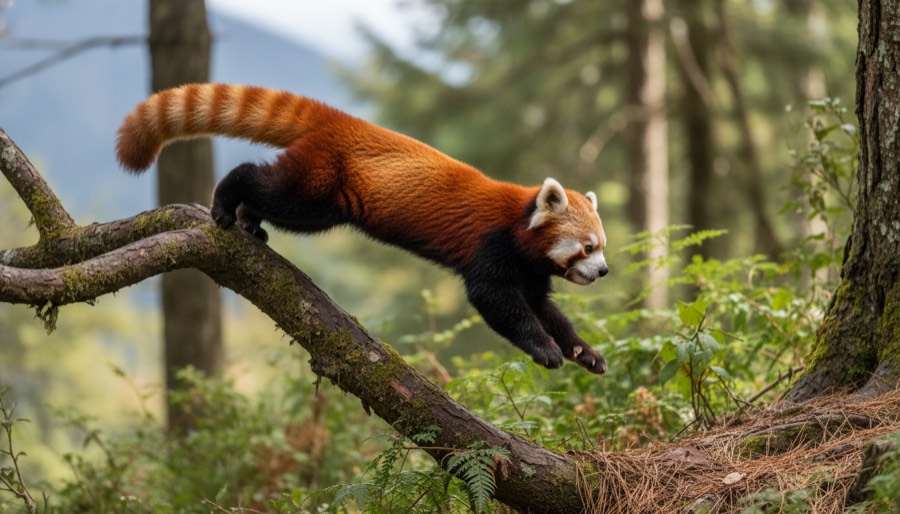
Red pandas live in cool mountain forests in Asia. They are wonderful climbers. They sleep in the trees all day and wake up around dusk to look for food.
Here's a cozy secret. When it's cold, a red panda wraps its long, bushy, striped tail around itself like a blanket. A built-in blanket!
Can you wrap your arms around yourself like a red panda curled up for a nap?
Red pandas aren't close cousins of giant pandas at all. They have their own special animal family, all by themselves.
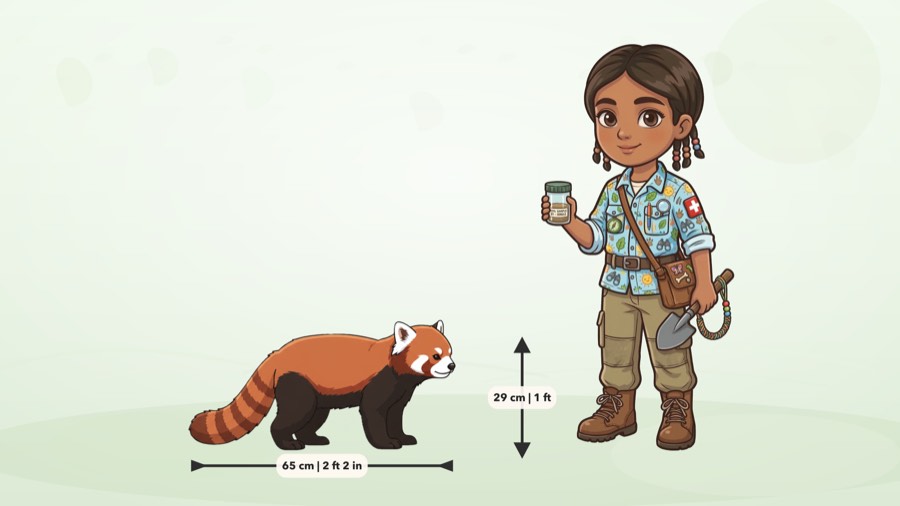
A red panda is small. It is about 65 centimeters (2 feet 2 inches) long, and it stands about 29 centimeters (1 foot) tall at the shoulder. That's about as high as your knee!
A red panda weighs about 5 kilograms (11 pounds). That's about the same as a house cat. It takes about four red pandas to weigh as much as one 5-year-old.
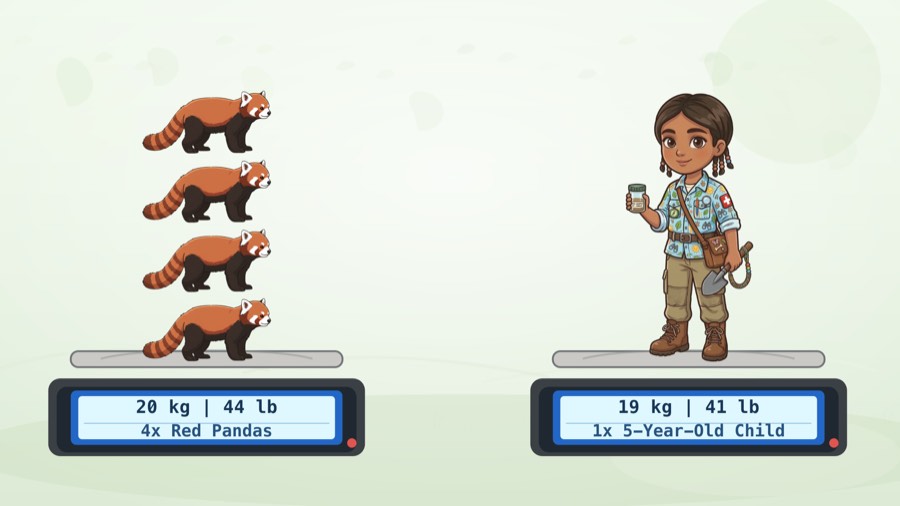
Can you picture four red pandas on one scale?
Red pandas munch mostly bamboo. To hold it tight, they have a special wrist bone that works a bit like a thumb. Hold up your hand. A red panda has an extra one, kind of!
And here's a trick: a red panda can walk down a tree headfirst. Its back ankles can twist right around. Can you wiggle your ankles and try?
How do red pandas talk to each other? With squeaks, chirps, and little whistles. Can you squeak like a red panda?
Red panda cubs are tiny when they're born. They stay snug in a cozy nest with their mom, and they stay close to her for about a year.
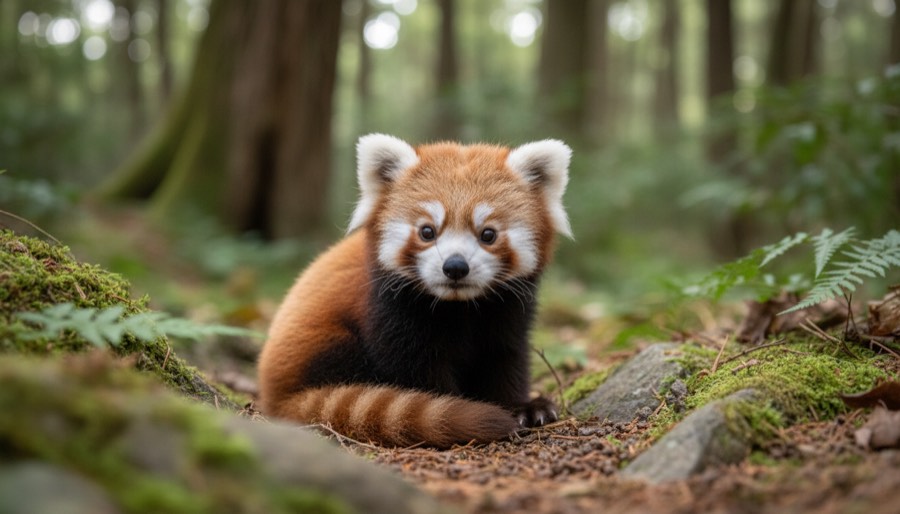
Now you know the red panda's secrets: a blanket tail, a false thumb, and a headfirst climb down.
Where to see a red panda
In the wild, red pandas live high in the cool mountain forests of the Himalayas and nearby parts of Asia, where they are very hard to spot. For the rest of us, these zoos around the world have red pandas you can visit.
North America
Red pandas
Cincinnati Zoo — Cincinnati, OhioThis zoo has helped red pandas for decades, and recently celebrated its 100th red panda birth.
Learn more →Red pandas
San Diego Zoo — San Diego, CaliforniaLook for them in the Asian Passage area.
Learn more →Carson
Woodland Park Zoo — Seattle, WashingtonCarson moved into a brand-new forest-themed home that opened on May 1, 2026.
Learn more →Red pandas
Smithsonian's National Zoo — Washington, D.C.Find them along the zoo's Asia Trail.
Learn more →Around the world
Red pandas
Dublin Zoo — Dublin, IrelandClimb the rocky trail of Himalayan Hills and look up in the treetops.
Learn more →Red pandas
Chester Zoo — Chester, EnglandYou'll find them right beside the snow leopard habitat.
Learn more →Red pandas
Edinburgh Zoo — Edinburgh, ScotlandTall trees to climb, and often a sleepy red panda high in the branches.
Learn more →Animals sometimes move between zoos — check the zoo's own website before you visit.
For grown-ups
Red pandas are listed as Endangered by the IUCN, mostly because of habitat loss as forests are cleared, along with hunting and trapping. Fewer than 10,000 are thought to remain across India, Bhutan, China, Nepal, and Myanmar. There's a hopeful story from Nepal: in 2010, the Red Panda Network started a "Forest Guardians" program with just 16 local members, who walk the forest to monitor red pandas and look after their habitat. Today the Network works with community partners and dozens of community forests, and the guardians' work has helped bring poaching in their project areas down to almost zero. Local people protecting the forest they live beside is one of the biggest reasons for hope.
A family hope action: choose paper and wood products from forests that are looked after well (look for a forest-stewardship label), and talk together about why forests matter to animals like red pandas.
Starters: "Why do you think a red panda sleeps up high in a tree?" "How would you use a tail as a blanket?" "What would you want to ask a red panda?"
If your kid asks will red pandas disappear? — this holds up: "Red pandas need help, and lots of people are working hard to give it. Families who live near the forests are looking after them, and zoos work together too. When people take care of a place, the animals there get a better chance."
Keep exploring
Wild Atlas has a whole page built around this animal — narrated facts, the full scale comparison against a 5-year-old, and the squeaks and whistles a red panda really makes. It's part of the Planet Pioneers pack, one of our paid packs.
Meet the red panda in Wild Atlas →
For more, visit the IUCN Red List.
 Subscribe and the Farm Friends pack ($3.99) is free — yours to keep even if you unsubscribe.