This week's Wild Atlas Spotlight: the reindeer. There's no official Reindeer Day on the calendar — reindeer do get their own day, World Caribou Day, every June 6 — but with the holidays here, it felt like exactly the right week to meet the real animal behind the sleigh.
About this day: There's no official day for the reindeer this week, so this one is a Wild Atlas Spotlight.
Read this one out loud together — it's short, and it's even more fun with a little jingle in your voice.
Reindeer are the only deer in the world where the girls grow antlers too!
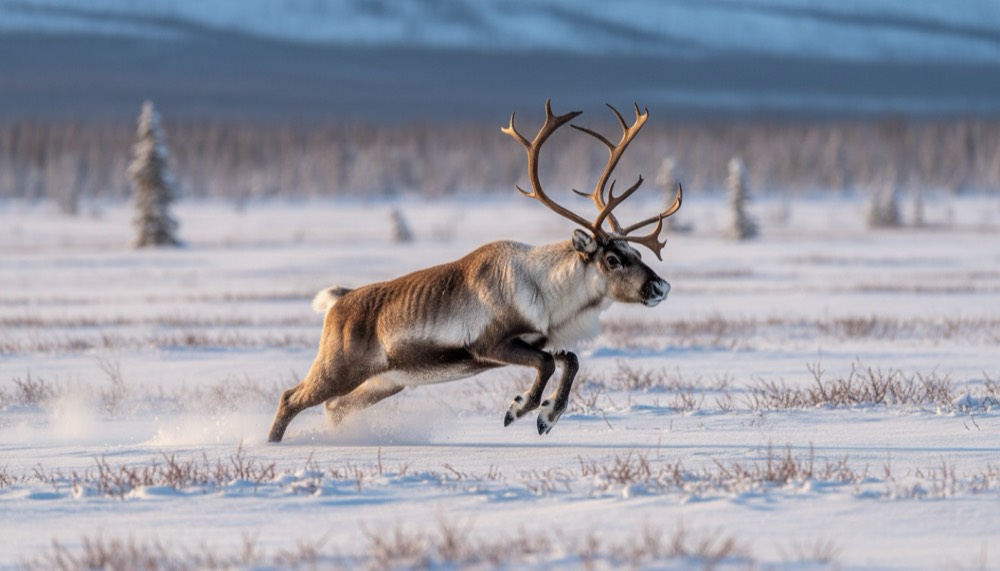
Boy and girl reindeer both grow antlers — and a big male's antlers can stretch longer than a 5-year-old is tall. Many reindeer mums keep theirs all winter long, right up until their calves are born in spring.
Deep inside a reindeer's eyes is a hidden mirror. It's gold in summer and turns deep blue once winter comes, which helps a reindeer see through the long, dark Arctic night.
Listen closely and you might hear them coming before you see them — reindeer feet go click, click, click as they walk. Scientists think the sound may help a herd stay together in fog or snow.
Can you click your tongue like a reindeer's feet?
Their big, wide hooves work like snowshoes on snow, and like paddles when they swim across rivers.
Can you stomp your feet wide, like a reindeer crossing deep snow?
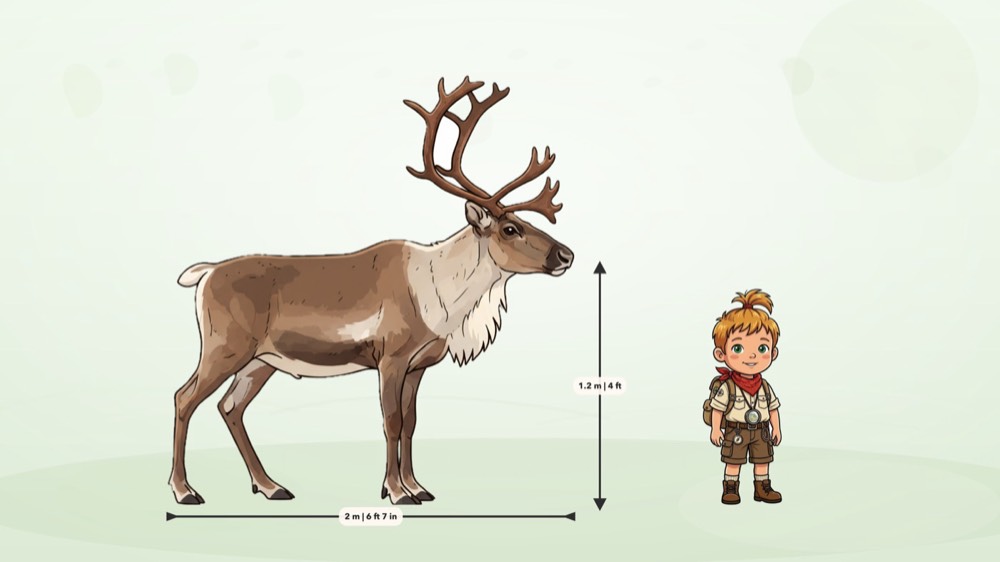
A big reindeer stands taller than a 5-year-old at the shoulder — and nose to tail, it's almost twice as long as a 5-year-old is tall.
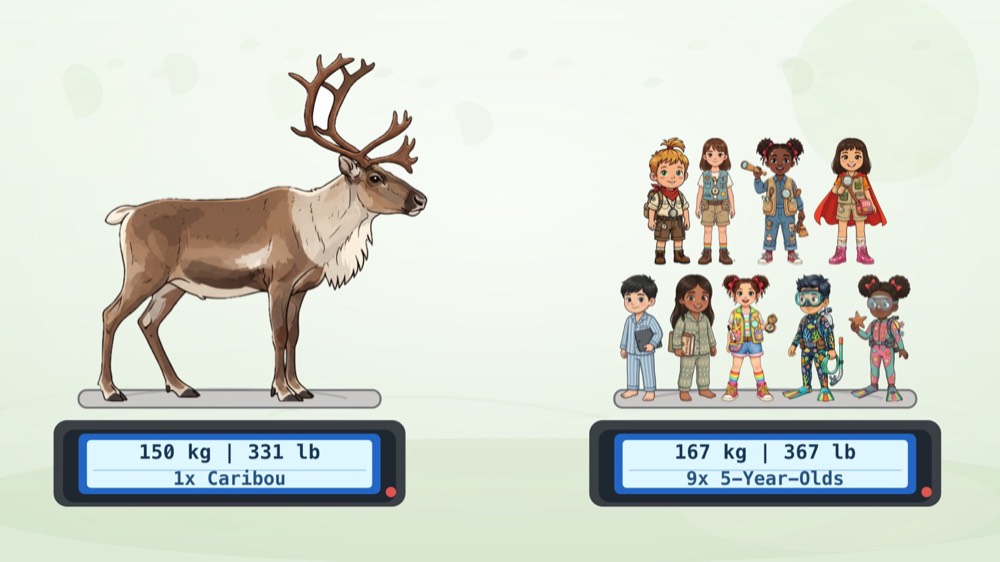
A grown-up reindeer weighs a little less than nine 5-year-olds put together! Can you count all nine friends on the other scale?
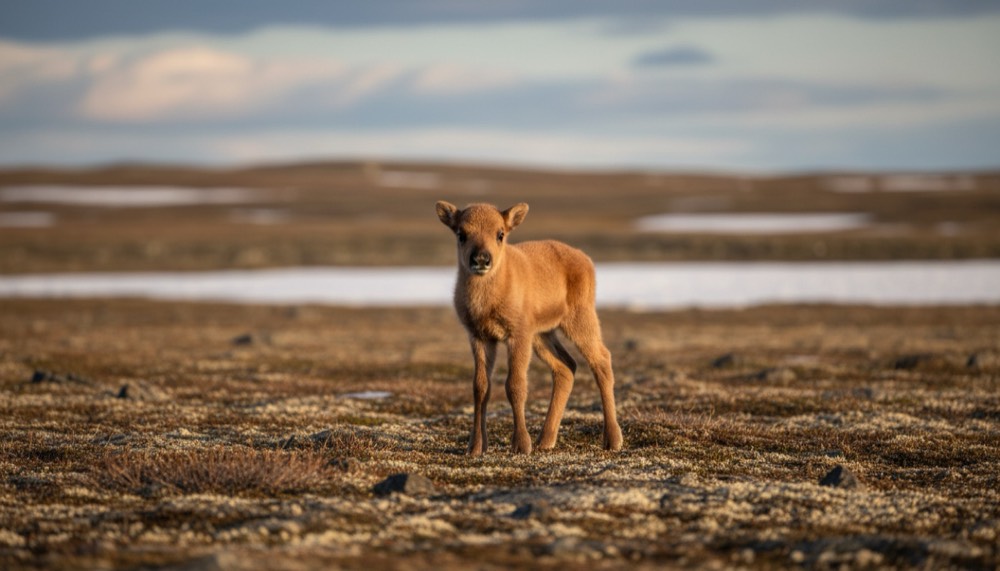
A newborn reindeer calf weighs about as much as a big bag of flour — and it can double its weight in about two weeks. It stands up within an hour of being born, and by the very next day, it can run faster than a person.
That's the real reindeer — quietly incredible, long before any sleigh bells ring.
Where to see a reindeer
In the wild, reindeer and caribou live in the far north of the world, on the snowy Arctic tundra and in cold northern forests across Alaska, Canada, Greenland, Scandinavia, Finland, and Russia. For the rest of us, these zoos around the world have reindeer and caribou you can visit.
North America
Meet the reindeer on the Northern Trail
Minnesota Zoo — Apple Valley, MinnesotaWalk the zoo's Northern Trail to meet caribou — the same animal as Santa's reindeer, with its North American name — living right through a Minnesota winter.
Learn more →A herd of expert lichen-sniffers
Wilder Institute / Calgary Zoo — Calgary, AlbertaIn the Wild Canada zone, meet a herd of female woodland caribou, including several young ones. The zoo calls them expert lichen-sniffers.
Learn more →Journey to Churchill
Assiniboine Park Zoo — Winnipeg, ManitobaReindeer live in this huge northern exhibit, where you can also see polar bears, muskoxen, and snowy owls.
Learn more →A safe home for northern animals
Alaska Wildlife Conservation Center — Portage, AlaskaA sanctuary for Alaska animals that can't live in the wild. Reindeer live here, and so do moose, muskoxen, and bears.
Learn more →Around the world
Home of the European wild forest reindeer
Korkeasaari Zoo — Helsinki, FinlandReindeer from this zoo helped start new wild herds in Finland's forests.
Learn more →At the world's oldest open-air museum
Skansen — Stockholm, SwedenSkansen keeps forest reindeer and has sent some to help Finland's wild herds.
Learn more →A boardwalk through the forest
Ranua Wildlife Park — Ranua, Finnish LaplandWalk through the northern forest to spot wild forest reindeer and other Arctic animals.
Learn more →Animals sometimes move between zoos — check the zoo's own website before you visit.
For grown-ups
Reindeer and caribou are listed as Vulnerable, and migratory tundra caribou herds have fallen by about 65% over the past two to three decades — declines linked to a warming Arctic and loss of habitat. There's a hopeful story too: the European wild forest reindeer had nearly disappeared from Finland's forests, and zoos including Helsinki's Korkeasaari Zoo raised reindeer that went on to help start new wild herds. More than 80 reindeer have been released into national parks where forest reindeer had been missing, and a new project is already under way to keep the recovery going.
Reindeer need cold, snowy homes to stay healthy. This week, try turning off the lights when you leave a room, or take a walk instead of a car ride. It won't change the Arctic on its own, but it's the same idea: small, everyday choices add up to a kinder world for the animals that need it to stay cold.
Starters: "What do you think it would feel like to walk on snow with built-in snowshoe feet?" "What's one thing you love about reindeer that has nothing to do with Santa?" "If you could hear one reindeer sound — click, click, click — what would you want to try clicking along to?"
If your kid asks do reindeer really fly? — this holds up: "Real reindeer can't fly, but they're still amazing: a hidden mirror inside their eyes changes color for winter, their feet click as they walk, and they travel farther than almost any land animal. Santa's flying reindeer are a fun story, and real reindeer are pretty magical too."
Keep exploring
Wild Atlas has a whole page built around this animal — narrated facts, the full scale comparison against a 5-year-old, and more reindeer facts like these — look for the caribou (the same animal) in the Planet Pioneers pack.
Meet the reindeer in Wild Atlas →
For more, visit the Alaska Department of Fish and Game.
 Subscribe and the Farm Friends pack ($3.99) is free — yours to keep even if you unsubscribe.