This week's Wild Atlas Spotlight: a big cat so good at hiding in its snowy mountain home that people call it the "ghost of the mountains" — the snow leopard.
About this day: There's no official day for the snow leopard this week, so this one is a Wild Atlas Spotlight.
Read this one out loud together — it's short, and it's more fun with a soft, chuffy voice.
Snow leopards are big cats that can't roar, and their fluffy tail is so long they wrap it around themselves like a scarf!
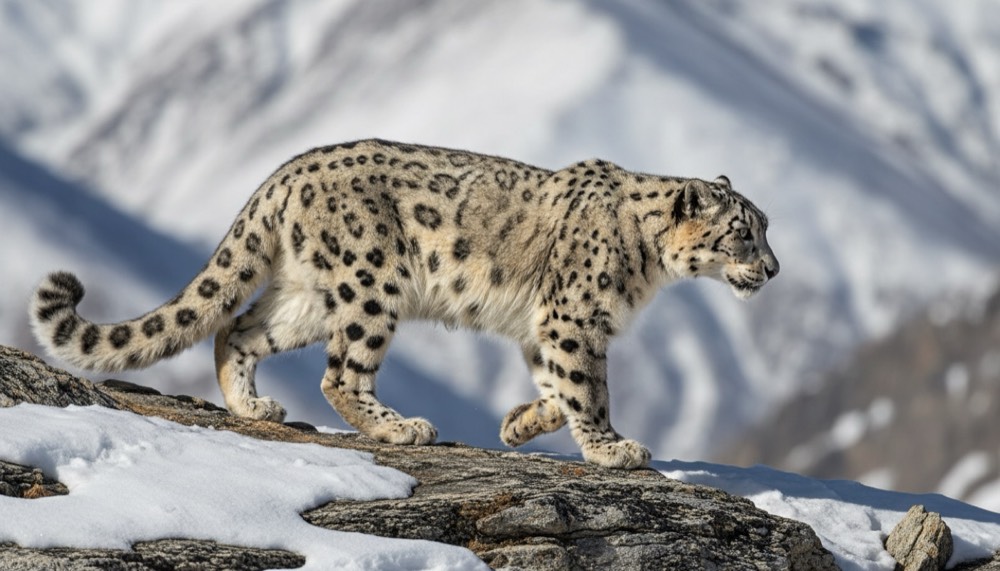
Meet the snow leopard — a cousin of lions and tigers who lives high in the rocky mountains of Asia, in places like the Himalayas. Up there it's cold, steep, and often snowy, which is exactly how this big cat likes it.
Instead of a roar, a snow leopard says hello with a soft, puffing sound called a chuff. Can you make a soft chuffing sound, like a gentle "pfff"?
Its spotty grey coat blends right into the rocks — so well that people who live in those mountains can go years without spotting one. That's why some people call it the "ghost of the mountains."
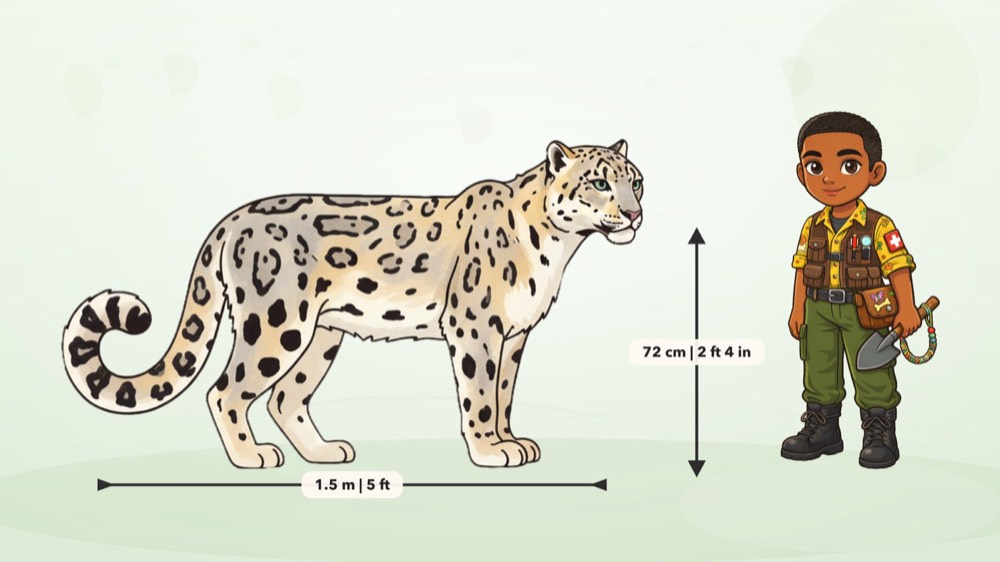
Standing on all fours, a snow leopard comes up to about your tummy — but nose to tail, it's almost as long as two kids lying head to toe! That long, fluffy tail helps it balance as it climbs steep, rocky cliffs, and at bedtime, it wraps around the snow leopard like a cozy scarf.
Can you curl up small and wrap your arms around yourself, just like a snow leopard's tail?
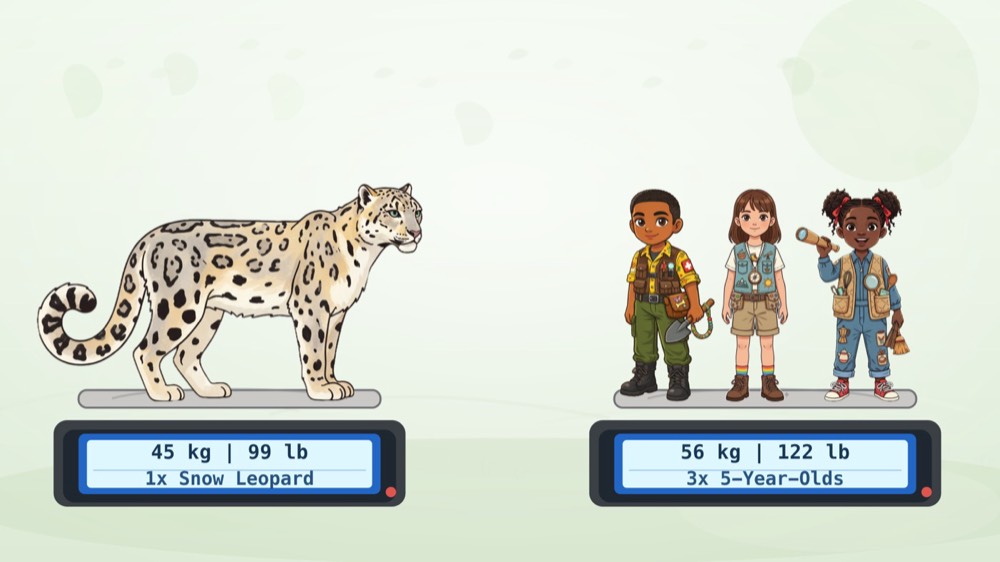
About two or three five-year-olds, all standing on one big scale together, would weigh as much as one grown-up snow leopard. And its big, wide, furry paws work like snowshoes, so it doesn't sink into deep snow.
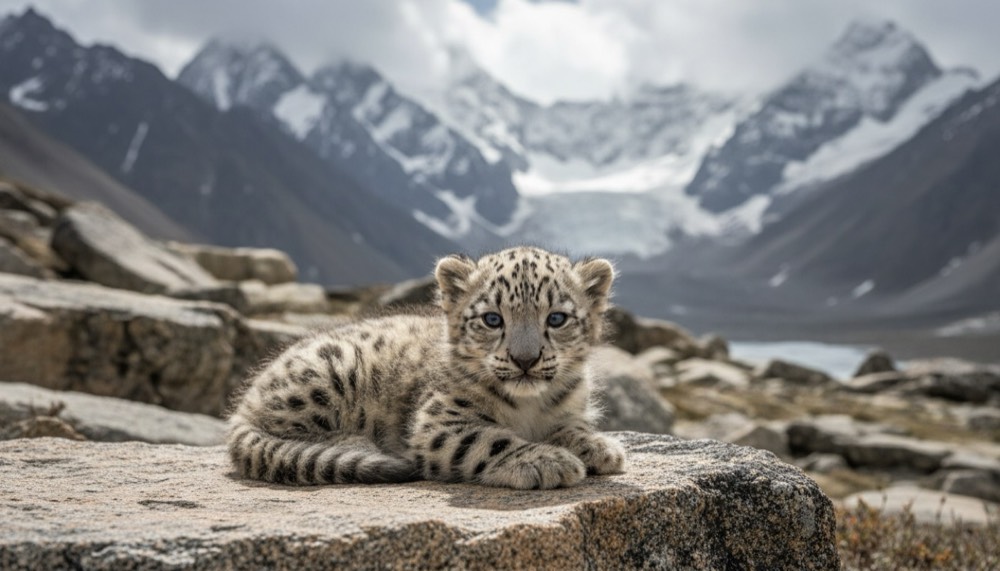
A snow leopard cub is born in a cozy rock den, so tiny it weighs about as much as a can of soup. Its eyes open when it's about a week old, and it stays close to its mom for almost two years, learning to climb and explore the cliffs she calls home.
Can you take big, wide steps, like you're wearing snowshoe paws of your own?
Where to see a snow leopard
In the wild, snow leopards live high in the rocky mountains of Asia — places like the Himalayas — and they're so shy that even scientists mostly "see" them on hidden cameras. For the rest of us, these zoos around the world have snow leopards you can visit, and winter is a great time to go, since snow leopards love the cold!
North America
Marai and Aibek
Woodland Park Zoo — Seattle, WashingtonSeattle is the home town of the Snow Leopard Trust, and 38 snow leopard cubs have been born at this zoo.
Learn more →Valens
Cheyenne Mountain Zoo — Colorado Springs, ColoradoValens lives in the Asian Highlands area, a fitting home for a mountain cat, on the side of an actual mountain.
Learn more →The Eurasia habitat
Toronto Zoo — Toronto, OntarioFind the zoo's snow leopards prowling their rocky Eurasia habitat.
Learn more →Big Cat Falls
Philadelphia Zoo — Philadelphia, PennsylvaniaSnow leopards live in Big Cat Falls, next door to some of their big-cat cousins.
Learn more →Around the world
Bheri
Chester Zoo — Chester, EnglandBheri, born in 2025, was Chester Zoo's very first snow leopard cub — named after a river in the Himalayas.
Learn more →Pari and Koshi
Highland Wildlife Park — Kincraig, ScotlandUp in the snowy Scottish Highlands, this park's snow leopards feel right at home in the cold.
Learn more →Animals sometimes move — check the zoo's own website before you visit.
For grown-ups
Snow leopards are listed as Vulnerable, with numbers slowly decreasing — mostly from conflict with herders after livestock losses, poaching, fewer wild sheep and goats to hunt, and mountain habitat squeezed by mining, roads, and a changing climate.
There's a hopeful story: in the mountain country of Bhutan, scientists hid more than 300 cameras across the cliffs and took over 10,000 photos of snow leopards. Every cat's spots are different, like a fingerprint, so researchers could count them one by one. Between 2016 and 2023, the count rose from 96 to 134 snow leopards in Bhutan — a 39.5% increase.
This week's hope action: play "Spot the Ghost Cat" — look at a photo of rocky mountains together and try to find the hidden snow leopard, just like the scientists do with their camera-trap photos. Then tell a grown-up one thing snow leopards need to keep thriving: wild mountains with plenty of wild sheep and goats to eat.
Starters: "What do you think it's like to live way up in the snowy mountains?" "Snow leopards are so good at hiding that almost no one ever sees one in the wild — what's your best hiding spot?"
If your kid asks could a snow leopard hurt me? — this holds up: "They live way up in faraway mountains and they're very shy — they'd hide from you long before you ever saw them. They almost never bother people."
Keep exploring
Wild Atlas has the snow leopard, narrated, in the Planet Pioneers pack — the full scale comparison against a 5-year-old, its own fact cards, and the story of the soft chuffing sound it makes instead of a roar.
Meet the snow leopard in Wild Atlas →
For more, visit the IUCN SSC Cat Specialist Group.
 Subscribe and the Farm Friends pack ($3.99) is free — yours to keep even if you unsubscribe.