This week's Wild Atlas Spotlight: the wombat. No wombat day falls this week — the fan-favorite Wombat Day is every October 22 — but once you hear what a wombat's poop looks like, we couldn't wait to tell you.
About this day: There's no official day for the wombat this week, so this one is a Wild Atlas Spotlight.
Read this one out loud together — it's short, and it's even better with a low, snuffly wombat-grunt voice.
Wombats are the only animals in the world known to make cube-shaped poop!
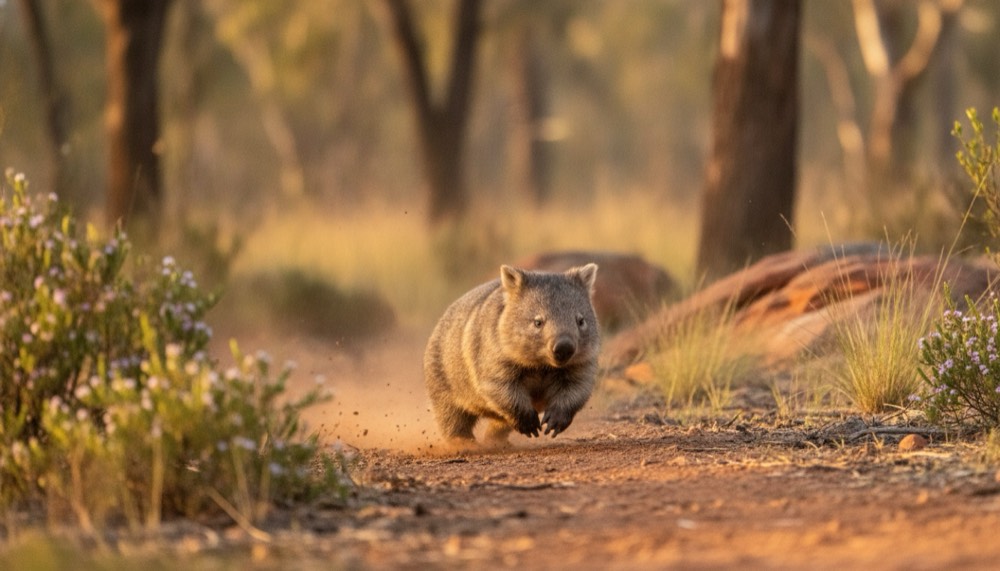
The cube shape forms inside a wombat's tummy, not on the way out. Wombats leave their little cube-poops on rocks and logs, like a sign that says "I live here."
A wombat looks like a round, furry barrel on short legs — but it isn't a bear, and it isn't a giant rodent. It's a marsupial, a pouch animal, just like a kangaroo. Apart from other wombats, its closest living cousin is the koala.
Here's another surprise: a mother wombat's pouch opens backwards, toward her back legs. That way, when she digs a tunnel, no dirt gets scooped in on top of her baby.
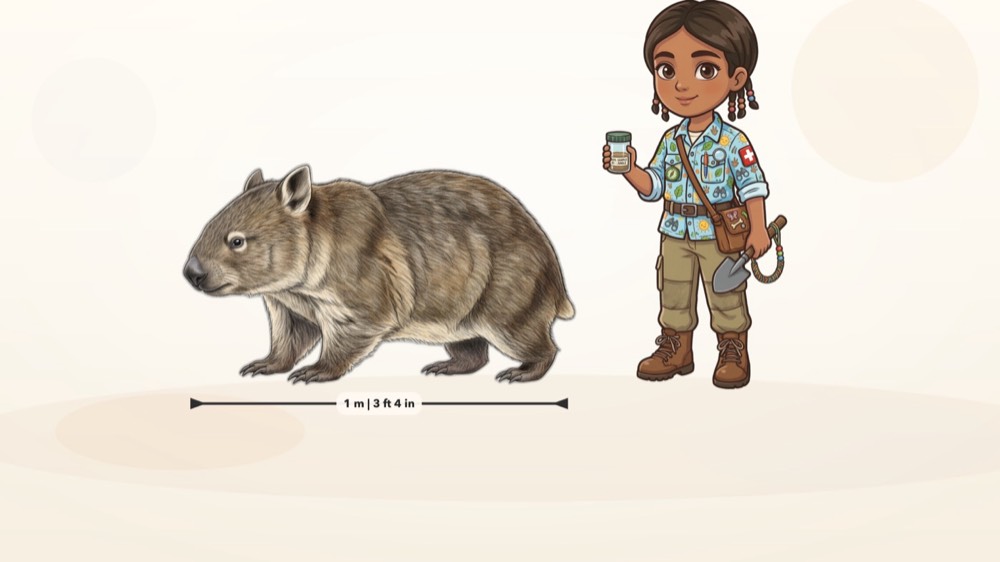
A grown-up wombat's body is almost as long as a 5-year-old is tall — but low and round, built for squeezing through tunnels, not for standing tall.
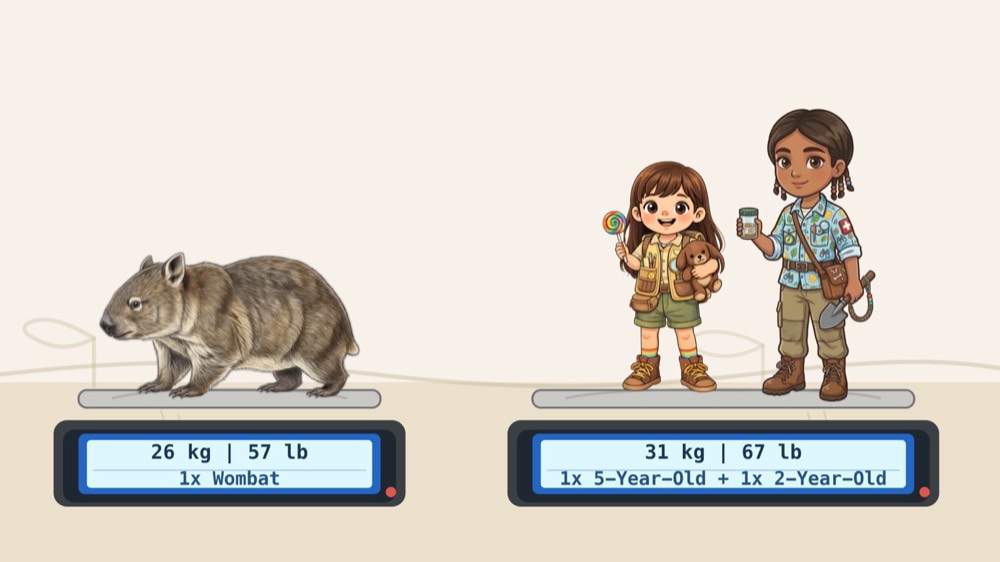
Can you picture a wombat on one side of a scale, and a 5-year-old plus a 2-year-old on the other? The kids would be just a little heavier — a wombat weighs almost as much as the two of them together!
A brand-new baby wombat, called a joey, is about the size of a jellybean when it's born. It crawls into its mom's pouch and grows there for many months — sometimes most of a year — before it leaves the pouch for good.
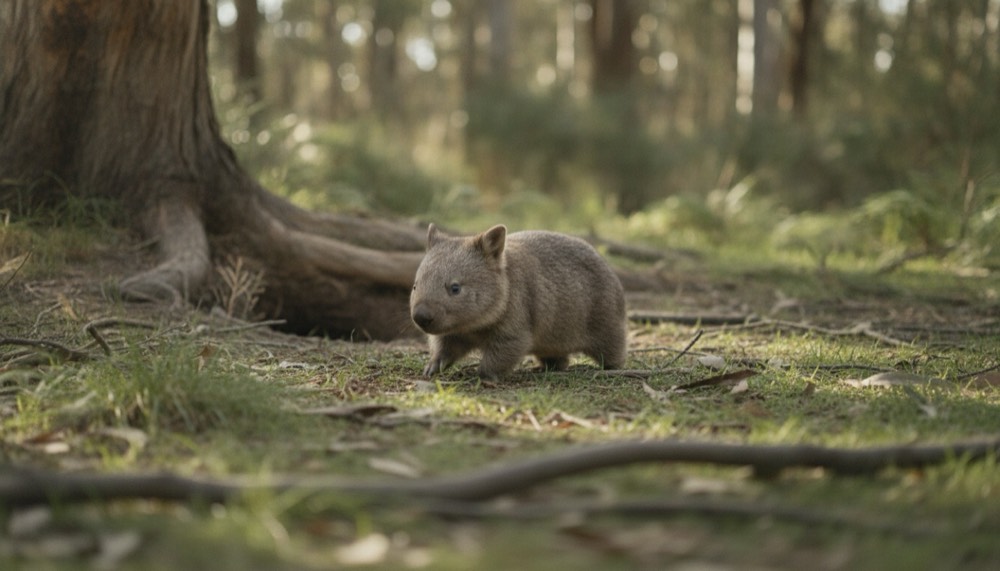
Wombats spend about two-thirds of their lives underground, digging tunnel-homes that can stretch longer than a school bus. Their teeth never stop growing — handy, since they spend their nights munching tough grass.
Can you dig a pretend tunnel with your hands? Can you waddle low to the ground, like a wombat heading home for the night?
Where to see a wombat
In the wild, common wombats live only in the cool forests and grassy hills of south-eastern Australia and on the island of Tasmania, where they come out to graze at dusk — watch quietly, from a distance. For the rest of us, these zoos and sanctuaries have wombats you can visit.
In Australia
Woodlands Track wombats
Healesville Sanctuary — Healesville, VictoriaWalk the leafy Woodlands Track and look for a wombat's shiny black, furless nose — that's how you tell a common wombat from its hairy-nosed cousins.
Learn more →The biggest wombat habitat
Australia Zoo — Beerwah, QueenslandThe zoo says it has the biggest wombat home of any zoo in the world, with plenty of room to dig, graze, and snooze. If you spot a mum, look for her backwards pouch!
Learn more →Rescued and rehomed
Bonorong Wildlife Sanctuary — Brighton, near Hobart, TasmaniaA wildlife hospital and sanctuary. Many of its wombats arrived as orphans or after accidents, and are cared for here.
Learn more →Around the world
Wombat babies in Germany
Zoo Duisburg — Duisburg, GermanyDuisburg has kept wombats for many years and has raised wombat babies there. Visit late in the day, when wombats start to wake up.
Learn more →The "Outback" wombats
Erlebnis-Zoo Hannover — Hannover, GermanyLook for wombats in the zoo's "Outback" area. This pair has had babies four different times.
Learn more →One of only two in Japan
Nagano City Chausuyama Zoo — Nagano, JapanOne of only two zoos in all of Japan that keep wombats.
Read about Japan's wombats →Meet a cousin in North America: the southern hairy-nosed wombat
You can't see a common wombat on display at any North American zoo right now, but a few are home to its cousin, the southern hairy-nosed wombat — a little smaller, fuzzier-nosed, and just as good at digging. The Los Angeles Zoo calls wombats "bulldozers of the bush."
Learn more →Animals sometimes move — check the zoo's own website before you visit.
For grown-ups
Common wombats are listed as Least Concern — not endangered overall, but some local groups are struggling, mostly from a skin disease called mange, from being hit by cars, and from losing their grassy homes.
There's a hopeful story from a wombat cousin: the northern hairy-nosed wombat, one of the rarest animals on Earth. In the early 1980s, only about 35 were left, all in one park in Queensland. Rangers built a predator-proof fence to keep them safe. Today there are about 450, living across three protected homes in Queensland — including a new one called Dhuny Yumba National Park, where in October 2025 trail cameras spotted mother wombats carrying joeys in their pouches for the first time.
This week's hope action: be a wombat spotter. If your family is ever in wombat country, look for wombats (and wombat cube-poops!) from a safe distance, and ask a grown-up to log the sighting with a citizen-science group like WomSAT. Anywhere in the world, you can tell a friend the story of the 35 wombats that became 450.
Starters: "Why do you think a wombat's poop is shaped like a cube?" "If your home could be a tunnel underground, what would you want in it?" "What do you think it felt like for the rangers to count 450 wombats after there were only 35?"
If your kid asks could a wombat squish a dingo? — this holds up: "It won't squish anything on purpose — it just blocks the tunnel with its tough backside so a predator can't get past, like closing a strong door."
Keep exploring
Wild Atlas has a whole page built around the wombat, in the Legends of the Wild pack — narrated facts, the full scale comparison against a 5-year-old, and its backwards pouch explained.
Meet the wombat in Wild Atlas →
For more, visit the Australian Museum.
 Subscribe and the Farm Friends pack ($3.99) is free — yours to keep even if you unsubscribe.