Happy World Bonobo Day! Every February 14, people celebrate the bonobo — one of our two closest animal cousins, along with chimpanzees.
About this day: World Bonobo Day was started by Ashley Stone of The Bonobo Project and first marked on Valentine's Day 2017, a nod to bonobos' famously peaceful ways. Source
Read this one out loud together — it's short, and it's even better with a big, ticklish laugh.
Deep in the rainforests of the Democratic Republic of the Congo lives an ape that laughs when it's tickled.
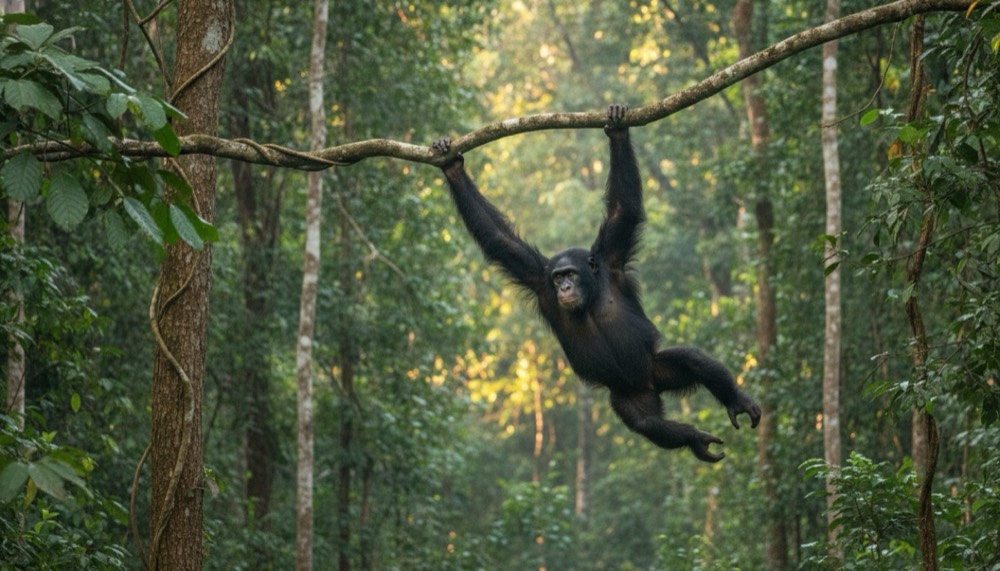
That ape is the bonobo — one of our two closest animal cousins, along with chimpanzees. And just like you, a bonobo really does laugh when someone tickles it, a breathy, panting "huh-huh-huh."
Can you try a tickly bonobo laugh right now?
Here's another surprise. Every single night, a grown-up bonobo builds a brand-new bed. It bends leafy branches high up in a tree into a cozy nest — and tomorrow night, it builds a whole new one.
On the ground, a bonobo usually walks low on its knuckles and feet, so it looks smaller than it really is. But stand one up tall, next to you...
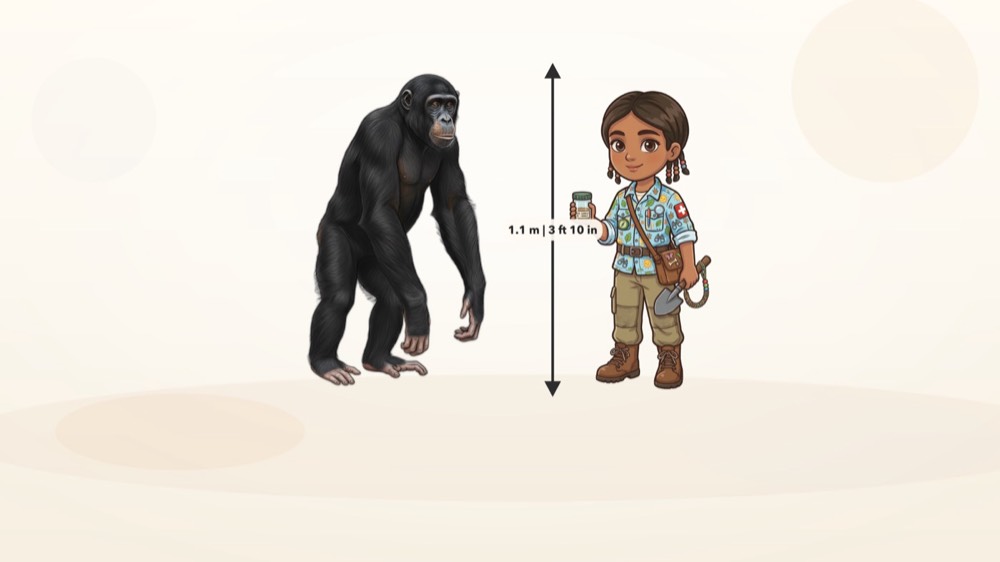
...and you'd be almost eye to eye.
A grown-up bonobo weighs about as much as two 5-year-olds put together.
Can you knuckle-walk across the floor like a bonobo, hands and feet down low? (Grown-ups, give them room to try it.)
In bonobo families, the moms are in charge. A bonobo son stays close to his mom his whole life, and her place in the group becomes his place too.
A baby bonobo rides on its mom, first on her tummy, then on her back, drinking her milk for about four years. Scientists have even seen bonobo moms take care of babies from another group who needed a new family.
Bonobos are famous for making up fast after a squabble, with a hug, some grooming, or holding hands. Can you give a make-up hug the next time you bump heads over something?
Where to see a bonobo
In the wild, bonobos live only in the rainforests of the Democratic Republic of the Congo, and very few people ever get to see one there. For the rest of us, these zoos around the world have bonobos you can visit, and one very special sanctuary in Congo looks after bonobos who need a new family.
North America
The biggest group in North America
Milwaukee County Zoo — Milwaukee, WisconsinThis zoo is home to the biggest group of bonobos in North America.
Learn more →Climbers in the Lost Forest
San Diego Zoo — San Diego, CaliforniaWatch bonobos climb rocks, ropes, and swaying poles next to splashing waterfalls. San Diego has cared for bonobos since 1960.
Learn more →Neighbors in the African Forest
Jacksonville Zoo and Gardens — Jacksonville, FloridaThis zoo's bonobos live in the African Forest area, and the zoo also helps support Lola ya Bonobo, the bonobo sanctuary in Congo.
Learn more →Along Jungle Trails
Cincinnati Zoo and Botanical Garden — Cincinnati, OhioBonobos live in Jungle Trails, a rainforest-style path through the zoo.
Learn more →Around the world
The sanctuary for orphaned bonobos
Lola ya Bonobo — near Kinshasa, Democratic Republic of the CongoThe world's only bonobo sanctuary cares for about seventy bonobos who lost their moms, and welcomes local schoolchildren and families to come learn about them.
Learn more →The only bonobos in the United Kingdom
Twycross Zoo — Leicestershire, EnglandTwycross is the only zoo in the United Kingdom with bonobos, and one of the very few places anywhere with all four kinds of great ape.
Learn more →Life in Pongoland
Zoo Leipzig — Leipzig, GermanyIn Pongoland, bonobos live near chimpanzees, gorillas, and orangutans, and scientists study how great apes think.
Learn more →Animals sometimes move — check the zoo's own website before you visit.
For grown-ups
Bonobos are listed as Endangered, mostly from bushmeat hunting, habitat loss from logging and farming, and a region where conflict has made conservation harder. There's a hopeful story: since 2002, the sanctuary Lola ya Bonobo, near Kinshasa in the Democratic Republic of the Congo, has cared for orphaned bonobos, and the sanctuary team says about seventy live there today. In 2009, a sanctuary-raised bonobo named Etumbe led the first group ever returned to the wild, into a protected forest reserve called Ekolo ya Bonobo, where the team says about thirty-five bonobos now live free. They keep working to grow the protected land.
Bonobos need healthy forest with room to live. This week, try checking one label together — a sustainably certified palm oil or FSC-paper product — and talk about why that choice matters. It won't reach the Congo Basin directly, but it's the same idea: forests stay standing when the people who use them look after them.
Starters: "If you and a friend were about to argue, what's one thing you could do instead, like a bonobo would?" "Bonobos share their food even with bonobos outside their own family. Who's someone outside your family you could share with?"
If your kid asks why do bonobos need a sanctuary family, don't they have their own mom? — this holds up: "Most bonobos grow up with their mom, just like most kids. Sometimes a baby bonobo loses its mom, and kind people at places like Lola ya Bonobo raise it and keep it safe. Some of those bonobos even grow up and go back to live free in a big protected forest."
Keep exploring
Wild Atlas has a whole page built around this animal — narrated facts, the full scale comparison against a 5-year-old, and all about its squeaks, hoots, and peeps, in the Legends of the Wild pack.
Meet the bonobo in Wild Atlas →
For more, visit San Diego Zoo Wildlife Alliance.
 Subscribe and the Farm Friends pack ($3.99) is free — yours to keep even if you unsubscribe.