Happy World Environment Day! Every June 5, people all over the world celebrate our planet — and today we're celebrating with the Galápagos giant tortoise, one of the best gardeners on Earth.
About this day: The United Nations declared World Environment Day in 1972, and it was first held in 1973. It's for the whole planet, and we picked the Galápagos giant tortoise. Source
Read this one out loud together — it's short, and it's even better in your slowest, sleepiest tortoise voice.
A giant tortoise is a slow-walking gardener.
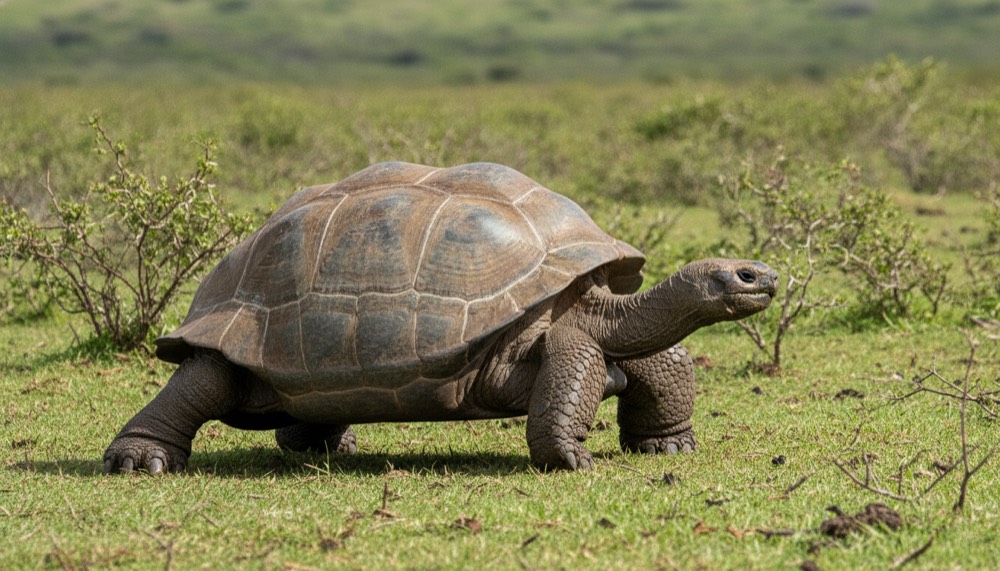
As it wanders its island, munching grass, leaves, and cactus, it carries seeds along in its tummy. One tortoise dropping can hold hundreds of seeds! When the seeds come back out, far from where the tortoise first ate them, new plants get to grow. That makes the tortoise one of the best gardeners on the island.
Here's a wow fact: the Galápagos Islands are named after these tortoises! Long ago, sailors thought their shells looked like saddles, and galápago is an old word for saddle. Some tortoises really do have a shell shaped like a saddle, curved up at the front, so they can stretch their long necks way up to reach cactus pads.
Can you stretch your neck up tall, like a tortoise reaching for a cactus?
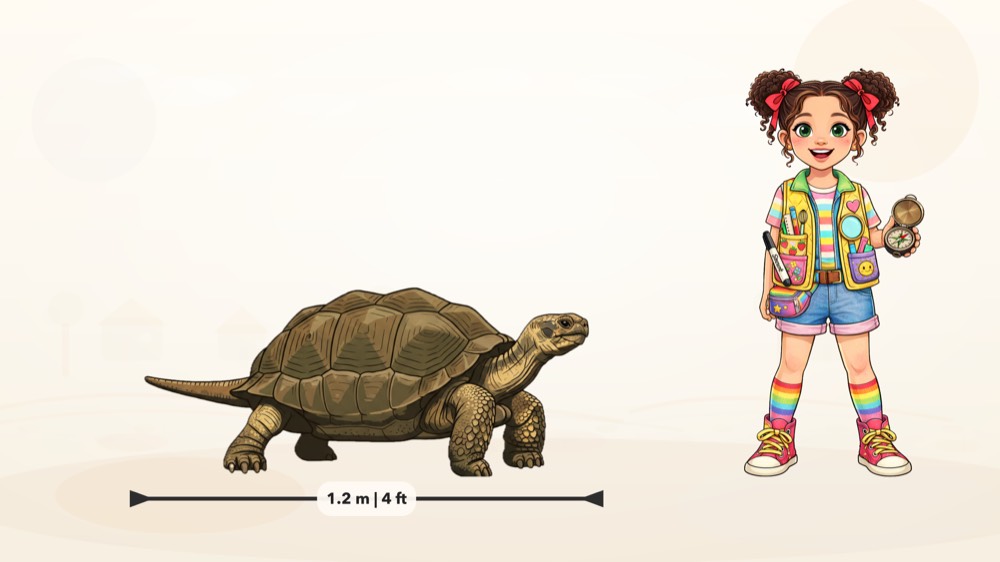
A big tortoise can be about as long as you are tall. And a big one can weigh as much as about 14 five-year-olds, all standing on one enormous scale together!
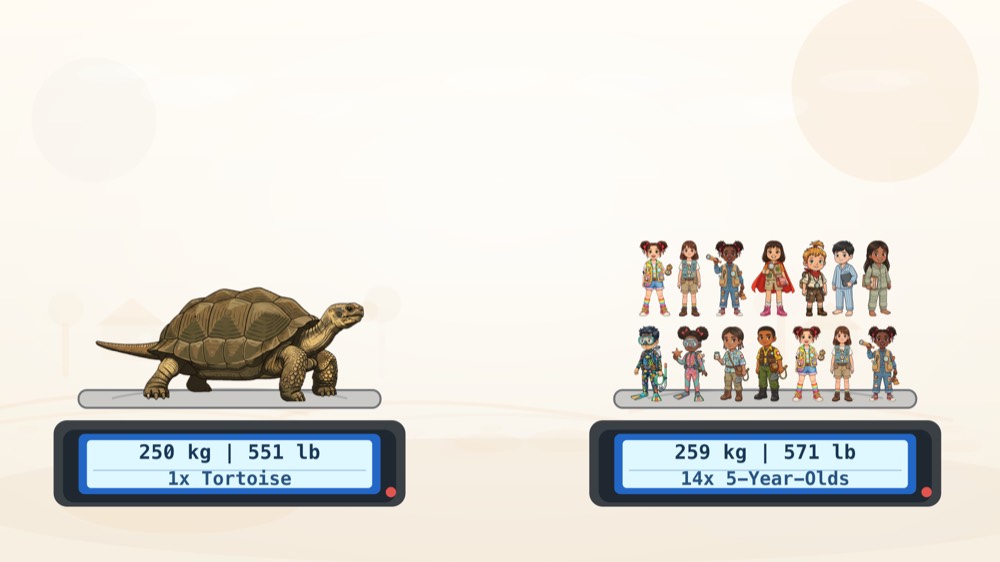
Can you picture 14 friends standing on one big scale?
Tortoises walk slower than you do, but they keep on going — some even take a long, slow walk up a volcano every year, from the dry coast to the green hills, and back again.
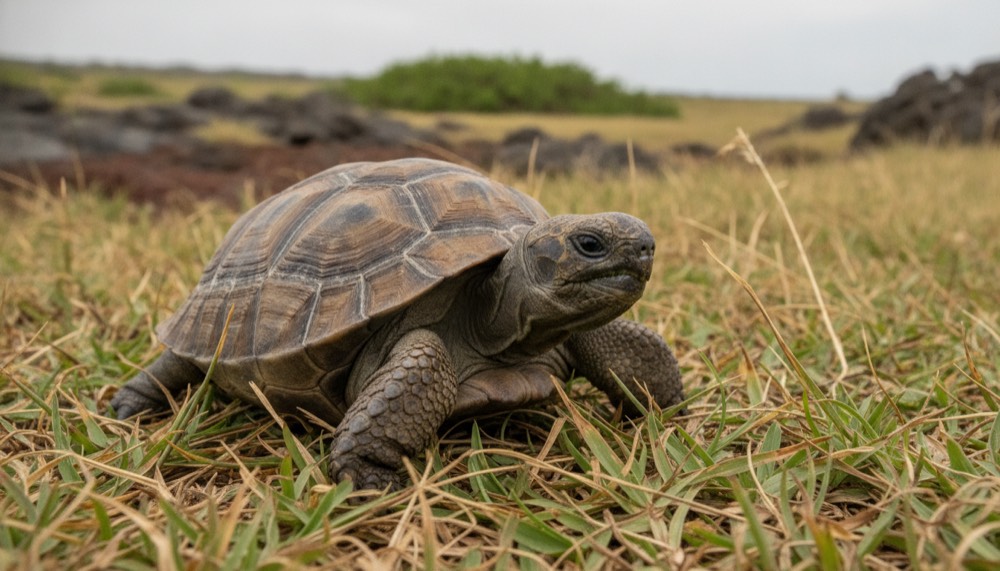
A brand-new baby tortoise is small enough to sit in your hand. Mom digs a nest for her eggs, and months later, the babies dig themselves out, all on their own!
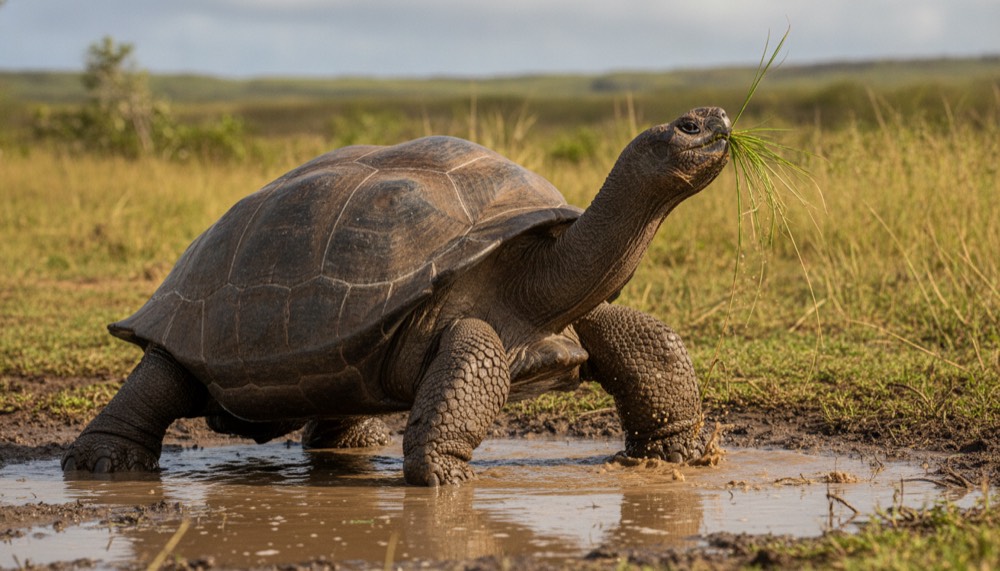
Galápagos giant tortoises can live more than 100 years — longer than almost any other animal on Earth. Can you curl up small and tuck your head in, the way a tortoise tucks into its shell?
Where to see a Galápagos giant tortoise
In the wild, Galápagos giant tortoises live only on the Galápagos Islands, far out in the Pacific Ocean. For the rest of us, a handful of zoos care for these gentle giants — and some have lived at their zoo for nearly 100 years.
North America
Mommy and Abrazzo
Philadelphia Zoo — Philadelphia, PennsylvaniaIn 2025, these two became parents for the very first time at about 100 years old — their babies were the first ever hatched at the zoo.
Visit Philadelphia Zoo →A whole Galápagos area
Houston Zoo — Houston, TexasHouston Zoo built a Galápagos area with lava rocks, cactus, and mud wallows, where its tortoises stroll around like they're back on the islands.
Visit Houston Zoo →Tortoises since 1928
San Diego Zoo — San Diego, CaliforniaSan Diego Zoo has cared for Galápagos tortoises since 1928. You can visit them along Reptile Walk.
Visit San Diego Zoo →Over 100 years old
Riverbanks Zoo and Garden — Columbia, South CarolinaRiverbanks is home to Galápagos tortoises more than 100 years old, plus babies hatched there in 2019.
Visit Riverbanks Zoo →Around the world
Priscilla
ZSL London Zoo — London, EnglandPriscilla lives in "Giants of the Galápagos," a home with warm pools and a muddy wallow built just for tortoises.
Visit ZSL London Zoo →More than 100 hatchlings
Zoo Zürich — Zürich, SwitzerlandZoo Zürich has a long-running Galápagos tortoise family — more than 100 babies have hatched there.
Visit Zoo Zürich →Animals sometimes move — check the zoo's own website before you visit.
For grown-ups
Scientists recognize 15 kinds of Galápagos giant tortoise, roughly one for each island or volcano, and the IUCN rates each one separately — several are Critically Endangered, others Endangered or Vulnerable, and two no longer exist. Long ago, sailors took tortoises onto their ships for food, which is a big reason numbers dropped so low. Today tortoises are protected, and people work to keep them safe — including by clearing out animals that don't belong on the islands and eat tortoise eggs and plants.
There's a hopeful story: on Española island, the tortoises were down to a small breeding group of just 15. People raised their babies safely for over 50 years and returned them home. By 2020 there were more than 2,000 tortoises on Española, breeding on their own again.
Be a gardener like a tortoise this week: plant a seed of something that grows naturally near you, in a pot or a garden, and water it together.
Starters: "If you had a shell, what would you keep safe inside it?" "What's one thing our family could do this week to help an animal like this one?"
If your kid asks did people hurt the tortoises? — this holds up: "A long time ago, some people did, before they understood how special and rare these tortoises are. Now lots of people work hard every day to keep them safe."
Keep exploring
Wild Atlas has a giant tortoise page — narrated facts and a scale comparison against a 5-year-old. You'll find it in the Cozy Critters pack.
Meet the tortoise in Wild Atlas →
For more, visit Galapagos Conservancy.
 Subscribe and the Farm Friends pack ($3.99) is free — yours to keep even if you unsubscribe.