Happy World Giraffe Day! Every June 21 — the longest day of the year up here in the north — people around the world celebrate the tallest animal on Earth. The Giraffe Conservation Foundation started this day back in 2014 and put it right on the solstice, because what says "reaching for the sun" better than a giraffe?
About this day: World Giraffe Day was started in 2014 by the Giraffe Conservation Foundation. They picked June 21, the longest day of the year, for the tallest animal. Source
Read this one out loud together — it's short, and it's even better with a long, stretchy giraffe voice.
Meet the giraffe — the tallest animal on Earth, with a long, dark tongue and a coat of patches that's all its own.
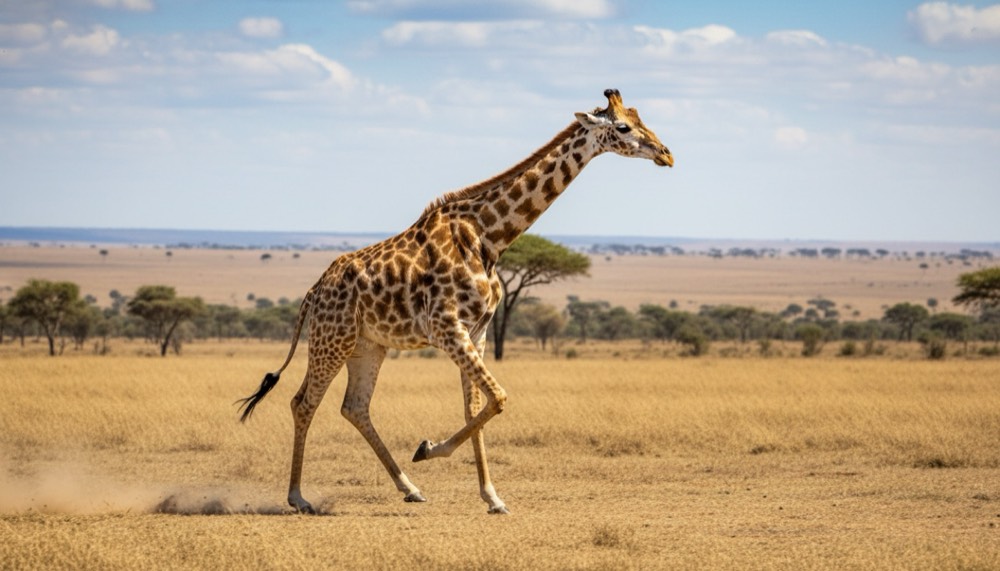
A giraffe strides across the grassy savanna on legs as long as a grown-up's whole body, nibbling leaves that almost nothing else can reach. Its tongue is about as long as your arm — and it's dark blue-black, which scientists think helps keep it from getting sunburnt while it works in the sun all day.
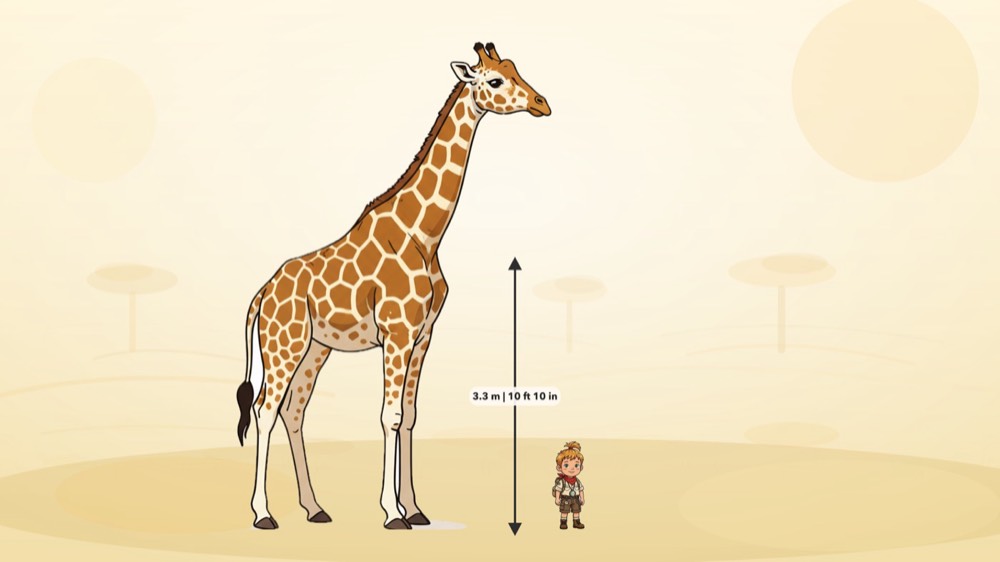
A big giraffe is as tall as five five-year-olds standing on each other's shoulders!
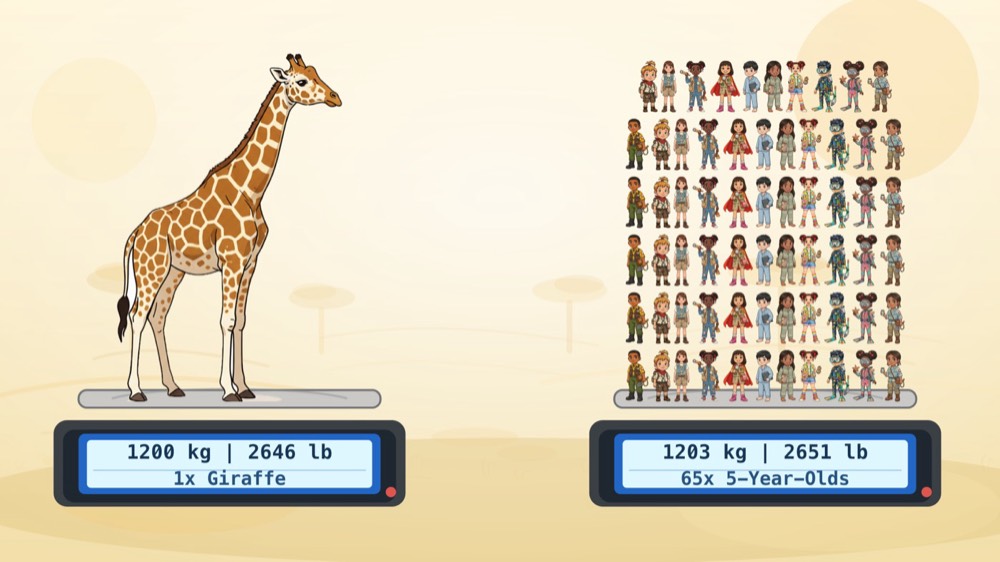
And it's heavy too — about as much as 65 five-year-olds, all standing on one big scale together!
Here's a surprise: a giraffe has the very same number of neck bones as you do — seven! Each one of its neck bones is just super long. Its heart is huge and strong, working hard to reach all the way up that tall neck to its brain. And those two little bumps on its head? They're called ossicones, and every giraffe — boys and girls both — has them from the day it's born.
A baby giraffe arrives already enormous — about as tall as a grown-up — and it's up on its wobbly legs within an hour!
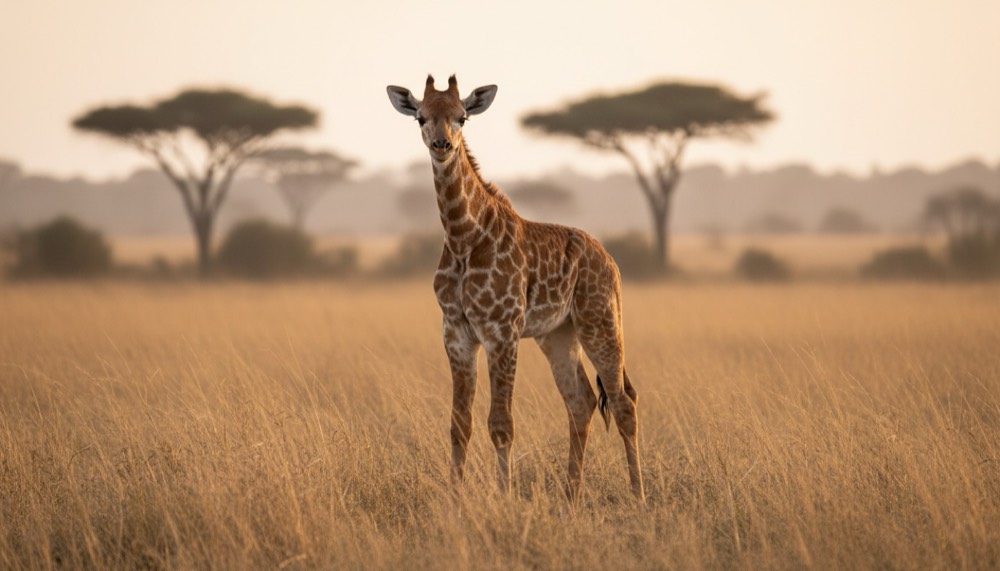
A newborn giraffe joins a giraffe nursery, where one mom babysits a whole group of calves while the others go off to eat. No two giraffes ever have the same patch pattern, not one, in the whole world. It's like a giraffe fingerprint.
Can you reach up high like a giraffe stretching for leaves? Can you draw your own one-of-a-kind spot pattern? Can you stand very still and tall like a giraffe napping on its feet?
Where to see a giraffe
In the wild, giraffes live only in Africa, browsing the savannas and open woodlands of countries like Kenya, Tanzania, Namibia and South Africa — look for them on safari in places like the Maasai Mara, the Serengeti or Kruger. For the rest of us, these zoos care for giraffes too, and some help protect their wild cousins back in Africa.
North America
The Giraffe Center
Cheyenne Mountain Zoo — Colorado Springs, ColoradoThis mountainside zoo is home to one of the biggest giraffe herds in North America. At the Giraffe Center you can offer a giraffe a leafy lettuce snack and see that long dark tongue up close.
Learn more →The African Savanna
Oakland Zoo — Oakland, CaliforniaLook for reticulated giraffes here, whose patches look like a net of creamy lines. The zoo also helps protect wild giraffes back in East Africa.
Learn more →Masai Giraffe Habitat
Houston Zoo — Houston, TexasMeet Masai giraffes, whose patches look like jagged oak leaves. Watch how they walk — both right legs step together, then both left legs.
Learn more →Around the world
African Savannah
Taronga Zoo Sydney — Sydney, AustraliaCatch a keeper talk here to learn how giraffes use their long, dark tongues to pull leaves off branches.
Learn more →The Giraffe Safari Bus
Werribee Open Range Zoo — near Melbourne, AustraliaRide the safari bus across the savannah to spot giraffes towering overhead. Scientists think giraffes may even help flowers by carrying pollen as they browse.
Learn more →Animals sometimes move — check the zoo's own website before you visit.
For grown-ups
In August 2025, the IUCN's giraffe specialists officially recognised something exciting: there isn't just one kind of giraffe — there are four. The northern, reticulated, Masai and southern giraffe are each different enough to count as their own species, something researchers had wondered about for years. Three of the four now show stable or growing numbers, though the northern and reticulated giraffe still need real help, and giraffes overall have lost nearly 90% of the land they used to roam across Africa. The Giraffe Conservation Foundation (GCF), which started World Giraffe Day, estimates about 140,000 giraffes remain in the wild.
One story shows what's possible. In 1996, only 49 West African giraffes were left in the wild, all in one small part of Niger. Local communities, Niger's government and conservation groups worked together to protect them — and today there are more than 600. Some even moved to a brand-new home, Gadabedji Biosphere Reserve, where giraffes hadn't lived in almost 50 years. Baby giraffes have already been born there.
A hope action for your family: be a pattern detective! Draw your own giraffe with a one-of-a-kind spot pattern — nobody else's will match, just like real giraffes. Scientists use photos of real giraffes' patterns the very same way, to tell individual giraffes apart.
Starters: "If you had a tongue as long as a giraffe's, what would you use it for?" "Why do you think giraffe babies stay close to other giraffe babies?" "What's something that's special about you, the way spots are special to a giraffe?"
If your kid asks do lions eat giraffes? — this holds up: "Sometimes, yes — that's part of how the grasslands work, everything there is connected. But a grown giraffe is very tall and can give a powerful kick, and young giraffes stay close to their mothers, which helps keep them safe most of the time."
Keep exploring
Wild Atlas has a whole page built around this animal — narrated facts, the full scale comparison against a 5-year-old, and more — in the Safari Stars pack.
Meet the giraffe in Wild Atlas →
For more, visit the Giraffe Conservation Foundation.
 Subscribe and the Farm Friends pack ($3.99) is free — yours to keep even if you unsubscribe.