Happy World Hippo Day! Every February 15, people all over the world celebrate the hippo — one of the most surprising animals we know.
About this day: Its origins aren't well documented, but zoos and conservation groups mark World Hippo Day every February 15.
Read this one out loud together — it's short, and it's more fun with a hippo-grunt voice.
Hippos make their own sunscreen — and it comes out red!
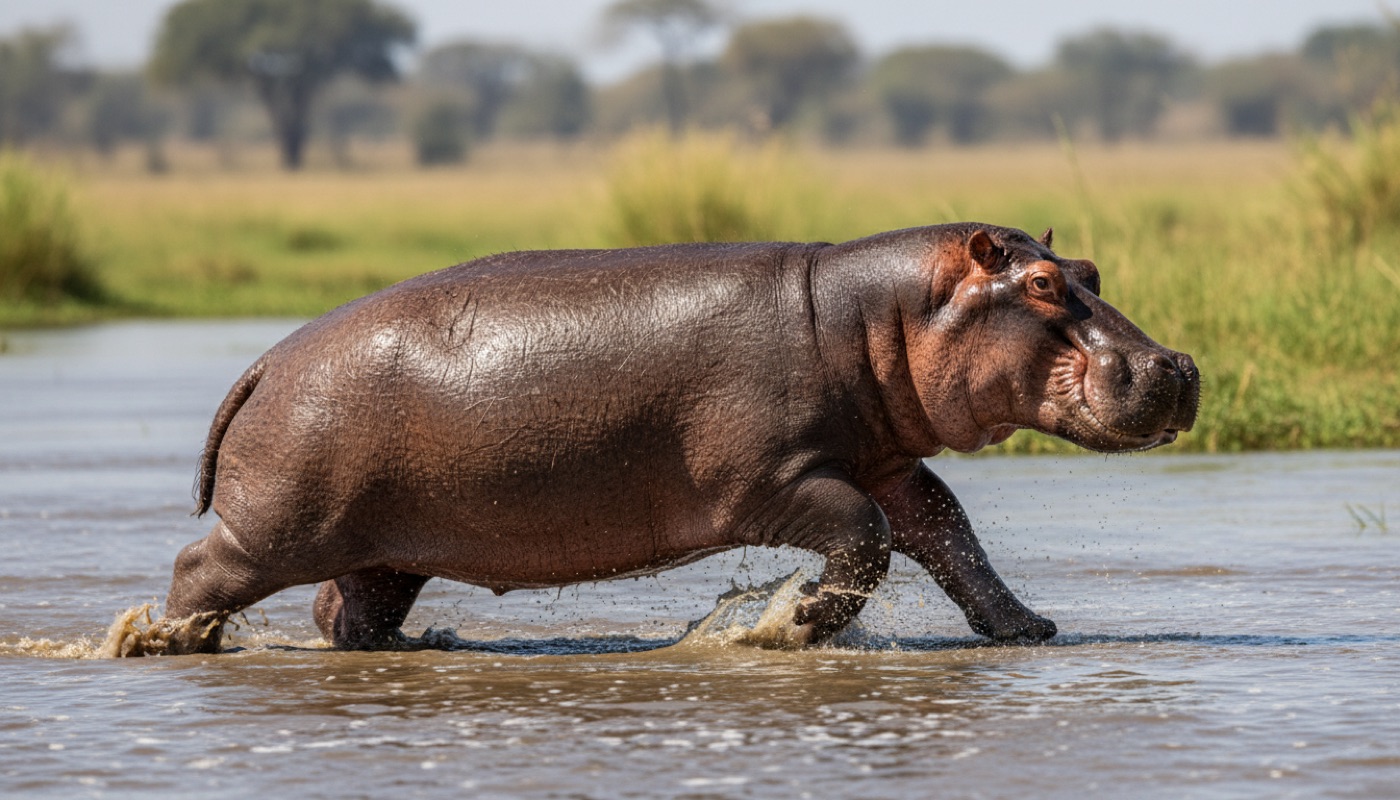
It's not blood. It's not sweat, either — hippos don't really sweat the way people do. Their skin makes a clear fluid that turns red in just a few minutes. It works a bit like sunscreen, and it may even help fight germs.
A hippo looks like an enormous pig — but apart from its little cousin the pygmy hippo, its closest cousins are whales and dolphins!
Here's another surprise: hippos can't really swim. Their bones are too heavy to float, so a hippo walks and bounces along the bottom of the river instead.
Can you hold your breath like a hippo? A grown-up hippo can hold its breath for up to five minutes before coming up for air.
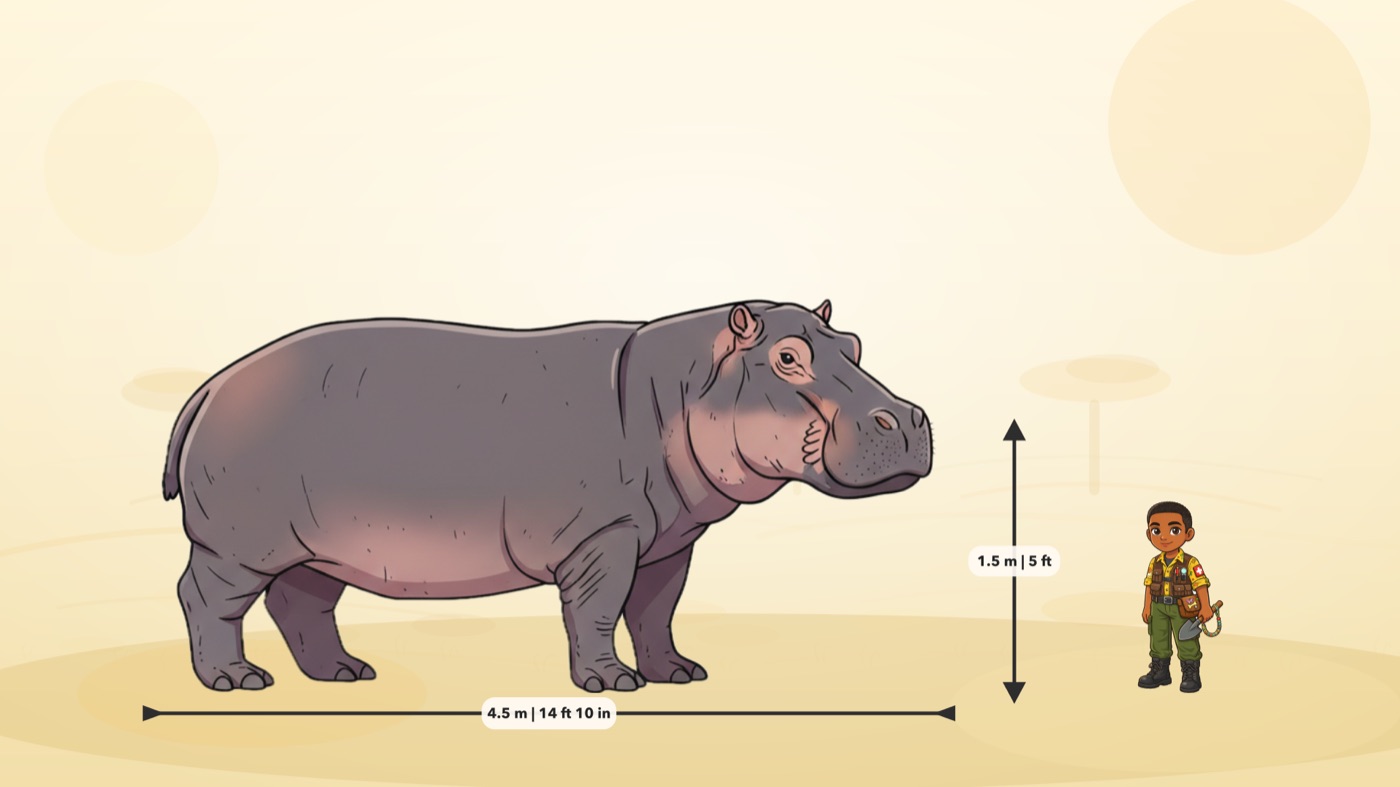
A big hippo stands taller than you — head and shoulders taller. A big male hippo can weigh more than 100 five-year-olds — all standing on one big scale together!
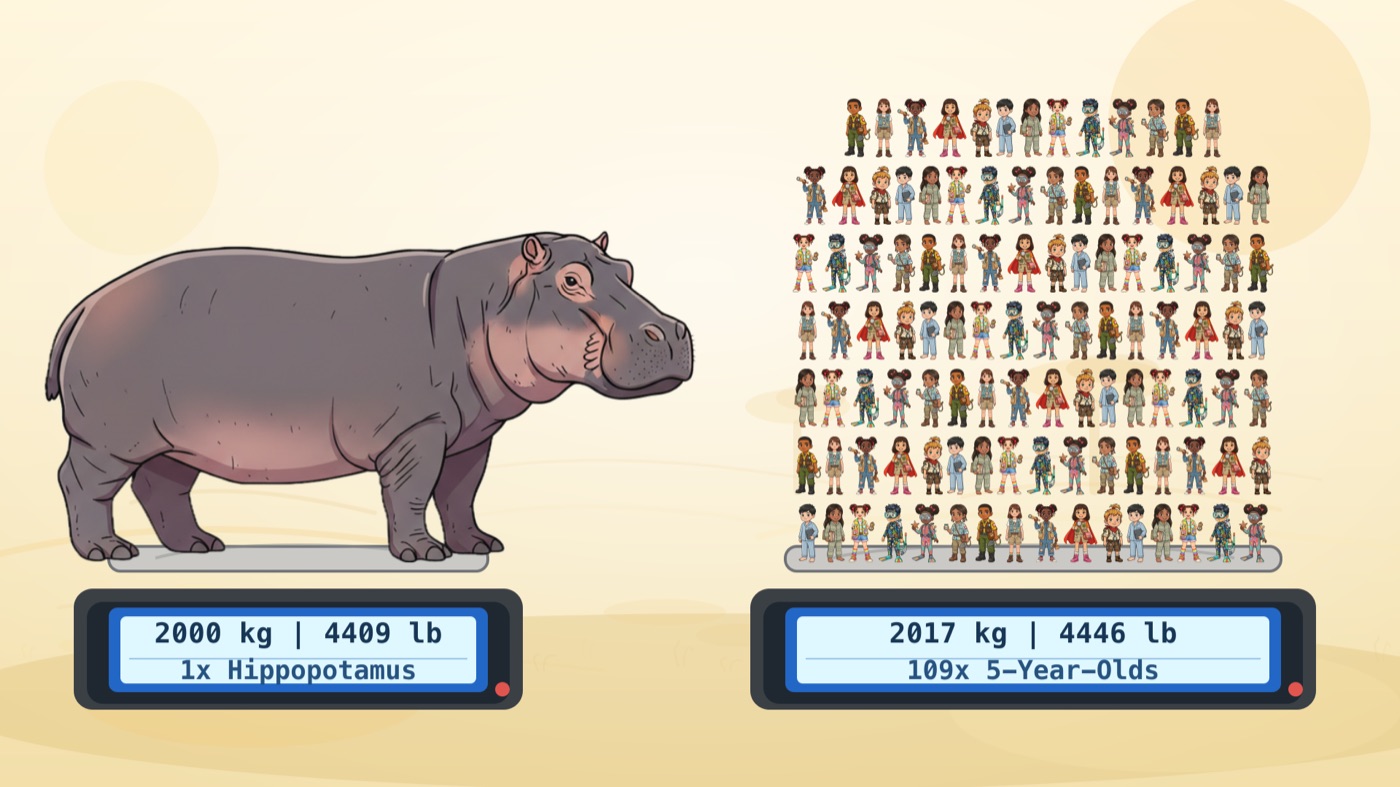
Can you picture 100 friends on one big scale?
A baby hippo, called a calf, weighs about as much as two five-year-olds when it's born. Calves can even drink their mom's milk underwater — their ears fold shut and their nose closes tight so no water gets in.
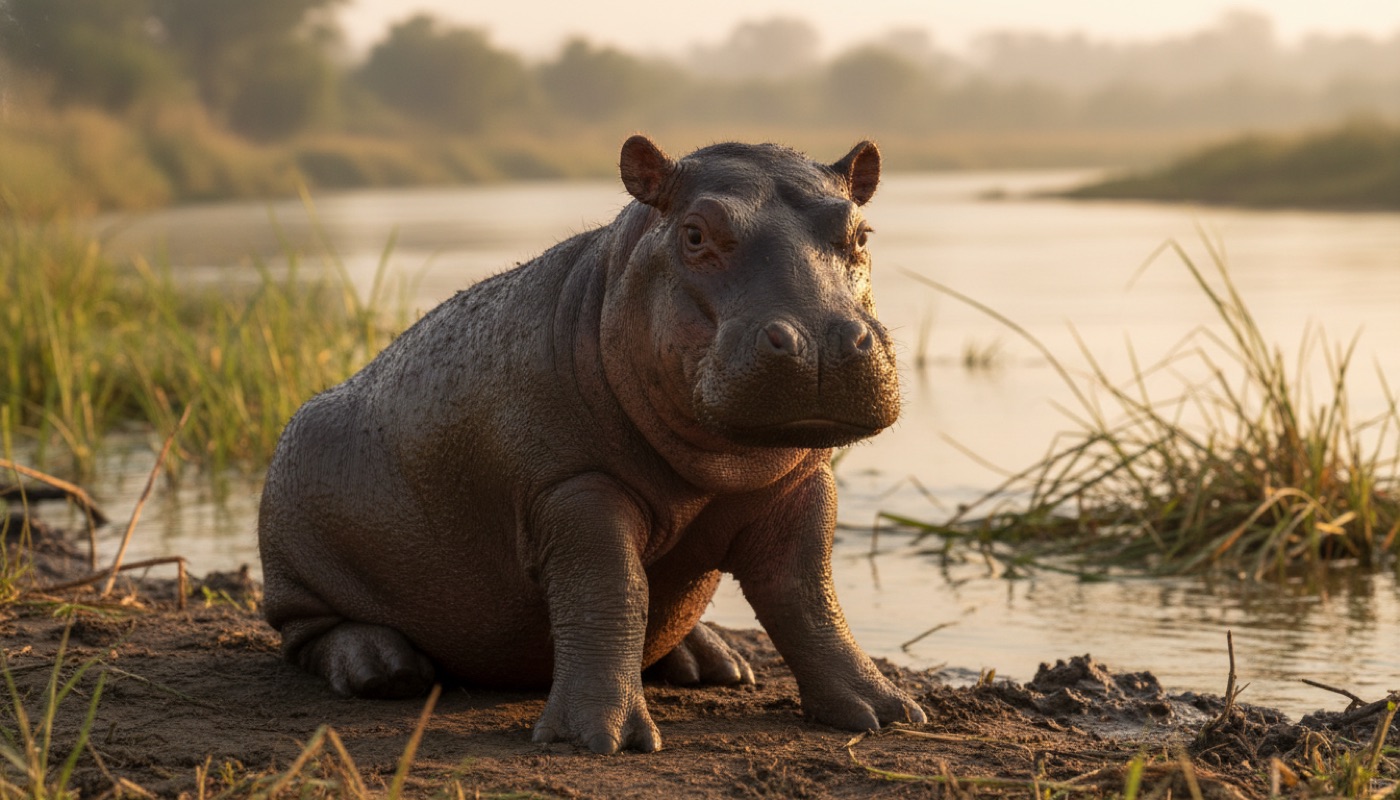
Hippos live together in family groups, usually 10 to 15 hippos. Their eyes, ears, and nose all sit on top of their head, so they can watch the world while most of their body stays hidden underwater.
At night, hippos climb out of the river and munch grass — about 40 kilograms (88 pounds) of it. That's a lot of grass!
Where to see a hippo
In the wild, hippos live in rivers and lakes in Africa, where lucky safari-goers can watch them. For the rest of us, these zoos around the world have hippos you can visit.
North America
Fiona and Fritz
Cincinnati Zoo — Cincinnati, OhioHand-raised after an early birth, Fiona now has a little brother, Fritz.
Learn more →Funani and Amahle
San Diego Zoo — San Diego, CaliforniaFunani watches over the whole group. Her daughter Amahle's name means "beautiful one."
Learn more →Mashavu, Kiboko, and Tombi
Saint Louis Zoo — St. Louis, MissouriWatch these three "tiptoe" along the pool floor, just like hippos do in the wild.
Learn more →Timothy and Uma
San Antonio Zoo — San Antonio, TexasTimothy shares a warm, year-round pool with his grandma Uma.
Visit San Antonio Zoo →Around the world
Lola and Hodor
Longleat Safari Park — Wiltshire, EnglandLola and her son Hodor love cabbage, and share a lake with two more hippos.
Learn more →Nala and Willi
Zoo Berlin — Berlin, GermanyNala's son is named Willi Wackelöhrchen — that's German for "Willi Wobble-Ears."
Learn more →Primrose, Tulip, and Lotus
Werribee Open Range Zoo — Victoria, AustraliaThis flower-named family gobbles giant pumpkins from keepers in just a few bites.
Learn more →Meet a cousin: the pygmy hippo
Maple, a baby pygmy hippo born at the Toronto Zoo in August 2026, is a smaller, different species. She's still behind the scenes with her mom, so check the zoo's page before you visit.
Learn more →Animals sometimes move between zoos — check the zoo's own website before you visit.
For grown-ups
Hippos are listed as Vulnerable, mostly from habitat loss, hunting, and conflict with people along shared rivers. There's a hopeful story: hippo numbers in Virunga National Park fell from about 29,000 in 1974 to fewer than 1,000 by 2005. The park credits ranger patrols and safer access for the comeback, with drones helping to count the hippos — a February 2026 census found 171 groups and 153 calves, and the park now estimates more than 2,700 hippos, even after a hard 2025 anthrax outbreak. The recovery kept going.
Hippos need clean rivers with room to live. This week, try turning off the tap while brushing teeth, or picking up litter near a pond. It won't reach Virunga's rivers directly, but it's the same idea: rivers stay healthy when the people near them look after them.
Starters: "What do you think a hippo's whole day looks like?" "How can people and hippos share a river?"
If your kid asks would a hippo hurt me? — this holds up: "Hippos aren't looking for trouble, but they're big and fast, and they really want their space, kind of like you might not want a stranger walking right up to you. That's why people who study them always stay far away and let hippos be hippos."
Keep exploring
Wild Atlas has a whole page built around this animal — narrated facts, the full scale comparison against a 5-year-old, and the sound a hippo actually makes.
Meet the hippo in Wild Atlas →
For more, visit the IUCN SSC Hippo Specialist Group.
 Subscribe and the Farm Friends pack ($3.99) is free — yours to keep even if you unsubscribe.