Happy World Lemur Day! It falls on the last Friday of every October, just before Halloween. Time to meet one of the sunniest animals on Earth: the ring-tailed lemur.
About this day: World Lemur Day began in Madagascar in 2014, when primate scientist Jonah Ratsimbazafy of the group GERP organised the first lemur festival. It's now held the last Friday of October. Source
Read this one out loud together — it's short, and it's more fun with arms spread wide.
Every sunny morning, ring-tailed lemurs sit up, spread their arms wide, and sunbathe — like they're doing yoga!
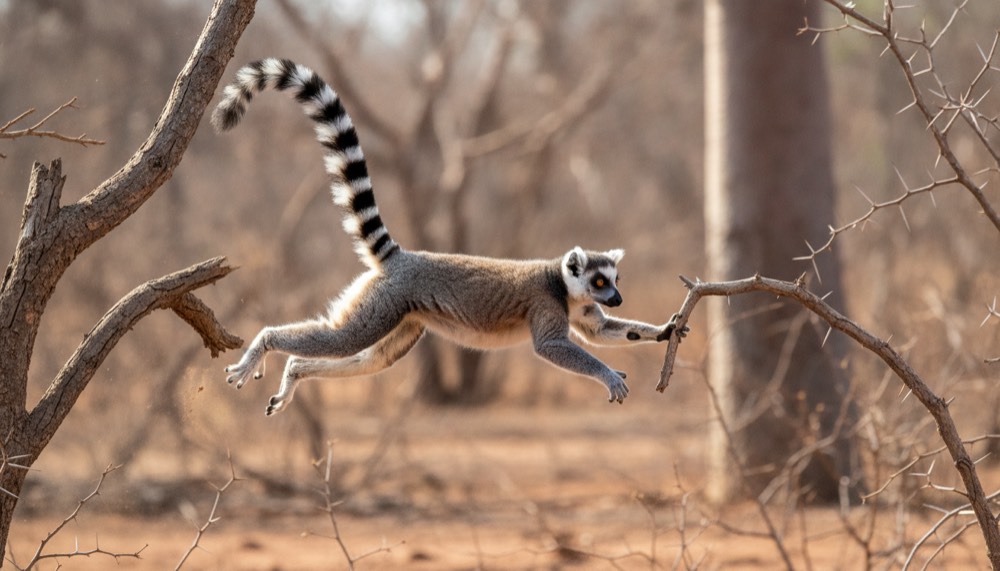
Meet the ring-tailed lemur. It lives in only one place on Earth — the dry forests and rocky hills of southern Madagascar, an island off the coast of Africa.
Can you sit up tall and spread your arms wide to warm your tummy in the sun, just like a lemur?
Here's a wow fact: its striped tail is even longer than the rest of its body — but it can't grab with it. Instead, its tail helps it balance and sends signals to its family.
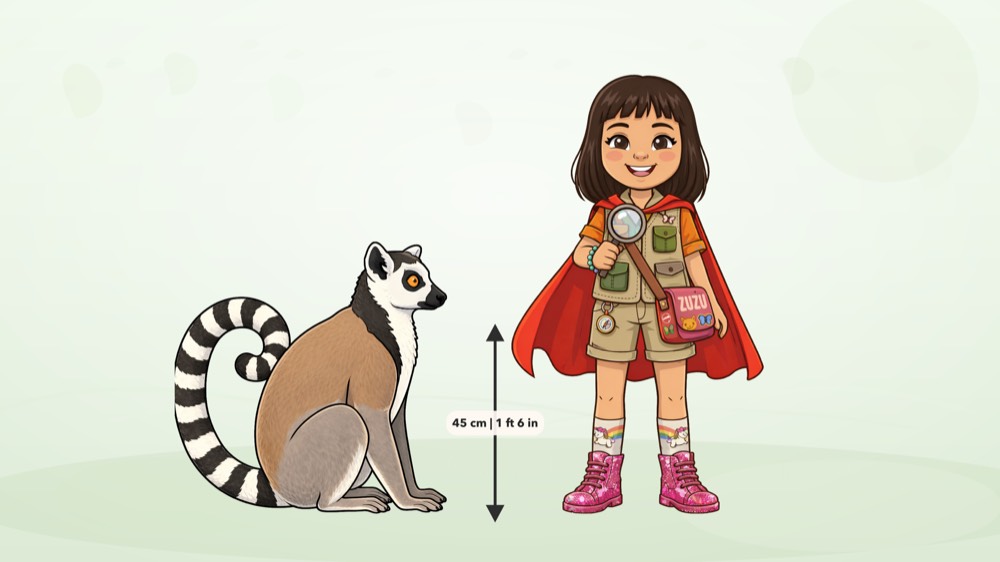
When a ring-tailed lemur sits up, it's less than half as tall as a 5-year-old!
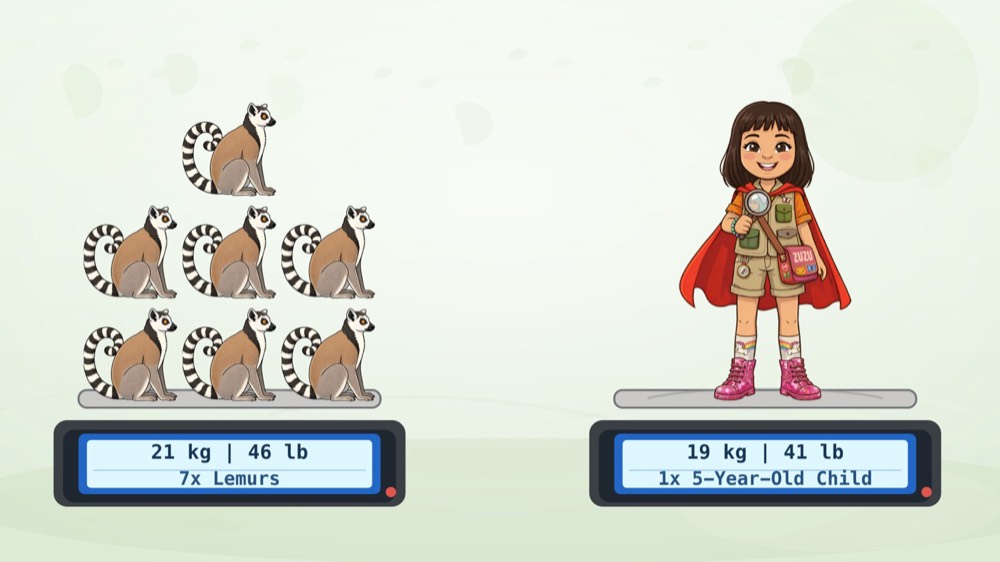
It would take about seven lemurs on a scale to outweigh one five-year-old!
In a lemur family, called a troop, the grown-up girls are in charge — they lead the group and eat first. And when boy lemurs want to show off, they rub smelly scent onto their tails and wave them at each other — a very smelly competition — no touching required.
Can you wave your hand in the air like a lemur waving its stripy tail?
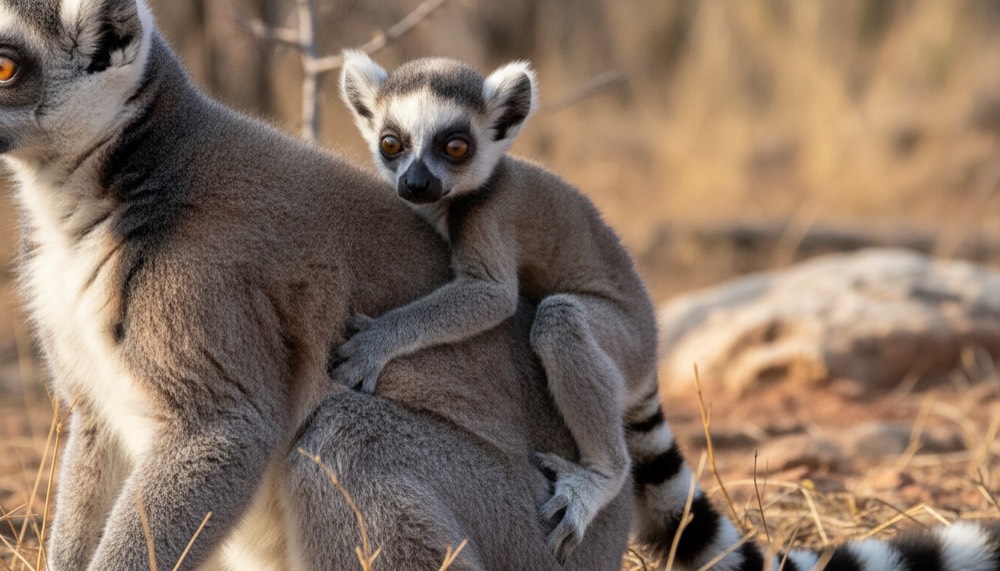
A newborn lemur weighs about as much as an egg. At first it clings to its mom's tummy, and after about two weeks, it climbs onto her back and rides piggyback.
Can you make a lemur sound — a squeaky meow, a purr, or a click?
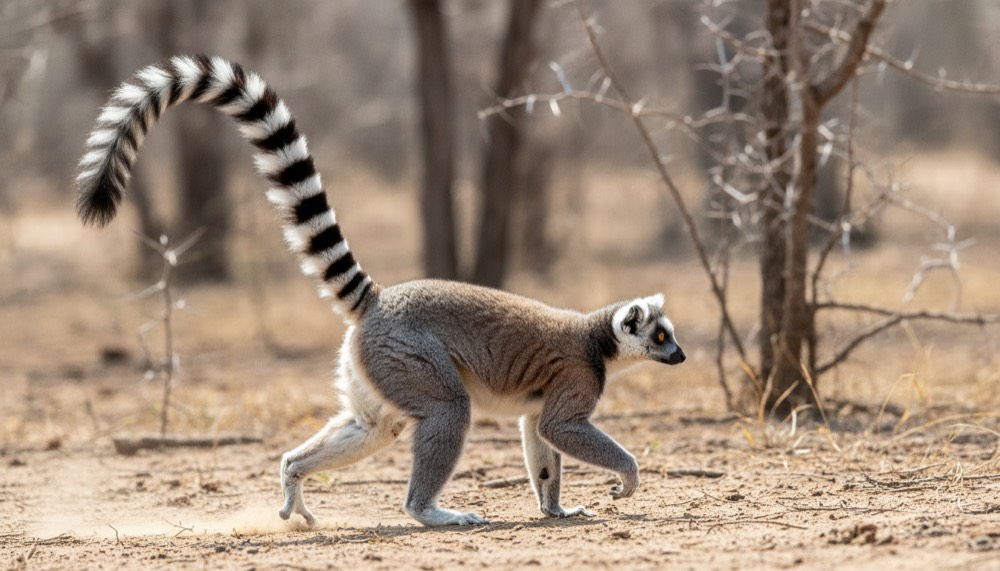
When a troop walks along the ground together, the lemurs hold their stripy tails up high, like flags, so the whole family travels together.
Where to see a ring-tailed lemur
In the wild, ring-tailed lemurs live in only one place on Earth — the dry forests and spiny bush of southern Madagascar. Some families visit habituated wild troops on guided walks at community-run reserves like Anja, near Ambalavao. For the rest of us, these zoos around the world have ring-tailed lemurs you can visit.
North America
Allagash and Rogue's family
Cheyenne Mountain Zoo — Colorado Springs, ColoradoIn March 2025, the troop's matriarch, Allagash, had twins — and on the very same day, her sister Rogue had a baby too. Allagash took in Rogue's baby as well, and raised all three as her own.
Learn more →Lemur Island
Smithsonian's National Zoo — Washington, D.C.On sunny mornings, the troop on Lemur Island may sit up, bellies to the sun and arms spread wide — the same "yoga position" you just read about.
Learn more →Wortham World of Primates
Houston Zoo — Houston, TexasYou'll find the troop here, and the zoo also helps people in Madagascar replant native forest for wild lemurs.
Learn more →The most kinds of lemurs outside Madagascar
Duke Lemur Center — Durham, North CarolinaA research and conservation center with guided tours — book ahead — tour availability varies in the off-season.
Learn more →Around the world
In with the Lemurs
ZSL London Zoo — London, UKA walk-through Madagascar garden with ring-tailed lemurs all around you. Keepers even placed the basking platforms where the sun hits longest.
Learn more →Eve and Pip's twins
Drusillas Park — Alfriston, East Sussex, UKMum Eve and dad Pip welcomed twin boys in April 2026 — the park's first ring-tailed lemur babies in over ten years. Lemurland runs a seasonal calendar, so check before you visit this late in the year.
Learn more →Ring-tailed lemur encounter
Taronga Zoo Sydney — Sydney, AustraliaStep into the lemurs' own habitat with keepers. Taronga's troop first came from its sister zoo in Dubbo.
Learn more →Animals sometimes move — check the zoo's own website before you visit.
For grown-ups
Ring-tailed lemurs are listed as Endangered, and there are fewer of them in the wild than there used to be. Nobody has a solid count of the total left, but scientists agree the trend is heading the wrong way — mostly because their forest home is shrinking, and because some are taken from the wild for the illegal pet trade.
There's a hopeful story too. In one corner of southern Madagascar, near a place called Anja, forest loss and hunting had left fewer than 100 lemurs in the area by the late 1990s. The people who lived right next to that forest decided to look after it themselves — they formed a community association, trained as guides, and stopped the logging and hunting. The community reports the lemurs came back: from fewer than 100 to more than 400. Their work won a United Nations conservation prize in 2012.
This week's hope action: draw a ring-tailed lemur with its own stripy tail, and tell someone in your family one lemur fact on World Lemur Day. It won't plant a tree in Madagascar, but caring about lemurs is exactly how places like Anja got started.
Starters: "In a lemur troop, the grown-up girls are in charge. If your family got to choose who's in charge, like a lemur troop does, who would you pick?" "What's your favorite way to warm up in the sun?"
If your kid asks will lemurs disappear forever? — this holds up: "Some lemurs are in trouble because their forest home is shrinking, but in one part of Madagascar, people who live near the forest became lemur guides — and the lemurs there went from fewer than 100 to more than 400."
Keep exploring
Wild Atlas has the ring-tailed lemur, narrated, in the Planet Pioneers pack — the full scale comparison against a 5-year-old, its own fact cards, and that famous sunbathing pose.
Meet the ring-tailed lemur in Wild Atlas →
For more, visit the Lemur Conservation Network.
 Subscribe and the Farm Friends pack ($3.99) is free — yours to keep even if you unsubscribe.