Happy World Oceans Day! Every June 8, people everywhere celebrate the ocean and everything that lives in it — and today, we're meeting an orca as our ambassador for the day.
About this day: World Oceans Day was first suggested in 1992, and the United Nations made it official in 2008. It's for the whole ocean, and we picked the orca. Source
Read this one out loud together — it's short, and it's even better with a clicking, splashing voice.
Orcas are the biggest dolphins in the world, and every orca family has its own special calls that only they use!
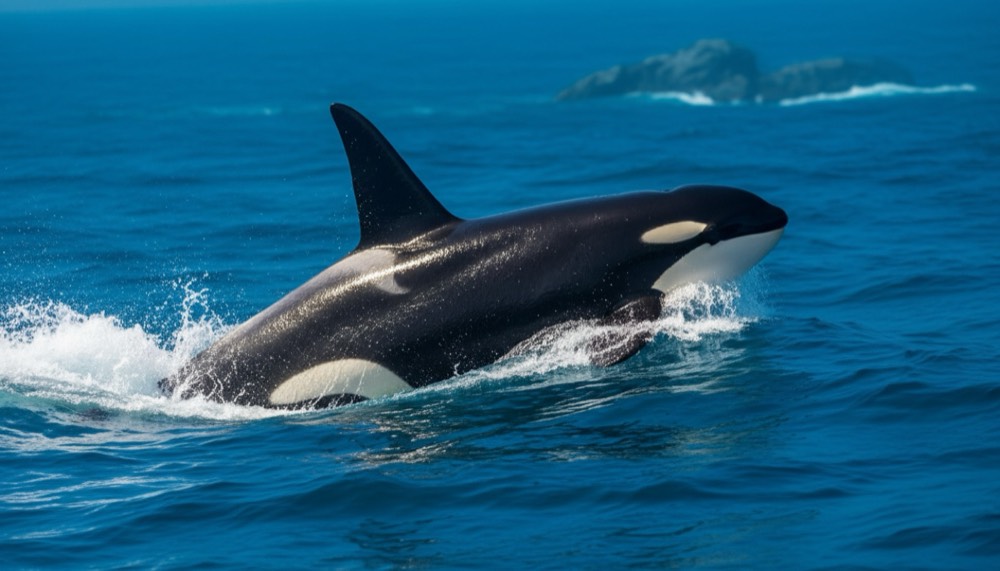
That's right — orcas are really the largest member of the dolphin family, even though most people don't picture them that way. Their black-and-white pattern helps them blend into the sunlit water near the surface and the darker water down below.
Every orca family has its own set of clicks, whistles, and calls — a bit like a family accent. No other family sounds quite the same. Can you make a clicking sound, like an orca listening for fish?
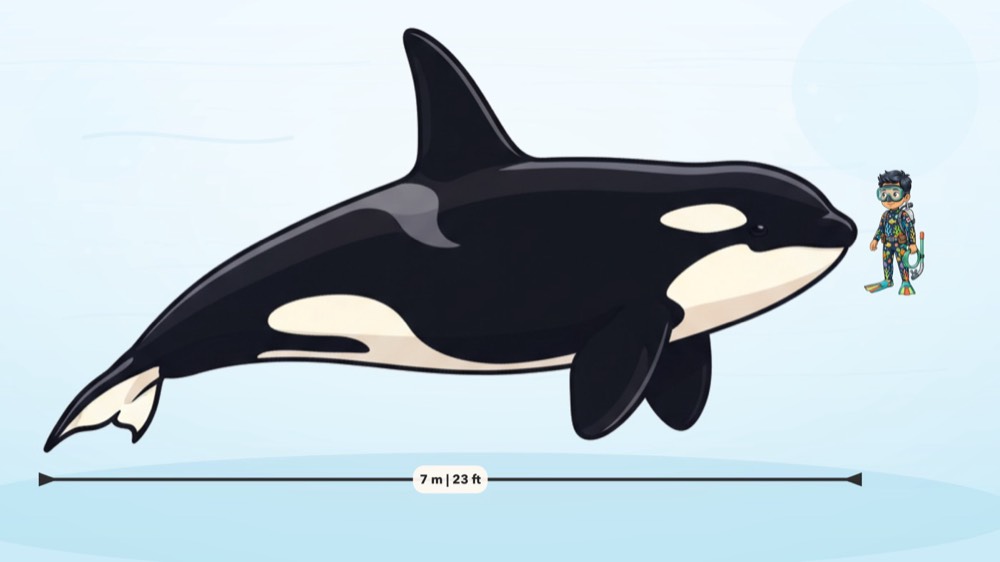
A grown-up orca is about 6 times as long as a 5-year-old is tall — stretched all the way out, that's about 7 meters (23 feet)!
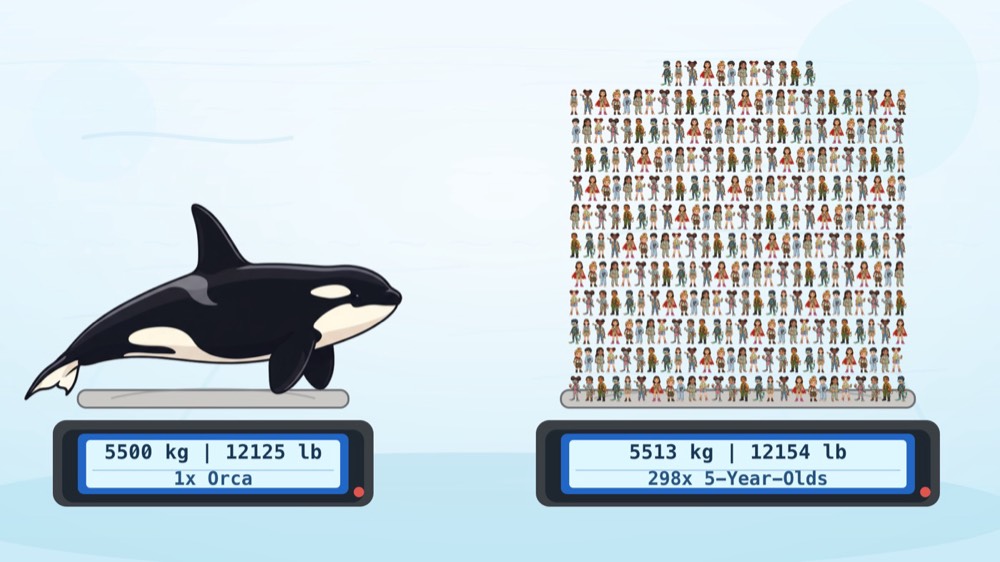
Orcas are heavy, too. One orca can weigh as much as about 300 five-year-olds, all standing on one giant scale together. Can you picture that many friends on one scale?
Orcas live together in family groups called pods, often led by a grandmother orca. In some orca families, the kids stay with their mom their whole lives — even once they're all grown up! Grandma orcas help lead their families to food, using everything they've learned over many, many years.
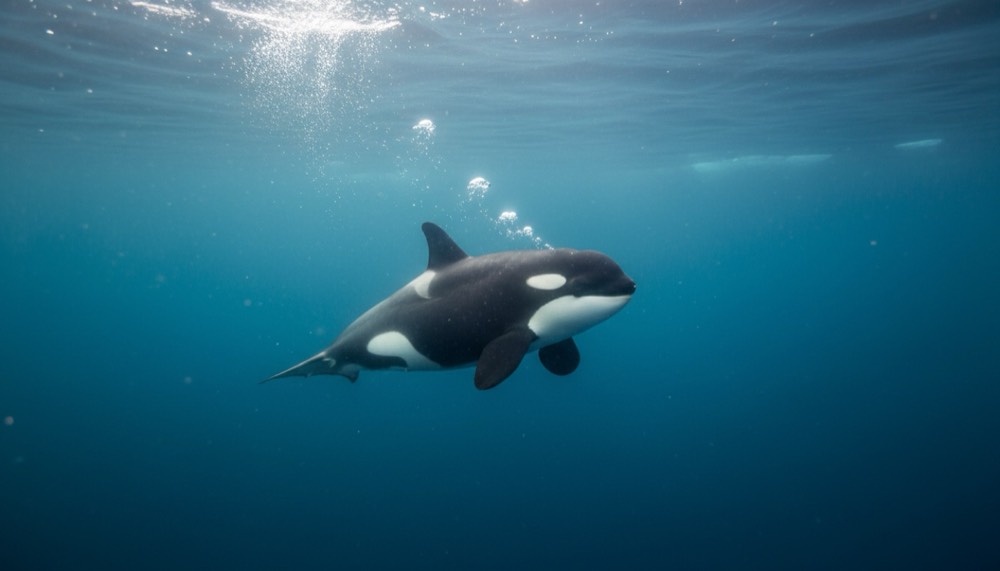
A newborn baby orca is already about twice as long as a 5-year-old is tall, and it weighs as much as about 10 five-year-olds! Baby orcas drink their mom's milk and stay close by her side.
Can you swim like an orca — arms at your sides, kicking with big, strong kicks?
Orcas live in every ocean on Earth, from icy polar seas to warm waters near the equator. Wherever they are, they stick together in their family pod — listening, clicking, and looking after one another. That's exactly what World Oceans Day is all about.
Where to see an orca
In the wild, orcas swim in every ocean on Earth and need a lot of room to roam — the best way to see one is from the shore or a boat, in a few special places where orca families visit. For the rest of us, Wild Atlas has an orca ready to explore anytime, with narrated facts and the full size comparison against a 5-year-old.
North America
Whale Watch Park
Lime Kiln Point State Park — San Juan Island, WashingtonOn this island, you can watch for orcas right from the rocky shore, next to an old lighthouse!
Learn more →A bay just for orcas
Robson Bight (Michael Bigg) Ecological Reserve — Johnstone Strait, British ColumbiaIn Canada there's a special bay where orcas rub on smooth pebble beaches. Boats stay outside so the orcas can have it to themselves.
Learn more →Glaciers and orcas
Kenai Fjords National Park — AlaskaIn Alaska's icy fjords, orcas swim past glaciers, along with sea otters and humpback whales!
Learn more →Around the world
Orcas under the northern lights
Fjords near Tromsø — Northern NorwayIn the far north of Norway, orca families swim into the fjords in winter to chase herring, sometimes under the northern lights!
Learn more →Orca sightings depend on the season and can never be promised — check the park's own website before you visit.
For grown-ups
Orcas are listed by the IUCN as Data Deficient — scientists don't yet have enough information to say how orca populations are doing worldwide, partly because researchers are still working out whether "orca" is really one species or several. Some orca families are doing better than others: the Southern Resident orcas of Washington and British Columbia are endangered and need extra help from us.
There's a hopeful story, too. In 1982, British Columbia set aside Robson Bight (Michael Bigg) Ecological Reserve, a quiet bay where Northern Resident orcas come to rub their bodies on smooth pebble beaches — a tradition unique to their culture. Boats are asked to stay out, so the orcas have the bay to themselves. Canada later extended legal protection to the surrounding waters, and the Northern Resident population grew in the counts that followed.
Orcas find their food by listening, so a noisy ocean makes hunting harder. This week, try playing "quiet pod" at home: one person is the orca, eyes closed, listening for a soft "fish" (a gentle clap), while everyone else stays as quiet as they can. It won't reach the real ocean, but it's the same idea — orcas need quiet water to hear.
Starters: "Did you know orcas are really the biggest dolphins in the world?" "Orca families each have their own set of calls, kind of like an accent — what's special about how our family talks or does things?"
If your kid asks do orcas hurt people? — this holds up: "There's no record of a wild orca seriously hurting a person — they're too busy fishing and looking after their families."
Keep exploring
Wild Atlas has a whole page built around this animal — narrated facts, the full scale comparison against a 5-year-old, and the sound an orca actually makes.
For more, visit NOAA Fisheries.
 Subscribe and the Farm Friends pack ($3.99) is free — yours to keep even if you unsubscribe.