Happy World Ostrich Day! Every February 2, people celebrate the ostrich — a day started in 2020 by an ostrich keeper at Auckland Zoo. And fittingly, it lands on the 2nd day of the 2nd month, just like an ostrich's two toes.
About this day: World Ostrich Day was started in 2020 by Jade Tinker, an ostrich keeper at Auckland Zoo. February 2 (2/2) nods to the ostrich's two toes on each foot. Source
Read this one out loud together — it's short, and it's more fun with your fastest running voice.
An ostrich egg is the biggest egg of any bird alive — just one weighs about as much as two dozen chicken eggs!
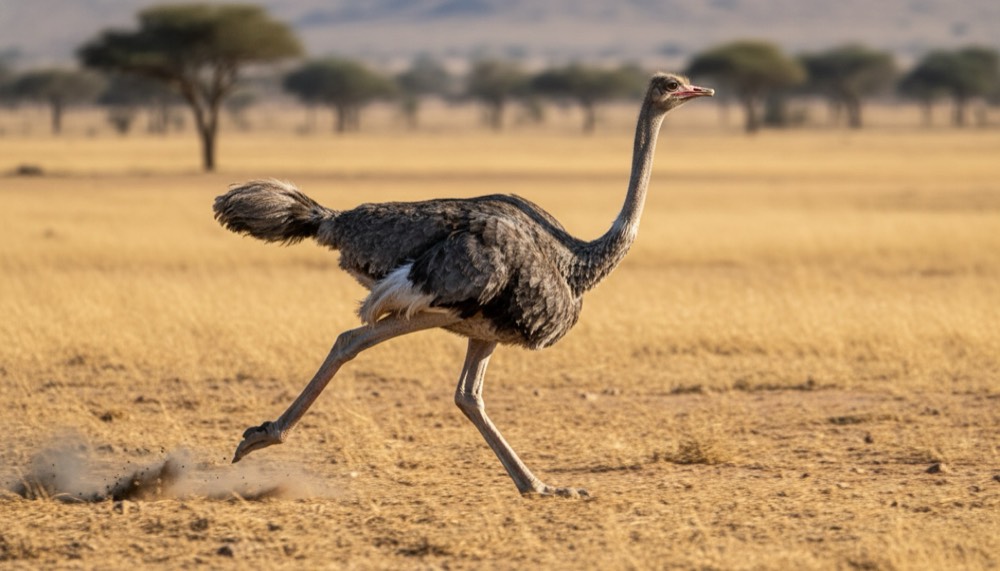
Ostriches can't fly. Instead, they run — faster than any other animal on two legs. A running ostrich can go as fast as a car driving through town, and one single running step can be longer than your bed!
Can you sprint as fast as you can across the room, like an ostrich?
Ostriches have just two toes on each foot. No other bird in the world does. And each of their eyes is even bigger than a ping-pong ball — the biggest eyes of any land animal.
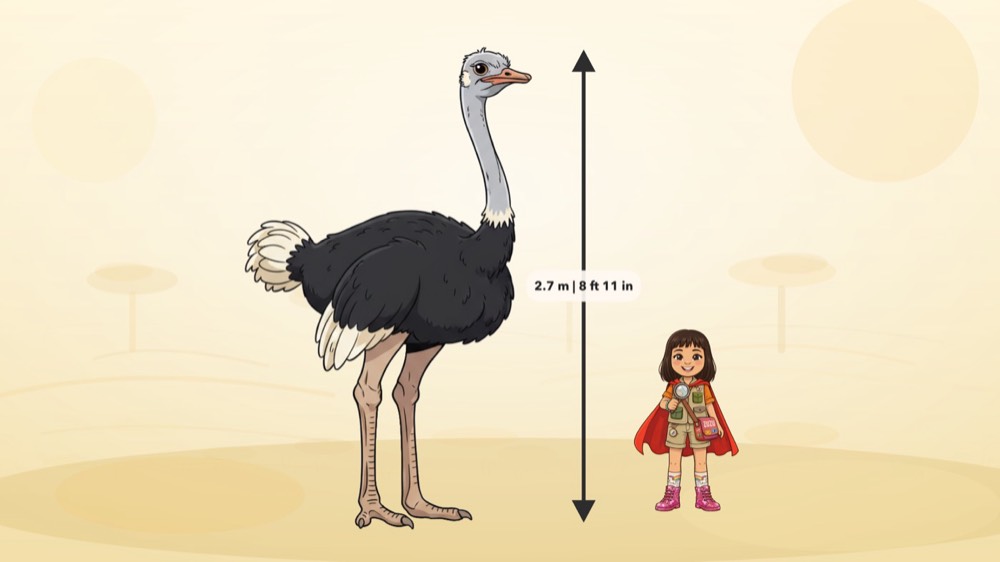
A big ostrich is taller than a grown-up — about as tall as two and a half five-year-olds standing on each other's heads!
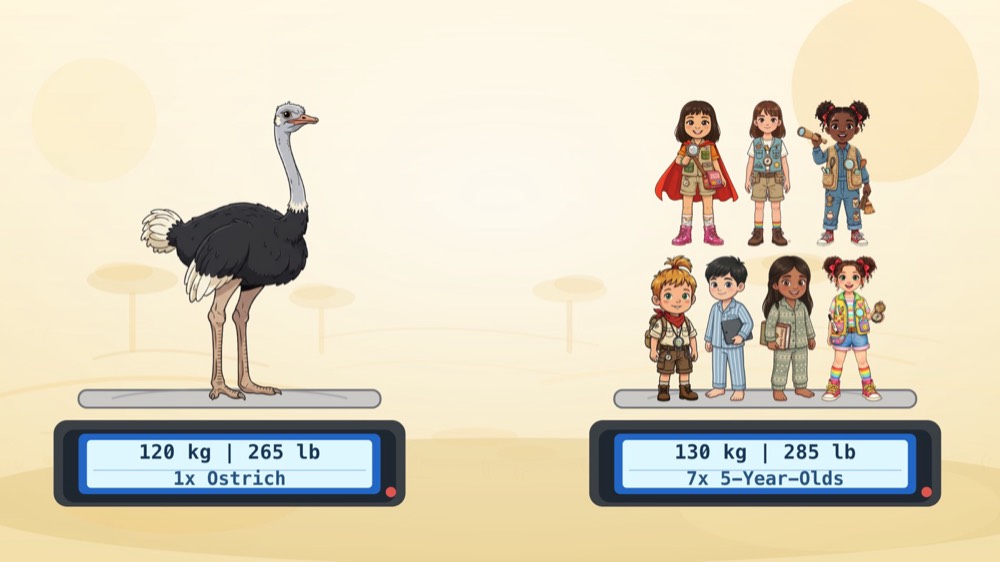
Can you picture 6 or 7 five-year-olds standing on one big scale together? That's about how much a big ostrich weighs.
Here's a fact worth busting: ostriches don't really bury their heads in the sand. That's a myth! They lie down flat with their neck stretched along the ground to hide — from far away, it can just look like their head disappeared.
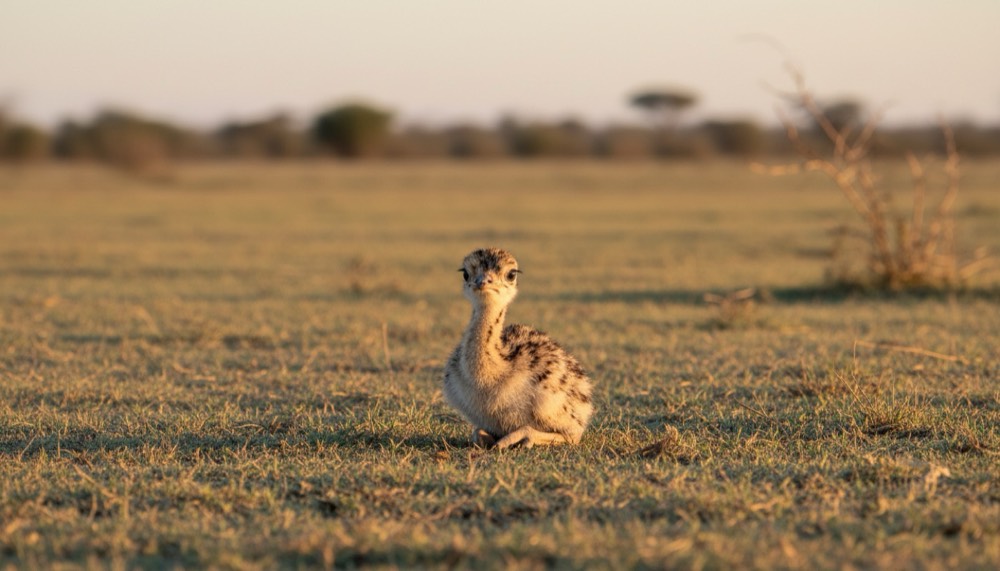
A baby ostrich, called a chick, starts out about as big as a chicken — then grows about a ruler's length taller every month at first. Mom sits on the eggs in the daytime, and Dad takes the night shift. Chicks from different families often join up into big ostrich playgroups, watched over by just a few grown-ups.
Ostriches walk on just their toes. Can you walk tall on your tiptoes like an ostrich?
Where to see an ostrich
In the wild, ostriches stride across the open grasslands and dry plains of Africa — on a safari in places like Kenya, Tanzania, Namibia or South Africa, you might spot one. For the rest of us, these zoos around the world have ostriches you can visit.
North America
African Journey
Maryland Zoo — Baltimore, MarylandIn the African Journey area, three ostriches share the watering-hole habitat with zebras and rhinos. See if you can spot their two-toed feet!
Learn more →African Savanna
Zoo Atlanta — Atlanta, GeorgiaIn the African Savanna, ostriches live together with giraffes and zebras, just like out on the plains.
Learn more →African Forest
Houston Zoo — Houston, TexasLook for the ostriches in the zoo's African Forest area. The zoo's own page busts the head-in-the-sand myth!
Learn more →African Savanna
Toronto Zoo — Toronto, OntarioMeet the southern ostrich — the kind of common ostrich that lives in southern Africa.
Learn more →Around the world
Ostriches at Marwell
Marwell Zoo — Hampshire, EnglandMale ostriches make a deep "booming" call — it sounds a little like far-away thunder! Can you make a big, low boom?
Learn more →Safari bus ride
Werribee Open Range Zoo — Victoria, AustraliaRide the safari bus across open plains and watch ostriches use their wings like rudders to steer as they run.
Learn more →Where World Ostrich Day began
Auckland Zoo — Auckland, New ZealandAn ostrich keeper at Auckland Zoo started World Ostrich Day in 2020! Here, the ostrich flock shares an African savannah with giraffes and zebras. Count their toes — just two on each foot!
Learn more →Animals sometimes move — check the zoo's own website before you visit.
For grown-ups
Ostriches overall are listed as Least Concern, though their numbers are going down — there are still somewhere between 300,000 and 900,000 in the wild. One group, the North African ostrich, is a different story: it's a rare kind of ostrich that had disappeared from most of its old home in the Sahel. In March 2020, conservation groups worked with Chad's government to move 34 ostrich chicks into two protected reserves, followed by 29 more in 2021. By 2023, some of those birds had grown up and hatched 10 chicks of their own in the Ouadi Rimé–Ouadi Achim reserve — the first ostriches born there in 50 years.
Ostriches are strong and fast, and in the wild they want plenty of space — that's why people who study them always watch from a safe distance.
This week's hope action: be a myth-buster! Share the true story with someone in your family: ostriches don't bury their heads in the sand — they lie down flat to hide. Sharing true animal facts helps people care about real animals.
Starters: "If you were as fast as an ostrich, where would you run first?" "Why do you think an ostrich has such big eyes?" "What do you think it would feel like to hatch out of the biggest egg in the world?"
If your kid asks do ostriches really hide their heads in the sand? — this holds up: "No — that's a myth. Ostriches turn their eggs in a sand nest with their heads down, and from far away that can look like their head disappeared. They never actually bury their heads."
Keep exploring
Wild Atlas has a whole page built around this animal, in the Safari Stars pack — narrated facts, the full scale comparison against a 5-year-old, and the true story behind that sand myth.
Meet the ostrich in Wild Atlas →
For more, visit the San Diego Zoo Wildlife Alliance.
 Subscribe and the Farm Friends pack ($3.99) is free — yours to keep even if you unsubscribe.