Happy World Otter Day! Every year, on the last Wednesday of May, people celebrate all fourteen kinds of otter in the world. Today we're celebrating one very special otter — the one that lives in the sea, floats on its back, and cracks its dinner open with a rock.
About this day: World Otter Day was started by the International Otter Survival Fund, a UK charity. It's held every year on the last Wednesday in May. Source
Read this one out loud together — it's short, and it's even better with a slow, sleepy, bobbing-on-the-waves voice.
Meet the sea otter — one of the fluffiest, floatiest animals in the whole ocean, who nap on their backs with the sky over their noses.
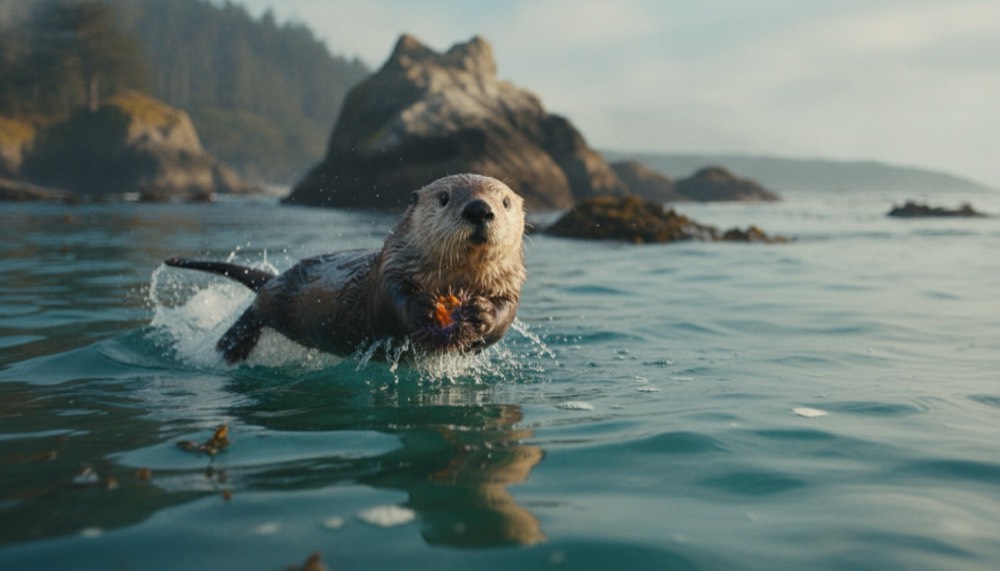
A sea otter lives in cold, shallow seas along the North Pacific coast, often floating right in a swaying kelp forest. It's the biggest member of the weasel family, but one of the smallest animals that lives in the sea full-time.
Here's a surprise: a sea otter has no blubber at all to keep it warm. Instead, it has the thickest fur of any animal in the world — more hairs on one tiny patch of its back than you have on your whole head!
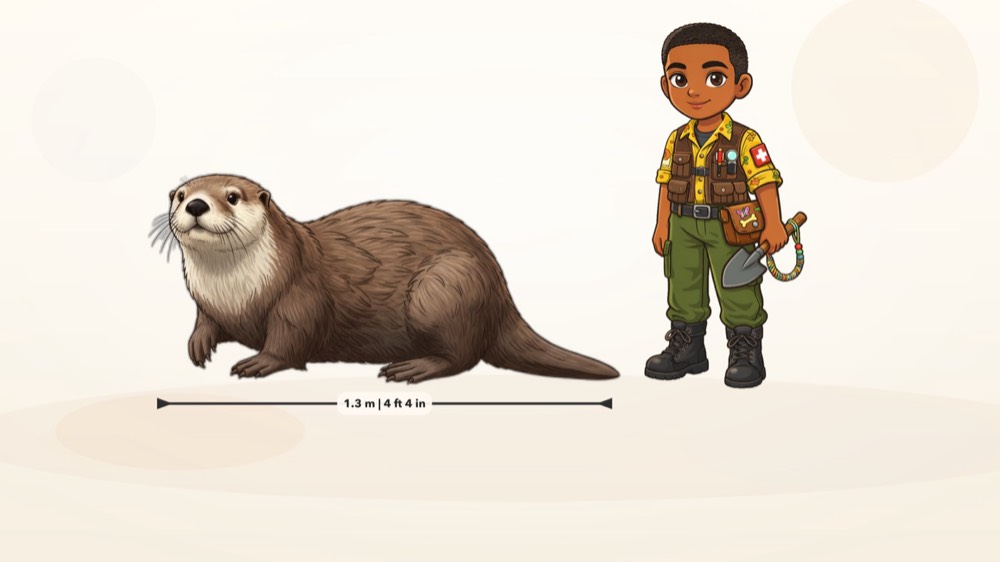
Stretched out from nose to tail, a big sea otter is a little longer than you are tall.
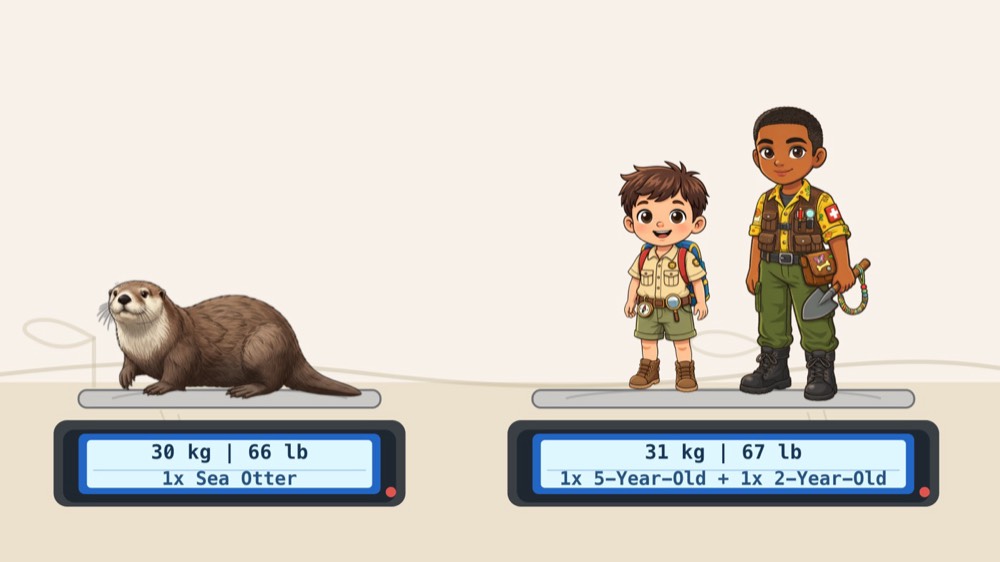
And a big sea otter is heavy, too — about as much as a five-year-old and a little toddler standing on a scale together.
When a sea otter gets hungry, it floats on its back, puts a favorite rock on its tummy, and taps a clam or a crab shell on it until — crack! — dinner is open. It even keeps that rock tucked in a baggy pocket of skin under its arm, so it's always ready for snack time. To stay warm, a sea otter eats and eats and eats — big piles of food every single day.
A newborn sea otter pup is born right in the water, already floating. Its mom grooms its fur for hours, until it holds so much air that the pup bobs on the waves like a cork — it can't even dive if it tries!
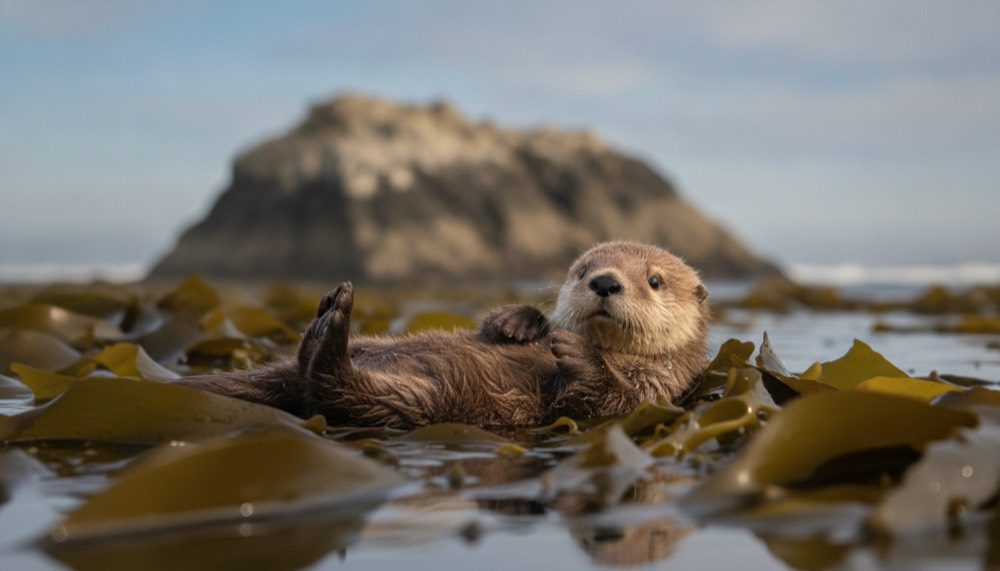
When mom needs to dive for food, she sometimes wraps her pup in kelp, like a soft, swaying blanket, so it stays in one safe spot until she's back.
Can you lie on your back on a cozy rug, tummy up to the sky, like a floating sea otter? Can you pretend to tap a clam on a rock, like an otter opening a snack? Can you wrap your arms around yourself like an otter wrapping up in kelp?
Where to see a sea otter
In the wild, sea otters float in cold, shallow seas along the North Pacific coast — from Japan and Russia to Alaska, Canada and California. You can sometimes spot them from shore around Monterey Bay, though you should always watch from far away. For the rest of us, these zoos and aquariums care for sea otters too — many were rescued, and some are foster moms who help pups who need a hand get back to the wild.
North America
The Otter Raft
Monterey Bay Aquarium — Monterey, CaliforniaWatch rescued sea otters float, groom, and crack open snacks. Some of the otter moms here are foster moms who raise pups who need help so they can go back to the wild.
Learn more →Sea Otter Habitat
Aquarium of the Pacific — Long Beach, CaliforniaPeek underwater and watch busy sea otters diving, grooming, and playing together.
Learn more →Hoops the Otter
Oregon Zoo — Portland, OregonAll three sea otters here — Juno, Lincoln, and Uni Sushi — were rescued as tiny pups who needed help. Juno even shoots hoops with a basketball to keep her elbows healthy!
Learn more →Pier 60 Otters
Seattle Aquarium — Seattle, WashingtonSeattle Aquarium cares for northern and southern sea otters together. Ruby came to Seattle from California, and she likes to rest right next to her buddy Sekiu.
Learn more →Around the world
Sea Otters in Lisbon
Oceanário de Lisboa — Lisbon, PortugalOne of the very few places in Europe where you can meet sea otters.
Learn more →Animals sometimes move — check the zoo's own website before you visit.
For grown-ups
The sea otter is listed as Endangered by the IUCN — there aren't as many as there used to be. Long ago, people hunted sea otters for their thick fur, and there were far fewer left almost everywhere. Countries made rules to protect them, and in many places otters have been coming back: California's whole southern sea otter population grew from about 50 animals found near Big Sur in 1938 to around 3,000 today. At the Monterey Bay Aquarium, a group of otter moms who can't be released to the wild act as foster mothers for rescued, orphaned pups — nearly 300 southern sea otters have been returned to the wild through the program as of 2025. The otters help their whole neighborhood, too: by eating sea urchins, they let kelp forests grow tall and healthy, which helps many other sea animals, too.
A hope action for your family: be a Kelp-Forest Helper. Next time you're near a beach, creek, or street drain with a grown-up, help pick up any litter you find — everything that washes down a drain can end up in the sea where otters live.
Starters: "Did you know a sea otter uses a rock as a tool to crack open its dinner?" "Why do you think a sea otter wraps itself in kelp before it falls asleep?" "What do you think it would feel like to float on your back all day, like an otter does?"
If your kid asks why aren't there many sea otters left? — this holds up: "Long ago, people hunted sea otters for their fur, and there were far fewer left. Countries made rules to protect them, and in lots of places they're coming back — but the ocean still needs to stay clean for them to keep thriving."
Keep exploring
Wild Atlas has a whole page built around this animal — narrated facts, the full scale comparison against a 5-year-old, and more — in the Legends of the Wild pack.
Meet the sea otter in Wild Atlas →
For more, visit the Monterey Bay Aquarium.
 Subscribe and the Farm Friends pack ($3.99) is free — yours to keep even if you unsubscribe.