Happy World Sea Turtle Day! Every June 16, people celebrate all seven kinds of sea turtles — the date marks the birthday of Dr. Archie Carr, a scientist who spent his life studying and protecting them. Today we're meeting one of the seven: the green sea turtle. And right about now, on many warm beaches, mother green turtles are crawling ashore at night to lay their eggs.
About this day: World Sea Turtle Day is held on June 16, the birthday of Dr. Archie Carr, a scientist known as the father of sea turtle research. Source
Read this one out loud together — it's short, and it's even better if you flap your arms like flippers while you read.
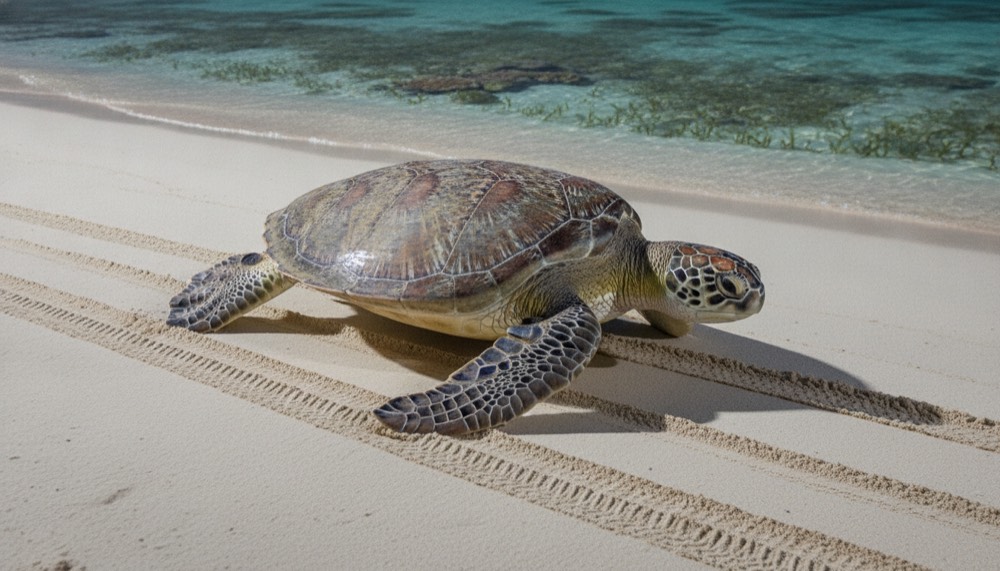
A green sea turtle isn't green on the outside. It munches so much seagrass that the fat under its shell turns green — and that's how it got its name!
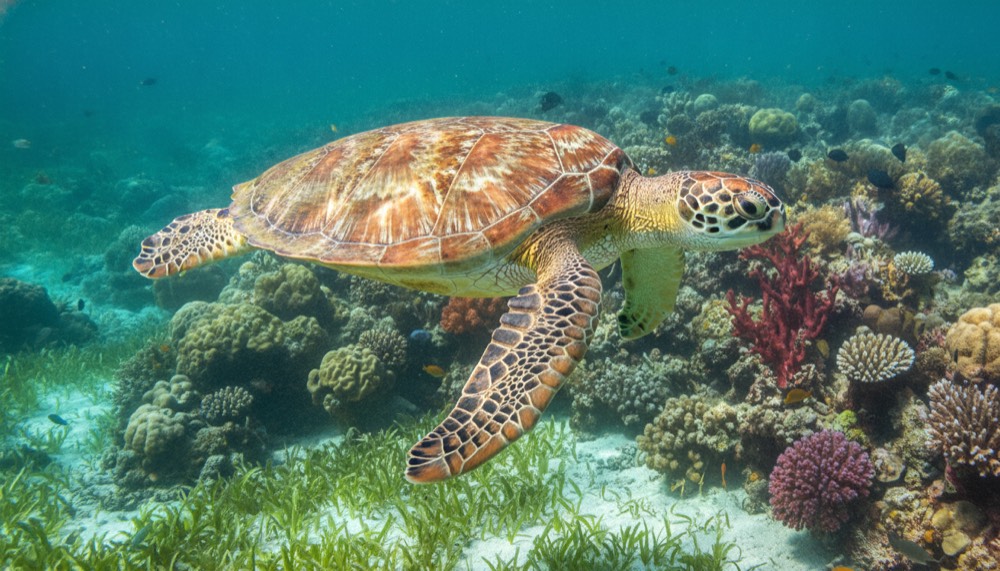
Its shell is actually brown, grey, or olive. The green is a secret, tucked away where only a scientist — or a very curious kid — would think to look.
Grown-up green sea turtles are ocean lawnmowers. They graze on seagrass and algae close to shore, the same way a cow grazes on grass in a field.
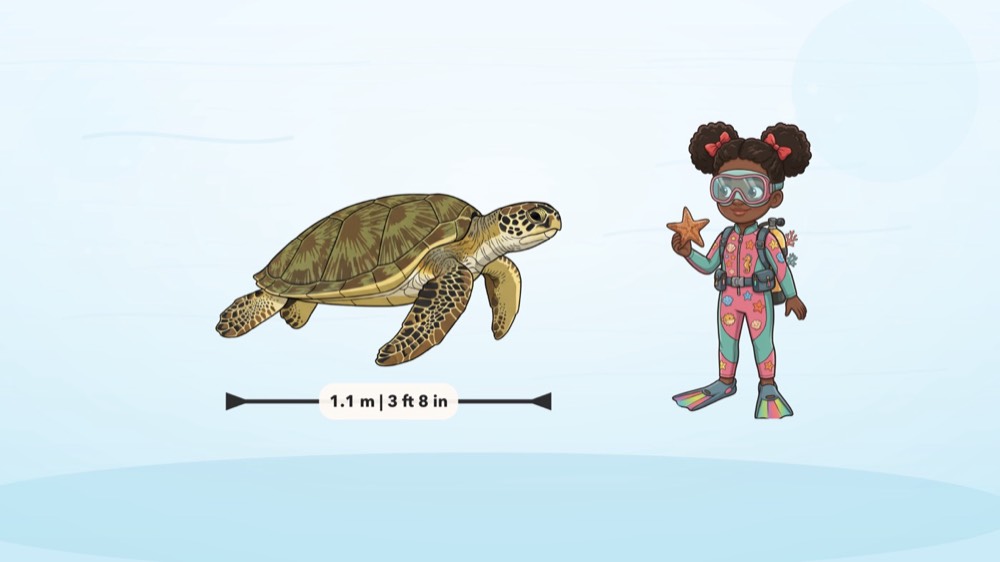
A grown-up green sea turtle is about as long as you are tall, and it can weigh as much as seven five-year-olds standing on one big scale together.
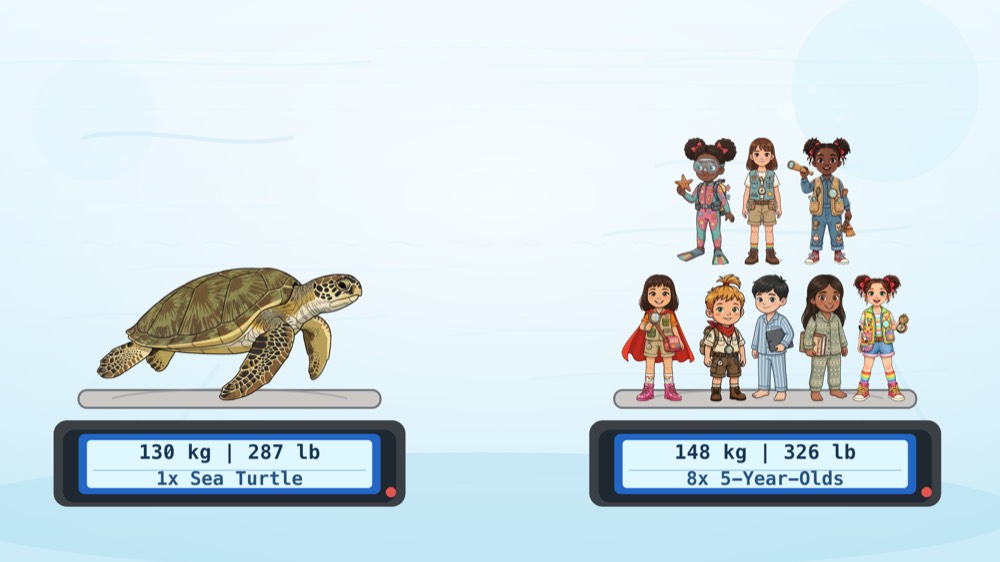
Can you picture seven friends on one big scale?
When it's resting, a green sea turtle can hold its breath for hours before it needs to come back up for air. Can you hold your breath that long? Nope, not even close! Turtles are amazing swimmers.
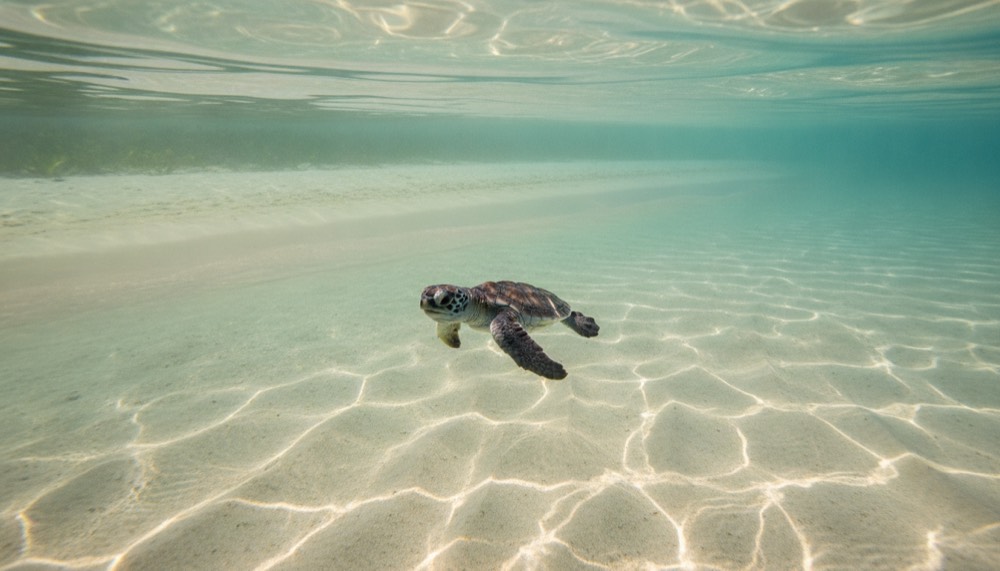
Right about now, mother green turtles are crawling up warm beaches at night, digging a hole with their back flippers, and laying about a hundred round eggs — then covering them up and swimming back out to sea. She came back to lay her eggs near the beach where she was born, decades ago.
When the eggs hatch later this summer, the babies dig out of the sand together, usually at night, and scurry toward the brightest glow on the horizon — which, on a natural beach, is the moon and stars over the ocean.
A brand-new hatchling is only about as long as your finger, and weighs about as much as a chocolate-chip cookie.
Can you flap your arms like turtle flippers and "fly" through the water? Can you dig a pretend nest in the sand? Can you crawl low and quick like a hatchling racing toward the sea?
People protected green sea turtles for a long time, and now there are many more. Green sea turtles live in warm seas all around the world. If you ever spot a turtle or a nest on a beach, the kind thing to do is watch quietly from far away and let it be.
Where to see a green sea turtle
In the wild, green sea turtles live in warm seas all around the world — grown-ups munch seagrass close to shore, and mother turtles crawl up sandy beaches at night to lay their eggs. For the rest of us, these aquariums and turtle hospitals have green sea turtles you can visit.
North America
Myrtle, a green sea turtle who's lived there since 1970
New England Aquarium — Boston, Massachusetts, USAMyrtle is a huge green sea turtle who swims right up to the divers in the Giant Ocean Tank to see what they're doing — she's extra big, even for a green turtle.
Learn more →Gliding through the Open Sea exhibit
Monterey Bay Aquarium — Monterey, California, USAIn the giant Open Sea exhibit, green sea turtles glide past schools of shimmering fish and sharks — like looking through a window into the middle of the ocean.
Learn more →A real sea turtle hospital
Loggerhead Marinelife Center — Juno Beach, Florida, USAWalk past outdoor tanks where sick or hurt sea turtles, including green sea turtles, get better before they go back to the sea — right on a beach where turtles nest.
Learn more →Around the world
The Sea Turtle Pool
Okinawa Churaumi Aquarium — Motobu, Okinawa, JapanWatch green, loggerhead, and hawksbill sea turtles swim through a big underwater window, next to a sandy beach where turtles have hatched every year since 2017.
Learn more →Green sea turtles you meet at an aquarium are often rescued and can't go back to the ocean, so their caretakers help them every day. Animals sometimes move — check the zoo's own website before you visit.
For grown-ups
Green sea turtles were listed as Endangered for more than 40 years. In October 2025, the IUCN moved them all the way to Least Concern — global nesting has grown about 28% since the 1970s, thanks to protected beaches, turtle-safe fishing nets, and decades of people watching out for them. On Florida's index beaches, biologists once counted just a few hundred green turtle nests a year; by the 2020s they were counting tens of thousands. Some places still need help — a few regional groups are still at risk, and green turtles are still listed as Threatened in the US — so the story isn't finished, but it's real, earned progress.
Be a beach hero this week: with a grown-up, fill in any sandcastle holes and knock down sandcastles before you leave a beach, so nesting moms and hatchlings don't get stuck. If you don't live near the coast, picking up litter near a creek or storm drain helps too, since it flows to the sea.
Starters: "Did you know a baby sea turtle finds the ocean by crawling toward the brightest glow — usually the moon and stars over the water?" "Why do you think a mother sea turtle buries her eggs and swims away, instead of staying to guard them?" "People helped sea turtles for over 40 years and it worked — what's one small thing you'd want to help an animal with?"
If your kid asks do all the baby turtles make it to the ocean? — this holds up: "Not all of them — that trip is the hardest part. That's why people turn off bright lights near nesting beaches, fill in sandcastle holes, and watch over nests until they hatch."
Keep exploring
Wild Atlas has a whole page built around the sea turtle, part of the Ocean Creatures pack — narrated facts and the full scale comparison against a 5-year-old.
Meet the sea turtle in Wild Atlas →
For more, visit NOAA Fisheries.
 Subscribe and the Farm Friends pack ($3.99) is free — yours to keep even if you unsubscribe.