Happy World Wildlife Day! Every March 3, the whole world celebrates wild animals and plants — it's the day in 1973 when countries signed CITES, the treaty that protects wild animals and plants from harmful trade. This year, we're meeting one wild animal: the lion.
About this day: World Wildlife Day was declared by the United Nations in 2013. March 3 marks the day in 1973 when countries signed CITES, the treaty protecting wild animals and plants from harmful trade. Source
Read this one out loud together — it's short, and it's even better with a big lion roar.
A lion's roar is so loud it can be heard up to 8 kilometres away.
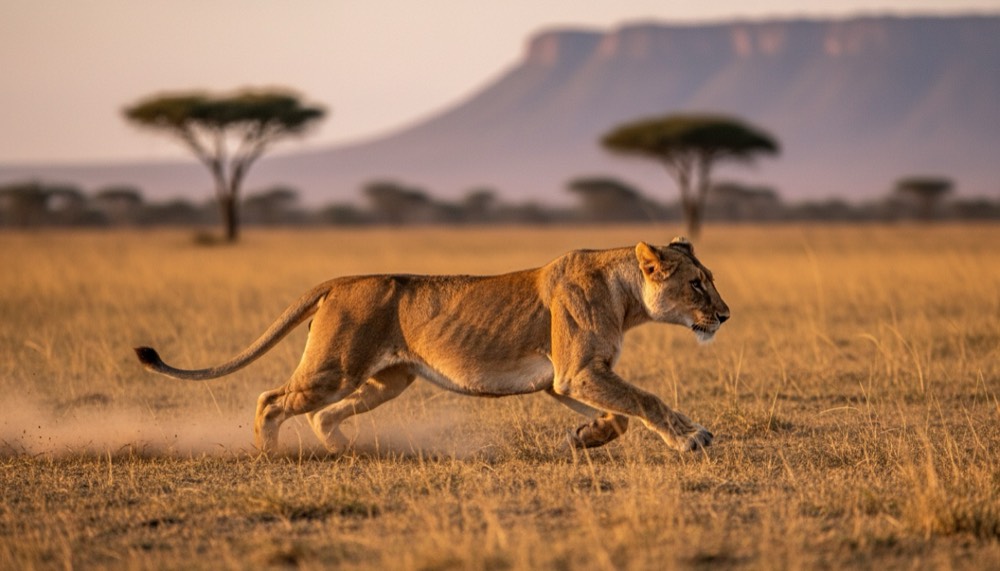
Lions roar to tell their family, "Here I am, this is our home" — and the sound can travel as far as 80 football fields.
Lions are the only big cats that live together in families, called prides. The lion mums and aunties stay together their whole lives, hunting and raising cubs side by side.
Prides make their home on the grassy plains and open woodland of Africa, resting wherever they can find shade.
Can you roar as loud as you can, then whisper it? Which one carries farther?
Stand next to a big lion, and the top of your head wouldn't even reach its shoulder. Nose to tail, a big lion is even longer than two five-year-olds lying down head to toe.
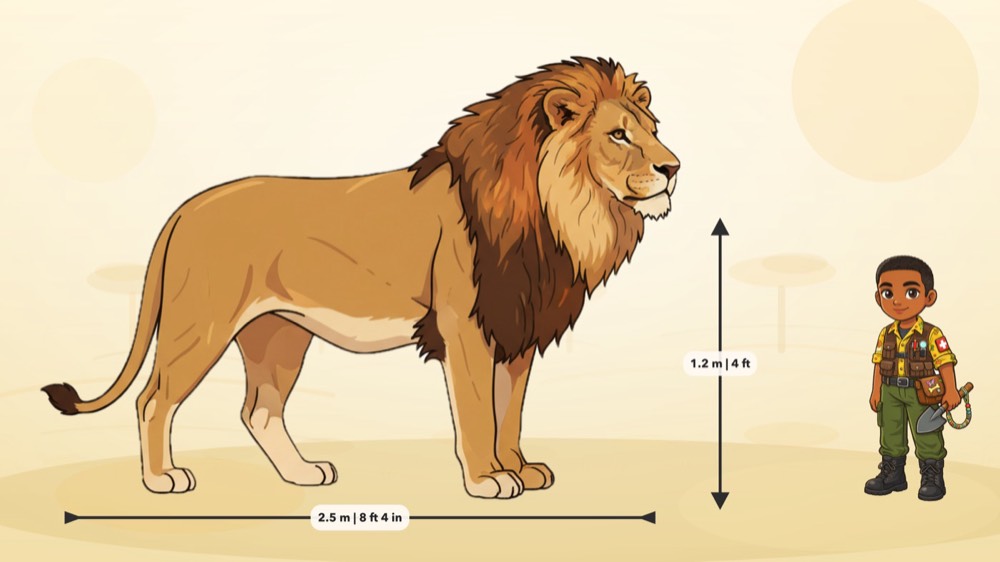
Only boy lions grow a big, fluffy mane — and it gets darker as they get older.
It would take eleven five-year-olds standing on one big scale to outweigh a single lion!
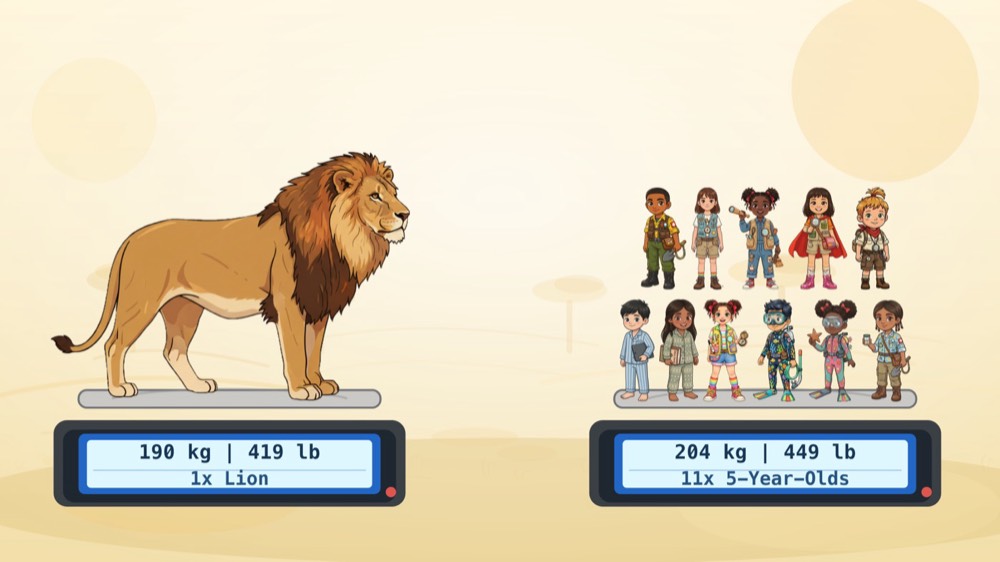
Can you picture eleven friends on one scale, all trying to balance out one lion?
Lions spend most of the day resting in the shade — up to 20 hours!
Can you curl up small like a hiding cub, then stretch up tall like a grown lion?
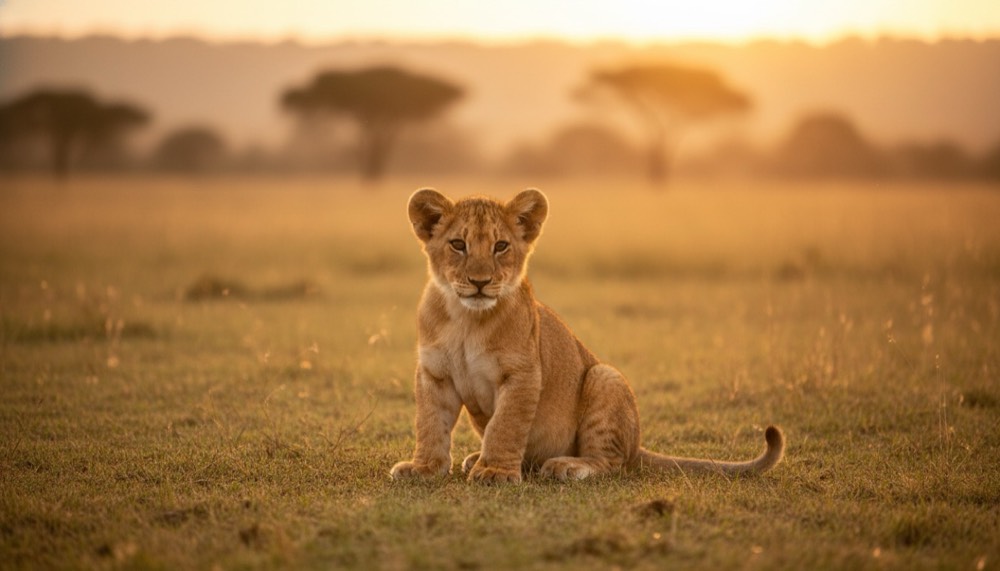
Baby lions are called cubs. They're born with spots on their fur that fade as they grow, and their eyes stay shut for about their first week or two. Mum keeps them hidden and safe for a few weeks before they meet the rest of the pride.
Where to see a lion
In the wild, lions live on the grassy plains and savanna of sub-Saharan Africa (plus one small forest in India), where safari-goers can watch them from a vehicle with a guide. For the rest of us, these zoos around the world have lions you can visit.
North America
African Savanna
Toronto Zoo — Toronto, OntarioLook for the lions' big amber eyes here — like all cats, lions see really well at night, when they're most active.
Visit Toronto Zoo →Predators of the Serengeti
Oregon Zoo — Portland, OregonThe zoo says lions have nine different calls. Listen closely on your visit and see how many you can hear.
Visit Oregon Zoo →Helping lions far away
Houston Zoo — Houston, TexasHouston's lions live across from the tigers and bears. The zoo also helps real lion projects far away in Kenya and Mozambique.
Visit Houston Zoo →A small pride
Zoo Atlanta — Atlanta, GeorgiaZoo Atlanta's lions are a small pride. On cold or rainy days, they may choose to stay cozy indoors.
Visit Zoo Atlanta →Around the world
Lion Pridelands
Taronga Western Plains Zoo — Dubbo, AustraliaWatch a whole lion family here. Just like in the wild, the lionesses stay together their whole lives.
Visit Taronga Western Plains Zoo →Lions 360
Monarto Safari Park — near Adelaide, AustraliaHome to one of Australia's biggest lion prides. On the Lions 360 experience (booked separately), you walk through a safe viewing area while the pride moves all around you.
Visit Monarto Safari Park →Lion Country
Yorkshire Wildlife Park — Doncaster, EnglandA big, seven-acre home for African lions. Some of these lions were rescued from a faraway place and found a safe new home here, where they've even had cubs.
Visit Yorkshire Wildlife Park →Animals sometimes move — check the zoo's own website before you visit.
For grown-ups
Lions are listed as Vulnerable on the IUCN Red List, with roughly 20,000 to 25,000 left in the wild across Africa, and they've disappeared from about 94% of the land they used to roam — mostly from lost habitat and conflict with people over livestock. There's a hopeful story, too: Rwanda's Akagera National Park lost every one of its lions by 2002. In 2015, conservationists carefully brought seven lions back. By 2023, the park reported more than 50.
Before your next zoo trip, look up its lion conservation partner together and talk about what "helping lions in the wild" actually means — it's a simple way to turn a visit into something a little more real.
Starters: "If you were a lion cub, what would you want your pride to be like?" "A lion's roar can travel up to 8 kilometres — how far is that from our house?" "What do you think it takes to bring lions back to a place where they'd disappeared?"
If your kid asks could a lion hurt me? — this holds up: "Lions are strong wild hunters, so we only ever watch them from far away — a safari truck or a zoo fence. Not because lions are bad, but because wild animals need their space, like we'd want ours."
Keep exploring
Wild Atlas has a whole page built around this animal, in the Safari Stars pack — narrated facts, the full scale comparison against a 5-year-old, and what a lion's roar sounds like.
For more, visit San Diego Zoo Wildlife Alliance.
 Subscribe and the Farm Friends pack ($3.99) is free — yours to keep even if you unsubscribe.